CM Sai Backs Cabinet Nod for Green Energy Corridor Phase-3
Synopsis
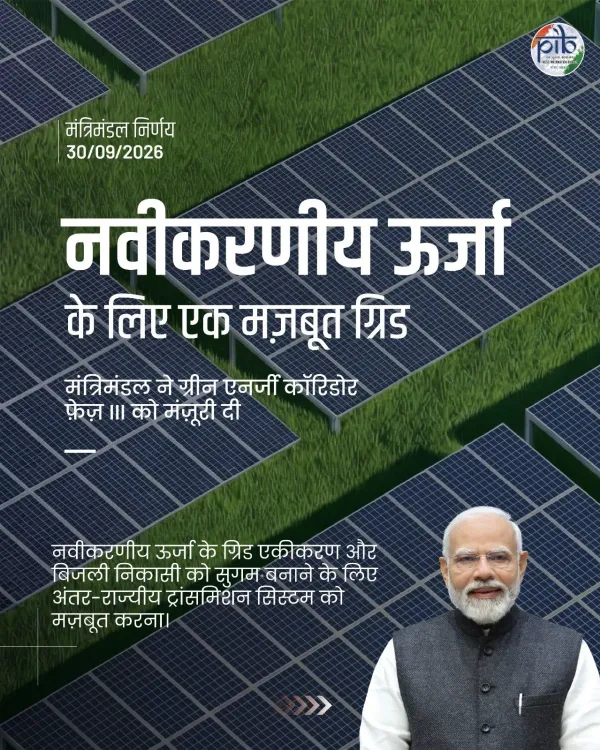
The Union Cabinet has approved Phase 3 of India's Green Energy Corridor, backing a 50 GWh Battery Energy Storage System and Intra-State Transmission upgrades. Chhattisgarh CM Vishnu Deo Sai praised the move as a milestone toward energy self-reliance and India's 500 GW clean-power target.
Key Takeaways
The Union Cabinet approved Phase 3 of the Green Energy Corridor , a multi-phase national transmission infrastructure scheme.
A 50 GWh Battery Energy Storage System (BESS) is the centrepiece, designed to balance peak electricity demand and supply.
Intra-State Transmission System (InSTS) upgrades will improve renewable energy evacuation at the state level.
The corridor was first launched in 2015 (Phase 1) , targeting high-renewable states like Rajasthan, Gujarat and Tamil Nadu.
The initiative supports India's target of 500 GW non-fossil power capacity by 2030 .
Key watchpoints include state-wise fund allocation, BESS tender timelines, and grid integration milestones.
India's power grid just took a significant leap forward. Chhattisgarh Chief Minister Vishnu Deo Sai on Wednesday, September 30, 2026, welcomed the Union Cabinet's approval of Phase 3 of the Green Energy Corridor, calling it a decisive step toward a clean and secure energy future for the country.
Posting on X in Hindi, CM Sai said the decision, taken under the 'visionary leadership' of Prime Minister Narendra Modi, would strengthen the country's Intra-State Transmission System (InSTS) and enable seamless flow of renewable power across state grids. He specifically highlighted a proposed 50 GWh Battery Energy Storage System (BESS) as the centrepiece of the initiative — one designed to close the gap between peak electricity demand and actual supply.
What Phase 3 of the Green Energy Corridor Adds
The Green Energy Corridor is a multi-phase national scheme to build the transmission backbone needed to carry solar and wind power from generation hubs to consumption centres. Phase 1, approved in 2015, focused on high-renewable states including Rajasthan, Gujarat, and Tamil Nadu — laying the first dedicated evacuation lines for clean energy. Each successive phase has widened the network and deepened state-level integration.
Phase 3 pushes that logic further by coupling grid upgrades with storage. The 50 GWh BESS component directly tackles the defining weakness of solar and wind generation: intermittency. By storing surplus power during off-peak hours and releasing it when demand spikes, battery storage smooths out the volatility that makes grid managers nervous and keeps fossil-fuel peaker plants running long after they should have been retired.
The 500 GW Target Driving Every Cabinet File
This approval does not exist in isolation. India has committed to reaching 500 GW of non-fossil power capacity by 2030 — a target that demands not just generation but the grid musculature to actually move that power. Renewable capacity is growing fast; transmission and storage have historically lagged. Every phase of the Green Energy Corridor is an attempt to close that gap before it becomes a bottleneck.
Intra-state lines are particularly critical. A wind farm in Chhattisgarh or a solar park in Rajasthan is worthless if the state grid cannot evacuate its output and feed it into the national pool. The InSTS upgrades in Phase 3 address exactly this last-mile transmission problem, making state power utilities direct beneficiaries alongside private renewable energy developers who need reliable evacuation guarantees before committing capital.
What to Watch as Phase 3 Rolls Out
The Cabinet nod is the starting gun, not the finish line. State-wise fund allocations, tender timelines for the 50 GWh BESS component, and phased integration milestones will be the real measures of execution. For a state like Chhattisgarh — traditionally a coal-belt economy now navigating an energy transition — how quickly Phase 3 funds flow and transmission lines get commissioned will shape both the state's power economics and its renewable investment climate for years ahead.
India's bet is straightforward: build the grid now, or watch the clean-energy decade arrive without the wires to carry it.
Point of View
It threads two political priorities at once: energy security as a sovereignty argument and clean energy as a climate-credibility argument. CM Sai's endorsement signals that coal-dependent states are being brought into the renewable narrative rather than left behind it. The real test will be whether execution timelines for the 50 GWh BESS match the political momentum — storage procurement in India has historically slipped well past cabinet announcements.
NationPress
1 Oct 2026
Frequently Asked Questions
What is the Green Energy Corridor Phase 3 approved by the Cabinet?
Phase 3 is the latest stage of India's national scheme to build dedicated transmission infrastructure for renewable energy. It includes upgrades to Intra-State Transmission Systems and a proposed 50 GWh Battery Energy Storage System to manage peak demand and supply gaps.
What is a 50 GWh Battery Energy Storage System and why does it matter?
A Battery Energy Storage System stores surplus renewable power generated during off-peak hours and releases it when demand peaks. A 50 GWh capacity can significantly reduce dependence on fossil-fuel peaker plants and stabilise the grid against the intermittency of solar and wind generation.
When was the Green Energy Corridor first launched in India?
Phase 1 of the Green Energy Corridor was approved in 2015, initially focusing on high-renewable states like Rajasthan, Gujarat, and Tamil Nadu to evacuate clean power into the national grid.
What is India's renewable energy target by 2030?
India has set a target of 500 GW of non-fossil power capacity by 2030. The Green Energy Corridor phases are a key part of the transmission and storage infrastructure needed to reach and sustain that target.
Why did Chhattisgarh CM Vishnu Deo Sai comment on a central Cabinet decision?
As a BJP Chief Minister and state government head, Sai welcomed central energy decisions that affect state grids and power utilities. Chhattisgarh, traditionally a coal-economy state, stands to benefit directly from InSTS upgrades that improve renewable energy evacuation at the state level.