CM Sai Greenlights ₹57.71 Cr Water Overhaul for Bastar
Synopsis
Chhattisgarh's CMO has sanctioned ₹57.71 crore under Amrit Mission 2.0 to overhaul drinking water supply in Bastar. A 73-km pipeline drawing from the Markandi River will deliver treated water to over 2,700 households in this historically underserved tribal region.
Key Takeaways
₹57.71 crore sanctioned for the Bastar Jal Praday (water supply) scheme under Amrit Mission 2.0 .
Water will be sourced from the Markandi River , purified, and distributed to urban residents of Bastar.
A 73-kilometre pipeline will form the backbone of the new distribution network.
More than 2,700 household tap connections are targeted under the project.
The project is part of Chief Minister Vishnu Deo Sai 's broader push to extend basic services to Chhattisgarh's tribal and remote regions.
AMRUT 2.0 , launched in 2021, provides central funding for urban water and sewerage schemes in smaller cities and tribal areas across India.
A tribal heartland that has long lived on the margins of urban infrastructure is about to get a lifeline. The Chief Minister's Office of Chhattisgarh announced on Monday, 26 October 2026 that a ₹57.71 crore water supply project has been sanctioned for Bastar under the Amrit Mission 2.0 — promising clean drinking water to thousands of households through a 73-kilometre pipeline network.
Water from the Markandi, Treated and Delivered
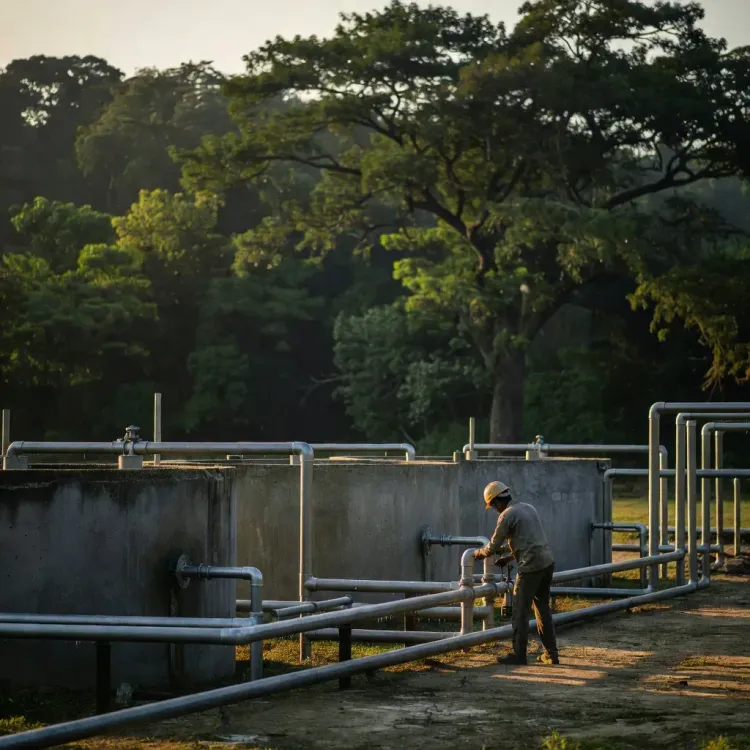
The scheme's engineering logic is straightforward but its ambition is significant. Water will be drawn from the Markandi River, processed at a purification facility, and then pushed through the 73 km pipeline to reach urban residents of Bastar. More than 2,700 household tap connections are planned under the project, giving families direct, treated water access at their doorstep — a basic service that remains uneven across many parts of this southern Chhattisgarh division.
The CMO framed the announcement as a direct outcome of Chief Minister Vishnu Deo Sai's 'Sushasan Sarkar' — sushasan meaning good governance — with the post stating the government is 'continuously working to make clean drinking water available to the people of the state.'
Bastar's Infrastructure Gap and the AMRUT Push
Bastar division is one of Chhattisgarh's most tribal-dominated and geographically challenging regions. Historically, urban infrastructure here — water supply, sewerage, roads — has lagged behind the state's more accessible districts. That makes a project of this scale more than a routine municipal upgrade; it is an assertion that the state's development agenda reaches its remotest corners.
The Atal Mission for Rejuvenation and Urban Transformation (AMRUT) was first launched by the central government in 2015 to overhaul urban water and sewerage systems across India. Its successor, AMRUT 2.0, rolled out in 2021, doubled down on universal tap water coverage in cities and towns — specifically targeting smaller urban centres and tribal areas that the first phase left partially addressed. State governments draw from central funding pools to design and execute city-specific projects, with the Bastar water supply scheme being one such initiative.
Chief Minister Sai's Governance Scorecard
Vishnu Deo Sai took charge as Chhattisgarh's Chief Minister in December 2023, leading the BJP government after it returned to power in the state. Infrastructure delivery — particularly extending basic services to tribal and rural zones — has been a stated priority of his administration. The Bastar sanction adds a concrete data point to that claim, with a defined project cost, a named water source, specific pipeline length, and a target number of connections.
What happens next will be closely watched: the project now moves into tendering, contractor selection, and construction of the pipeline. Achieving all 2,700-plus household connections on schedule will be the real test of whether the sanction translates into taps that actually run.
For a region where clean water has not always been a given, ₹57.71 crore and 73 kilometres of pipe could quietly become one of the most tangible governance wins of this administration.
Point of View
Delivery in Bastar carries outsized symbolic weight because the region's development deficit has long been intertwined with its security challenges. The real scrutiny, however, will arrive not at sanction but at completion — whether 2,700 households actually get running taps will define whether this becomes a durable legacy or a headline that aged poorly.
NationPress
26 Oct 2026
Frequently Asked Questions
What is the Bastar water supply project under Amrit Mission 2.0?
It is a ₹57.71 crore drinking water scheme for Bastar in Chhattisgarh, sanctioned under AMRUT 2.0, that will draw water from the Markandi River, purify it, and supply it through a 73-km pipeline to over 2,700 households.
What is Amrit Mission 2.0 (AMRUT 2.0)?
AMRUT 2.0 — Atal Mission for Rejuvenation and Urban Transformation 2.0 — is a central government scheme launched in 2021 to achieve universal tap water and sewerage coverage in Indian cities and towns, with a focus on smaller urban centres and tribal areas.
Who approved the Bastar drinking water project?
The project was sanctioned under the leadership of Chief Minister Vishnu Deo Sai, with the announcement made by the Chief Minister's Office of Chhattisgarh on 26 October 2026.
Where will the water for Bastar's new supply scheme come from?
Water will be sourced from the Markandi River in the Bastar region, treated at a purification facility, and then distributed to residents through a 73-kilometre pipeline network.
How many households will benefit from the Bastar water supply project?
The scheme targets more than 2,700 household tap connections in urban Bastar, giving families direct access to treated drinking water at their doorstep.