CM Sai Welcomes New Rail Lines Approved for Chhattisgarh
Synopsis
Chhattisgarh CM Vishnu Deo Sai welcomed Centre's approval of five rail projects — including a fourth line on Katni–Pendra Road and new corridors to Nava Raipur and Dongargarh — crediting PM Modi and Railways Minister Ashwini Vaishnaw for the green-light.
Key Takeaways
A fourth rail line has been approved on the Katni–Shahdol–Pendra Road corridor, a key freight artery in central India.
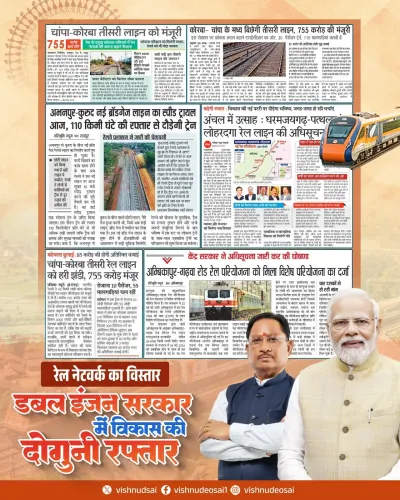
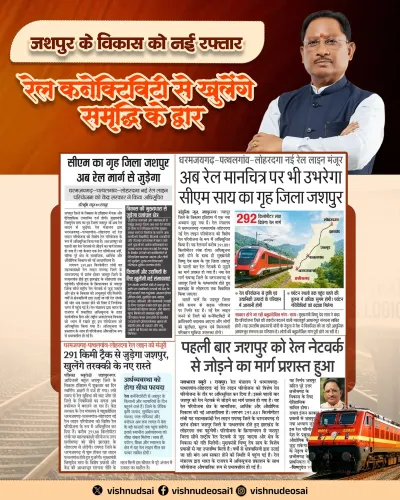
A third rail line each sanctioned for Pendra Road–Bilaspur and Janjgir-Champa–Korba , running through Chhattisgarh's coal belt.
Two new corridors approved: Kharsia–Nava Raipur–Parmalakasa and Kathgodar–Dongargarh .
CM Vishnu Deo Sai credited PM Narendra Modi and Railways Minister Ashwini Vaishnaw for the approvals.
The projects are expected to boost freight capacity from Chhattisgarh's coal and iron-ore mining zones and integrate Nava Raipur into the national rail network.
Land acquisition, tendering, and commissioning timelines remain the critical next steps before the corridors become operational.
Five new rail corridor projects cleared for Chhattisgarh could reshape how coal, iron ore, and people move across one of India's most resource-dense states — and Chhattisgarh Chief Minister Vishnu Deo Sai wasted no time welcoming the approvals on Tuesday, 20 October 2026.
What got approved: the five corridors in focus
The approvals cover a significant expansion of rail capacity across the state. A fourth rail line has been sanctioned on the Katni–Shahdol–Pendra Road stretch, one of the most freight-heavy arteries in central India. A third rail line each has been cleared for Pendra Road–Bilaspur and for Janjgir-Champa–Korba — the latter passing through the heart of Chhattisgarh's coal belt.
Two brand-new rail corridors have also been sanctioned: Kharsia–Nava Raipur–Parmalakasa, which would link the state's greenfield capital Nava Raipur into the freight network for the first time, and Kathgodar–Dongargarh. Together, the five projects represent a substantial bet on the state's industrial and logistics future.
CM Sai's message and who he thanked
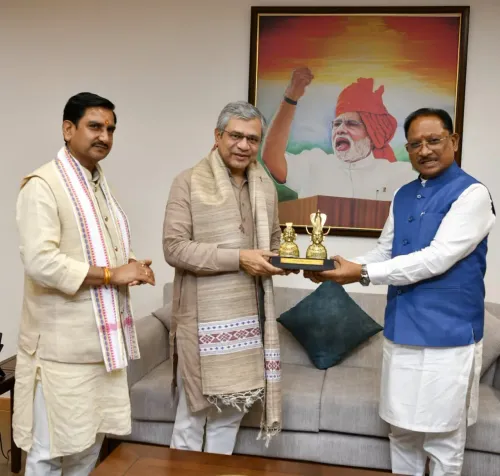
Posting in Hindi, Sai described the approvals as delivering 'new momentum to Chhattisgarh's economic development and paving the path of prosperity.' He credited the projects to the guidance of Prime Minister Narendra Modi and expressed gratitude — on behalf of the people of Chhattisgarh — to Union Railways Minister Ashwini Vaishnaw. The post, tagged #RailInfra4Chhattisgarh, also tagged the Prime Minister's handle and the Railways Ministry directly.
Why multi-tracking in Chhattisgarh matters
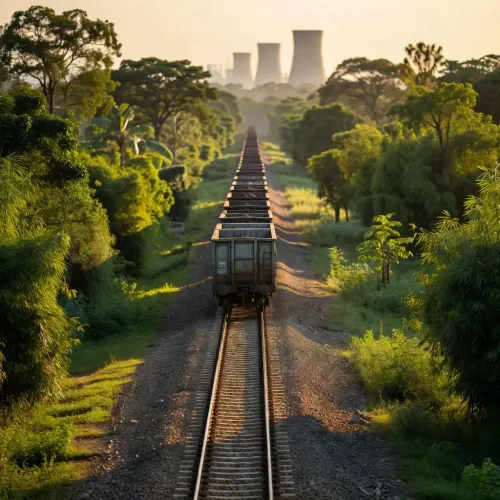
Chhattisgarh sits on some of India's largest reserves of coal and iron ore, yet rail bottlenecks have long throttled freight movement out of the state. Since 2014, the Union government has prioritised rail doubling and new corridors in eastern and central India specifically to ease freight pressure from mining zones and cut national logistics costs. The Korba coal fields alone feed power plants across multiple states; a dedicated third line to Janjgir-Champa directly increases the throughput capacity on that chain.
The Kharsia–Nava Raipur–Parmalakasa corridor carries additional significance: it would give the planned capital city of Nava Raipur a rail spine, unlocking industrial and real-estate development that has been waiting on connectivity. The Katni–Shahdol–Pendra Road fourth line, meanwhile, eases one of the most congested mixed-freight-passenger corridors connecting Madhya Pradesh and Chhattisgarh.
The road from approval to rail
Sanctions are the starting gun, not the finish line. Land acquisition, environmental clearances, tendering, and commissioning timelines will determine when passengers and freight actually benefit. Projects in similarly mineral-rich corridors have historically faced delays at the land-acquisition stage, making follow-through in subsequent rail budgets critical. The five corridors will need sustained central allocation to move from blueprint to ballast on schedule.
For a state whose economy runs — quite literally — on the rails, the scale of what just got approved is hard to overstate. Now the clock starts on delivery.
Point of View
Politically significant states. By personally crediting PM Modi and Railways Minister Vaishnaw, CM Sai reinforces the Centre-state partnership narrative that has been central to the BJP's governance messaging since 2014. The inclusion of Nava Raipur in the Kharsia corridor is notable — it signals an intent to make the planned capital city economically self-sustaining, not merely an administrative showcase. Whether these approvals translate to on-ground momentum will hinge on how quickly land acquisition and tendering proceed, a stage where past central-corridor projects in the region have stumbled.
NationPress
20 Oct 2026
Frequently Asked Questions
Which new rail lines have been approved for Chhattisgarh?
Five projects were approved: a fourth rail line on Katni–Shahdol–Pendra Road; a third rail line each on Pendra Road–Bilaspur and Janjgir-Champa–Korba; and two new corridors — Kharsia–Nava Raipur–Parmalakasa and Kathgodar–Dongargarh.
What did CM Vishnu Deo Sai say about the rail approvals?
CM Sai said the expansion would give 'new momentum to Chhattisgarh's economic development' and thanked PM Narendra Modi and Railways Minister Ashwini Vaishnaw on behalf of the people of the state.
Why is the Janjgir-Champa–Korba third rail line important?
The Korba region is the heart of Chhattisgarh's coal belt; a dedicated third line increases freight throughput capacity to power plants across multiple states that depend on Korba coal.
What is the significance of the Kharsia–Nava Raipur–Parmalakasa corridor?
It would give Nava Raipur — Chhattisgarh's planned greenfield capital — a direct rail connection, unlocking industrial development and reducing dependence on road transport for the new city.
When will the approved Chhattisgarh rail projects be completed?
No official completion timelines have been announced yet. Progress will depend on land acquisition, environmental clearances, and subsequent budget allocations — stages that historically determine the actual pace of delivery.