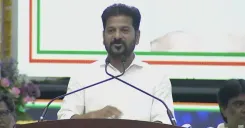
CM Sai Hails Bastar's Shift From Conflict to Progress

Synopsis
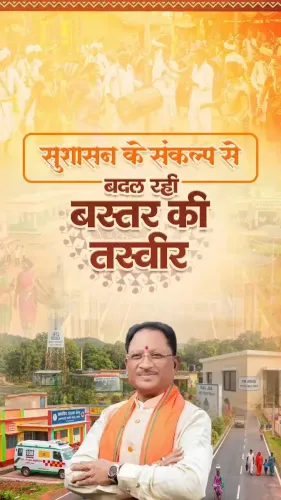
Chhattisgarh Chief Minister Vishnu Deo Sai declared on X that Bastar is undergoing a historic shift from Maoist conflict to peace and development, highlighting the reintegration of former insurgents and the region's growing aspirations.
Key Takeaways
CM Vishnu Deo Sai posted on 13 August 2026 declaring Bastar is entering a new era of peace, progress, and possibilities.
Bastar in southern Chhattisgarh has been India's most persistent Left Wing Extremism hotspot for nearly four decades.
Chhattisgarh has operated surrender-and-rehabilitation schemes for former Maoists since the early 2000s , offering financial aid and skill training.
The central government's SAMADHAN strategy (2017) formalised a twin-track approach combining security operations with targeted development.
Tribal communities in Bastar are the primary stakeholders — both the most affected by the conflict and the intended beneficiaries of the peace dividend.
Specific new project names and updated violence or surrender statistics tied to this announcement have not yet been officially released.
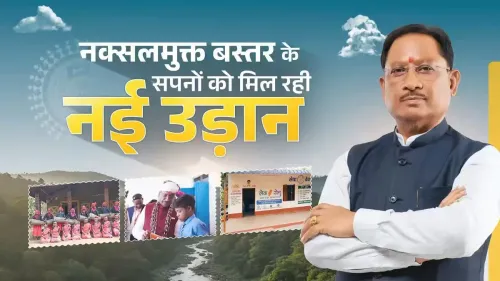
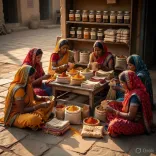
For decades, the mere mention of Bastar conjured images of ambushes, jungle hideouts, and a conflict that swallowed generations whole. Chhattisgarh Chief Minister Vishnu Deo Sai is now telling a different story — and on Thursday, 13 August 2026, he took to X to say it plainly: the hands that once held weapons are today weaving a new story of dignity.
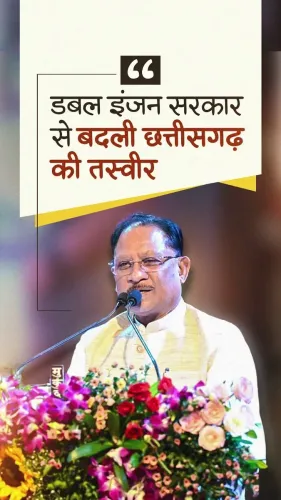
In his post, CM Sai wrote: 'A new chapter is unfolding in Bastar — one of peace, progress and possibilities. From violence to opportunity, from fear to freedom — this transformation is the true triumph of peace and development.' The message is spare, but the geography it invokes carries enormous weight.
Bastar's Long Shadow — and What Changed
Bastar, a sprawling forested region in southern Chhattisgarh, has been the epicentre of Left Wing Extremism in India for the better part of four decades. Maoist insurgents drew recruits from among the region's tribal communities, exploiting historical grievances over land, displacement, and state neglect. The human cost — security personnel, civilians, and insurgents alike — ran into thousands of lives.
The Indian state's response evolved from pure counter-insurgency into a twin-track approach: sustained security operations alongside targeted development. The central government formalised this as the SAMADHAN strategy in 2017, a framework that treats infrastructure, livelihoods, and governance reach as instruments of conflict resolution, not afterthoughts to it.
Surrender, Rehabilitation, and the Bet on Dignity
Chhattisgarh has run surrender-and-rehabilitation schemes for former insurgents since the early 2000s, offering financial support, skill training, and legal protection to those who lay down arms. The phrase CM Sai chose — 'hands that once held weapons are today weaving a new story' — maps directly onto these programmes, signalling that the state views reintegration, not just suppression, as the measure of success.
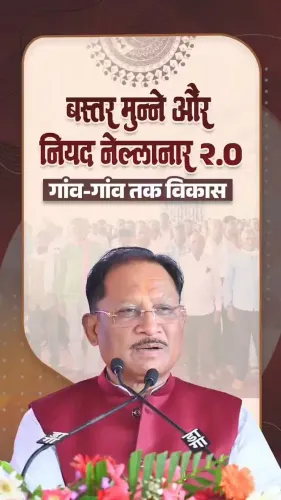
Tribal communities in Bastar sit at the centre of this calculus. They bore the heaviest costs of the conflict and stand to gain most from its winding down — through roads, schools, healthcare, and markets that insurgency had long kept out of reach.
The Metric That Still Matters
Rhetoric about peace is easy; the harder question is whether the numbers back it. Chhattisgarh has reported gradual declines in violence incidents in recent years, a trend that officials credit to the combination of security pressure and development outreach. The state government has not yet released updated statistics tied to this particular message, and specific new project names or surrender figures remain unconfirmed.
What is clear is that CM Sai is staking political capital on Bastar's transformation as a signature achievement — framing it not as an ongoing operation but as a chapter already turning. Whether that chapter holds will depend on whether the infrastructure and livelihood promises reach the forest villages where the conflict was born.
Bastar's story is no longer only about what it has suffered. The question now is whether what comes next can match the weight of that promise.
Point of View
Rather than merely neutralised threats, suggests the government is trying to build a narrative of inclusive resolution ahead of any political cycle. The credibility of that narrative, however, will ultimately rest on verifiable outcomes — infrastructure delivery, livelihood data, and sustained decline in violence — rather than on the poetry of the messaging.
NationPress
13 Aug 2026
Frequently Asked Questions
What is the current situation in Bastar regarding Naxalism?
Bastar in southern Chhattisgarh has seen a gradual reported decline in Maoist violence in recent years, attributed to sustained security operations combined with development and rehabilitation programmes, though the region has not been fully free of insurgent activity.
What is Chhattisgarh's surrender scheme for Maoists?
Chhattisgarh has run surrender-and-rehabilitation schemes for Maoist insurgents since the early 2000s, offering former cadres financial assistance, legal protection, and skill training to reintegrate into mainstream society.
What is the SAMADHAN strategy for Left Wing Extremism?
SAMADHAN is the central government's strategic framework for countering Left Wing Extremism, articulated in 2017. It combines security operations with targeted development, improved governance, and livelihood programmes in affected districts.
Who is Vishnu Deo Sai and why is he talking about Bastar?
Vishnu Deo Sai is the Chief Minister of Chhattisgarh and a senior BJP leader. Bastar falls within Chhattisgarh and has historically been the state's most conflict-affected region, making its transformation a central governance and political priority for his administration.
Which tribal communities live in Bastar?
Bastar is home to several Adivasi communities including the Gond, Halba, Muria, and Maria tribes, who have historically been caught between state forces and Maoist insurgents and are the primary intended beneficiaries of peace and development programmes in the region.