CM Sai Highlights Chhattisgarh Road and Rail Expansion
Synopsis
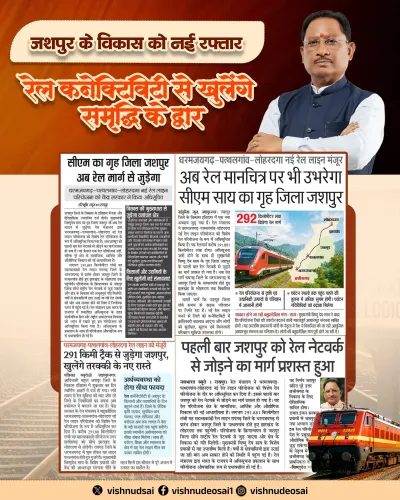
Chhattisgarh Chief Minister Vishnu Deo Sai on 27 June 2026 highlighted the state's accelerating road and rail expansion under the 'double engine government,' saying stronger connectivity is drawing investment, creating jobs, and integrating every district into the development mainstream.
Key Takeaways
Chhattisgarh Chief Minister Vishnu Deo Sai posted on 27 June 2026 highlighting rapid road and rail network expansion in the state.
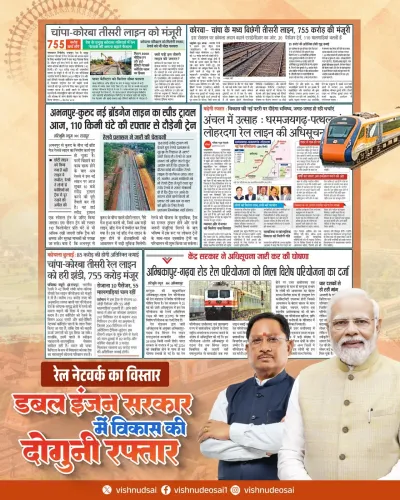
He credited the 'double engine government' — aligned BJP governments at the state and central levels — for accelerating infrastructure development.
Sai stated that improved connectivity is attracting investment and creating new employment opportunities across Chhattisgarh .
The expansion draws on national schemes including Bharatmala Pariyojana (launched 2015) and PM Gati Shakti (launched 2021).
The Chief Minister described a robust transport system as essential to building a 'developed, prosperous and self-reliant Chhattisgarh.' Budget allocations and new investment MoUs linked to connectivity improvements will be key indicators to watch going forward.
Chhattisgarh Chief Minister Vishnu Deo Sai on Saturday, 27 June 2026, underscored the rapid expansion of road and rail networks in the state, crediting the 'double engine government' — aligned BJP administrations at both the state and central levels — for accelerating infrastructure-led development. Sai said improved connectivity is attracting investment, generating employment, and bringing every region of the state into the mainstream of development.
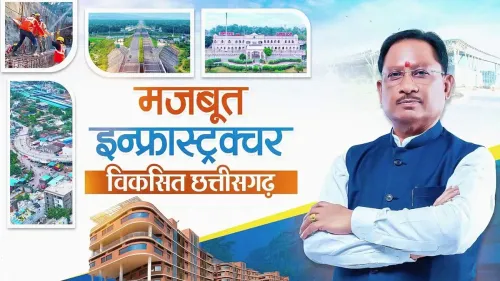
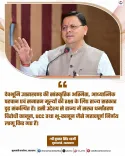
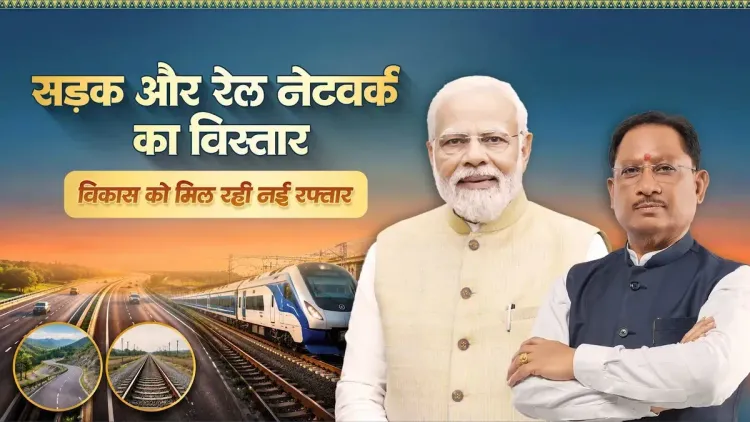
In his post on X, the Chief Minister wrote: 'बेहतर कनेक्टिविटी किसी भी राज्य की प्रगति की मजबूत आधारशिला होती है' ('Better connectivity is the strong foundation of any state's progress'). He added that a robust transport system is continuously providing new momentum to the building of a developed, prosperous and self-reliant Chhattisgarh.
Context
Chhattisgarh, carved out of Madhya Pradesh in November 2000, was created with the explicit goal of enabling focused regional development in a mineral-rich but historically under-connected region. Despite its natural wealth, the state has long faced challenges in linking its interior districts to major economic corridors, limiting the flow of private investment and slowing employment growth.
Chief Minister Vishnu Deo Sai took office in December 2023 following the BJP's victory in the state assembly elections. Since then, his administration has positioned infrastructure expansion as a central pillar of governance, framing connectivity as a prerequisite for industrial growth and social equity.
Policy Backdrop
The push for road and rail expansion in Chhattisgarh draws on two major national frameworks. The Bharatmala Pariyojana, launched by the central government in 2015, is a national highway expansion programme specifically designed to upgrade connectivity in states that have historically lagged in infrastructure investment. Chhattisgarh has been identified as a priority corridor under this scheme.
The PM Gati Shakti initiative, launched in 2021, further integrated roads and railways into a single multimodal infrastructure master plan. Together, these programmes provide the policy and financial scaffolding for the kind of state-level expansion Sai referenced. The 'double engine government' framing — a term BJP leaders use when the same party controls both the state and the centre — is intended to signal faster project clearances and fund flows.
Stakeholders and Impact
The primary beneficiaries of improved connectivity in Chhattisgarh are investors seeking access to the state's mineral and industrial base, local businesses that depend on efficient logistics, and rural communities in districts that have remained isolated from economic activity. Better road and rail links reduce transportation costs, shorten supply chains, and make the state more competitive as an investment destination.
Employment generation is a direct downstream effect highlighted by the Chief Minister. Infrastructure construction itself creates short-term jobs, while the industrial investment that improved connectivity attracts is expected to generate longer-term, more stable employment across sectors.
What's Next
Attention will now turn to state and central budget allocations for ongoing highway and rail projects in Chhattisgarh, as well as any new memoranda of understanding signed with private investors citing improved connectivity as a factor. The pace at which sanctioned projects move from approval to ground-level execution will be the clearest measure of whether the infrastructure momentum Sai described translates into tangible outcomes for the state's economy and its people.
Point of View
Making it simultaneously a governance claim and a political argument. By foregrounding connectivity as the foundation of progress, the Chief Minister is laying the groundwork to credit his administration for any investment inflows or employment gains that follow. The framing also signals to potential industrial investors that Chhattisgarh's project clearance environment is more predictable under aligned governments. Watched against the broader BJP pattern of using physical infrastructure as an electoral and governance anchor in resource-rich but historically under-served states, this post fits a well-established playbook.
NationPress
27 Jun 2026
Frequently Asked Questions
What did Chhattisgarh CM Vishnu Deo Sai say about connectivity?
Chief Minister Vishnu Deo Sai said on 27 June 2026 that better road and rail connectivity is the strong foundation of any state's progress, and that Chhattisgarh is advancing rapidly under the double engine government through expanded transport networks.
What is the 'double engine government' in Chhattisgarh?
'Double engine government' is a term used by BJP leaders to describe a situation where the same party — BJP — controls both the state government and the central government, which they argue leads to faster infrastructure approvals and greater fund flows to the state.
What national schemes are driving road and rail expansion in Chhattisgarh?
Two major central government programmes support Chhattisgarh's infrastructure push: Bharatmala Pariyojana, a national highway expansion scheme launched in 2015, and PM Gati Shakti, a multimodal infrastructure master plan launched in 2021 that integrates road and rail planning.
How does road and rail connectivity help Chhattisgarh's economy?
Improved connectivity lowers logistics costs, makes Chhattisgarh more attractive to private investors, and links interior districts — which are often mineral-rich but isolated — to major economic corridors, supporting both industrial growth and local employment.
When did Vishnu Deo Sai become Chief Minister of Chhattisgarh?
Vishnu Deo Sai became Chief Minister of Chhattisgarh in December 2023 after the BJP won the state assembly elections.