Goyal Highlights 'Made in India' Pride at London Business Plenary
Synopsis
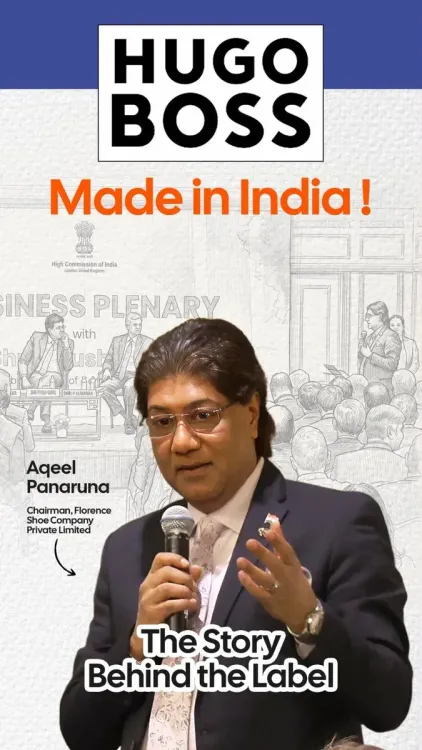
Commerce Minister Piyush Goyal, at a London Business Plenary, highlighted Tamil Nadu entrepreneur Aqeel Panaruna of Florence Shoe Company, whose 'Made in India' Hugo Boss shoes were spotted at Cairo Airport, as a symbol of Indian manufacturing excellence, women's empowerment, and sustainable production driving Brand India globally.
Key Takeaways
Commerce Minister Piyush Goyal attended a Business Plenary Session in London on 27 June 2026 as part of India-UK trade engagement.
Aqeel Panaruna , founder of Florence Shoe Company in Ambur, Tamil Nadu , shared how a luxury Hugo Boss shoe bearing a 'Made in India' label was spotted at Cairo Airport by an international customer.
Florence Shoe Company has championed women's empowerment in manufacturing , large-scale rural employment, and zero liquid discharge sustainable technologies.
The visit is linked to ongoing negotiations for the India-UK Comprehensive Trade and Investment Agreement , which began in January 2022 .
The episode reinforces the Make in India and Atmanirbhar Bharat policy frameworks that position Indian manufacturing at the top tier of global supply chains.
Ambur in Tamil Nadu is a longstanding leather and footwear export cluster central to India's manufacturing export identity.
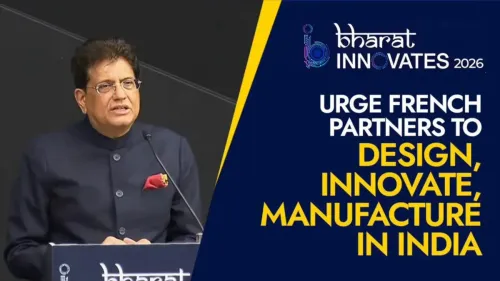
Union Commerce and Industry Minister Piyush Goyal on Saturday, 27 June 2026, spotlighted Indian entrepreneurial excellence at a Business Plenary Session in London, sharing the story of Aqeel Panaruna, founder of Florence Shoe Company from Ambur, Tamil Nadu, as a defining example of what the 'Made in India' label represents on the world stage.
Context
Minister Goyal recounted how an international customer at Cairo Airport spotted a luxury Hugo Boss shoe, checked its label, and found the words 'Made in India' — a product manufactured by Florence Shoe Company. The anecdote, shared by Aqeel Panaruna himself at the London plenary, illustrates how Indian manufacturing has quietly entered the top tier of global luxury supply chains. Goyal quoted Panaruna's experience to make a larger point: 'When you label a product Made in India, you are representing a country.'
Ambur in Tamil Nadu is one of India's oldest and most productive leather and footwear export clusters, with deep roots in export-oriented production for international markets. Florence Shoe Company is among the enterprises from this cluster that have scaled up to supply iconic global brands while maintaining a manufacturing base in rural Tamil Nadu.
Policy Backdrop
The visit comes against the backdrop of ongoing negotiations for a India-UK Comprehensive Trade and Investment Agreement, which both countries formally commenced in January 2022. Post-Brexit, New Delhi has prioritised deeper trade engagement with London to diversify export markets beyond traditional partners, and high-value manufacturing sectors such as footwear and leather are central to that pitch.
The episode also fits squarely within the Make in India initiative, launched in September 2014, which aims to position India as a global manufacturing hub by boosting domestic production and export quality. More recently, the Atmanirbhar Bharat framework has reinforced the emphasis on quality, sustainability, and employment generation as pillars of India's export identity.
Stakeholders and Impact
Minister Goyal highlighted that Florence Shoe Company's work has driven large-scale rural employment, championed women's empowerment in manufacturing, and pioneered sustainable zero liquid discharge technologies — making it a model enterprise beyond mere export volumes. The leather and footwear sector in Tamil Nadu is a significant employer of women workers and rural artisans, and such recognition at an official bilateral platform amplifies the sector's visibility to potential international buyers and investors.
For Indian footwear exporters broadly, the ministerial endorsement at a high-profile London session signals government intent to leverage trade corridor diplomacy to open new doors for mid-sized and small manufacturers who have already demonstrated global quality standards.
What's Next
Progress on the India-UK Comprehensive Trade and Investment Agreement will be closely watched by exporters in sectors ranging from footwear and leather to textiles and engineering goods. Minister Goyal's London engagements are expected to feed into the broader negotiating momentum, with Indian industry participation in upcoming European trade missions likely to follow. If concluded, the agreement could reduce tariff barriers that currently limit the price competitiveness of Indian-made luxury goods in the United Kingdom and, by extension, in other markets where UK-based buyers source globally.
For entrepreneurs like Aqeel Panaruna, and the thousands of manufacturers in clusters like Ambur, the message from the minister is clear: quality and sustainability are no longer just business imperatives — they are the new currency of Brand India's global reputation.
Point of View
Ground-level face on India's pitch to UK buyers and negotiators at a sensitive moment in free trade agreement talks. The Cairo Airport anecdote, whether or not it can be independently verified, serves as an effective narrative device that links rural Indian manufacturing to global luxury consumption, a pairing India has struggled to communicate consistently. It also signals that the government sees sectors like leather and footwear — historically undervalued in trade diplomacy compared to IT or pharmaceuticals — as credible ambassadors for Brand India. The emphasis on women's empowerment and zero liquid discharge technology further positions Indian manufacturing as aligned with the ESG priorities that European buyers increasingly demand.
NationPress
27 Jun 2026
Frequently Asked Questions
Who is Aqeel Panaruna and what is Florence Shoe Company?
Aqeel Panaruna is the founder of Florence Shoe Company , a footwear manufacturer based in Ambur, Tamil Nadu . The company supplies shoes to global luxury brands including Hugo Boss and is known for promoting rural employment, women's empowerment, and sustainable zero liquid discharge manufacturing practices.
What did Piyush Goyal say at the London Business Plenary?
Minister Piyush Goyal quoted Aqeel Panaruna 's account of how a luxury Hugo Boss shoe made by his company was spotted at Cairo Airport bearing a 'Made in India' label, using it to argue that Indian entrepreneurs are elevating Brand India to the top tier of global manufacturing.
What is the India-UK trade agreement and where do negotiations stand?
The India-UK Comprehensive Trade and Investment Agreement negotiations were formally launched in January 2022 . The deal aims to reduce tariffs and deepen trade ties between the two countries, with sectors like footwear, textiles, and pharmaceuticals among those expected to benefit.
Why is Ambur, Tamil Nadu significant for Indian exports?
Ambur is one of India's most prominent leather and footwear manufacturing clusters, with a long history of export-oriented production. Manufacturers from the region supply to international brands and are major employers of women and rural workers in Tamil Nadu.
What is the Make in India initiative?
Make in India is a flagship government initiative launched in September 2014 to boost domestic manufacturing, attract foreign investment, and position India as a global export hub. It underpins policies aimed at improving product quality and expanding India's share in global supply chains.