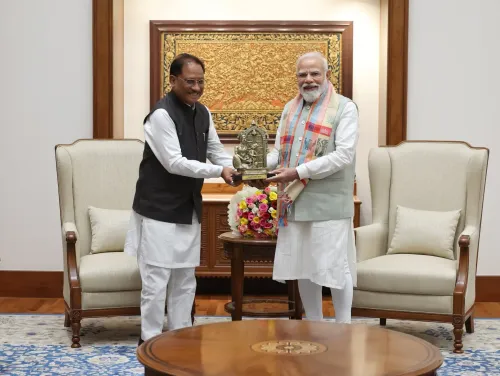
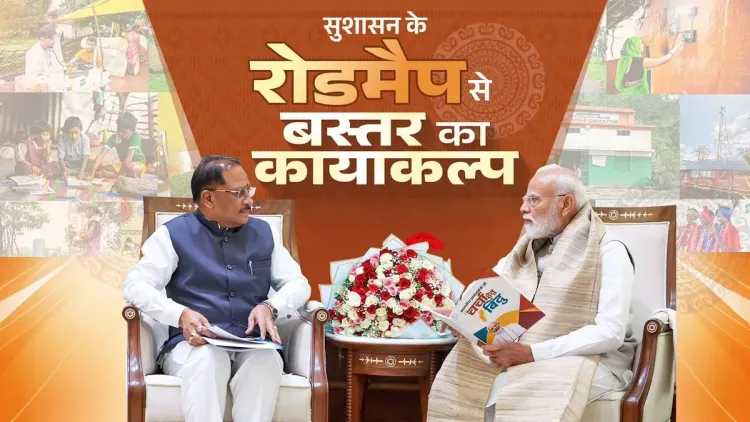
CM Sai Presents Bastar Development Blueprint to PM Modi
Synopsis
Chhattisgarh Chief Minister Vishnu Deo Sai met Prime Minister Narendra Modi in New Delhi to present a detailed development blueprint for Bastar, the tribal-dominated southern region historically affected by Left Wing Extremism, reaffirming the state's commitment to inclusive growth and self-reliance.
Key Takeaways
CM Vishnu Deo Sai met PM Narendra Modi in New Delhi to present a detailed development blueprint for Bastar .
Bastar is a tribal-dominated region in southern Chhattisgarh historically impacted by Left Wing Extremism and underdevelopment.
The BJP government, in power in Chhattisgarh since December 2023 , has prioritised Bastar as a zone for development-led peace-building.
The blueprint focuses on good governance, public trust, and inclusive development to achieve 'self-reliance' for the region's tribal communities.
Central funding approvals and scheme rollouts following the meeting will determine whether the blueprint translates into ground-level change.
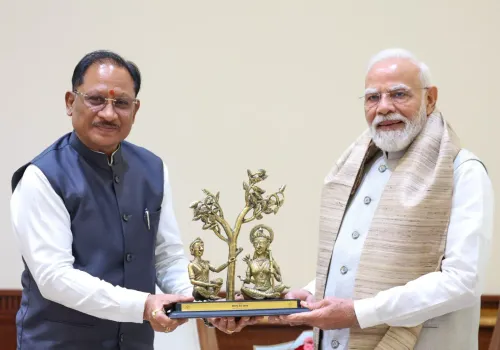
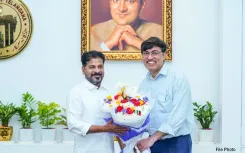
A region once defined by insurgency and isolation is now being pitched at the highest level of government as a story of transformation. Chhattisgarh Chief Minister Vishnu Deo Sai met Prime Minister Narendra Modi in New Delhi and presented a comprehensive development blueprint for Bastar — the tribal heartland of southern Chhattisgarh that has spent decades at the centre of India's Left Wing Extremism crisis.
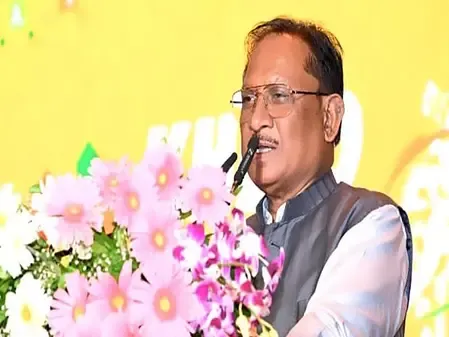
In a post on X, CM Sai wrote: 'Bastar aaj vikas, vishwas aur nayi sambhavnaon ke saath ujjwal bhavishya ki or tezi se aage badh raha hai' — 'Bastar today is moving rapidly towards a bright future with development, trust, and new possibilities.' He described sharing a 'detailed blueprint of the holistic development of a changing Bastar' before the Prime Minister, and reaffirmed the state government's commitment to taking the region to 'new heights of progress, prosperity, and self-reliance through good governance, public trust, and inclusive development.'
Bastar's Long Road from Red Corridor to Development Agenda
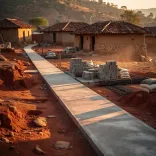
Bastar — a cluster of districts spanning dense forests and tribal settlements in southern Chhattisgarh — has been the most contested terrain in India's decades-long battle against Maoist insurgency. Security operations, displacement, and administrative neglect left the region chronically underdeveloped even as the rest of the country modernised. Connectivity, healthcare, education, and economic opportunity remained scarce for its predominantly tribal population.
When the BJP returned to power in Chhattisgarh in December 2023, the new government under CM Sai — himself from a tribal background — flagged Bastar as a priority zone for what it frames as development-led peace-building. The approach mirrors a broader strategy by BJP-governed states in central India: pair security operations with infrastructure investment, welfare delivery, and trust-building with local communities to erode the conditions that historically fuelled insurgency.
Why a Blueprint Lands on the PM's Desk
Presenting a state-level development plan directly to the Prime Minister signals more than routine coordination. It is a bid for central government alignment — and, crucially, for central funding and scheme approvals that can accelerate rollout on the ground. Major infrastructure pushes in tribal and former Naxal-affected districts typically draw on centrally sponsored schemes covering roads, housing, digital connectivity, and livelihood programmes.
The meeting also carries political weight. Bastar's transformation — or its credible promise — is a flagship narrative for the BJP in Chhattisgarh, one that connects state governance to the Centre's broader 'Viksit Bharat' ('Developed India') vision. For CM Sai, the New Delhi visit is both a policy exercise and a signal to tribal communities that their region commands attention at the top.
The specific contents of the blueprint — project timelines, funding asks, sectoral priorities — have not been made public. What follows this meeting, in state assembly sessions or budget announcements, will be the real measure of momentum.
Point of View
A tribal leader himself, direct engagement with the Prime Minister on Bastar positions him as a credible bridge between New Delhi's ambitions and the region's ground realities. The move also signals that the Chhattisgarh government is seeking central resources and political cover for an ambitious transformation agenda in a region where past promises have often stalled. The real test will be whether specific scheme approvals and funding commitments follow the blueprint meeting.
NationPress
3 Aug 2026
Frequently Asked Questions
What did CM Vishnu Deo Sai present to PM Modi in New Delhi?
CM Vishnu Deo Sai presented a comprehensive development blueprint for Bastar, covering holistic and inclusive growth for the tribal-dominated region in southern Chhattisgarh.
Why is Bastar significant for Chhattisgarh's development?
Bastar is a tribal heartland historically affected by Left Wing Extremism and chronic underdevelopment. The BJP-led state government has identified it as a priority area for development-led peace-building since coming to power in December 2023.
What is the BJP's approach to Bastar's development?
The BJP government frames Bastar's development through good governance, public trust, and inclusive growth — pairing security operations with infrastructure investment and welfare delivery to build lasting peace.
Who is Vishnu Deo Sai?
Vishnu Deo Sai is the Chief Minister of Chhattisgarh and a BJP leader who assumed office in December 2023. He comes from a tribal background, making his focus on Bastar's tribal communities particularly significant.
What could follow the Bastar blueprint meeting with PM Modi?
Central government funding approvals, scheme sanctions for tribal welfare and connectivity, and state-level rollout timelines announced in Chhattisgarh's assembly or budget sessions are the key developments to watch.