CM Sai: Pressurised Irrigation Comes to Jashpur Under PMKSY
Synopsis
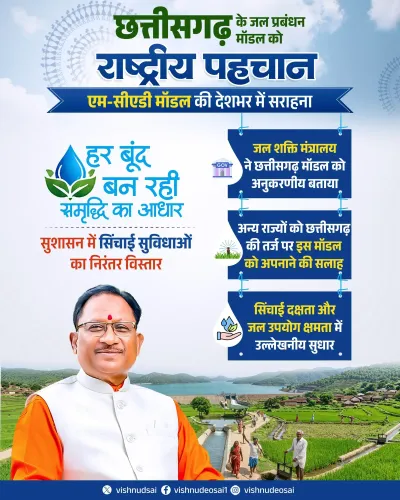
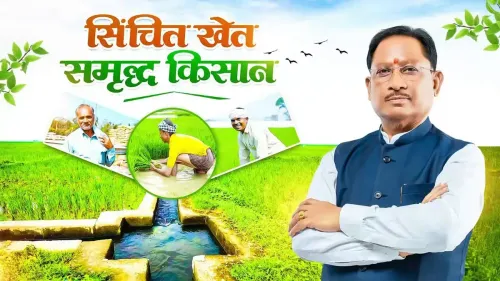
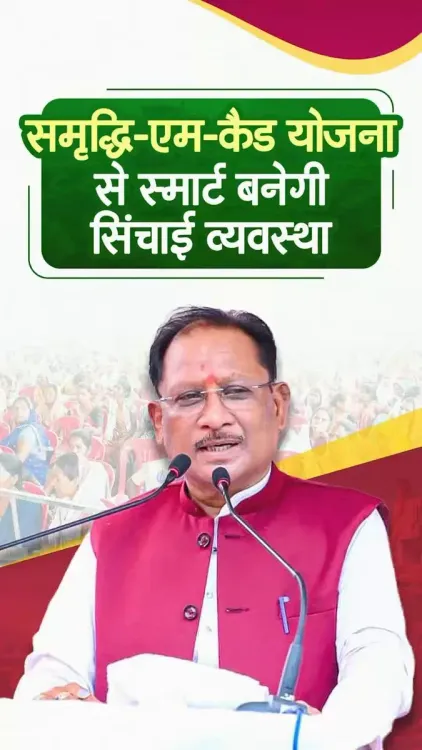
The Chhattisgarh CMO announced on 20 June 2026 that a modern pressurised irrigation system is being developed in tribal-dominated Jashpur district through the Samriddhi-M-CAD scheme under the centrally sponsored PMKSY, aimed at giving farmers more reliable and efficient water access.
Key Takeaways
The Chief Minister's Office of Chhattisgarh announced on 20 June 2026 that pressurised irrigation is being developed in Jashpur district .
The project is being implemented through the state's Samriddhi-M-CAD scheme, aligned with the central government's Pradhan Mantri Krishi Sinchayee Yojana (PMKSY) .
PMKSY was launched in July 2015 under the objectives of 'Har Khet Ko Pani' and 'Per Drop More Crop'.
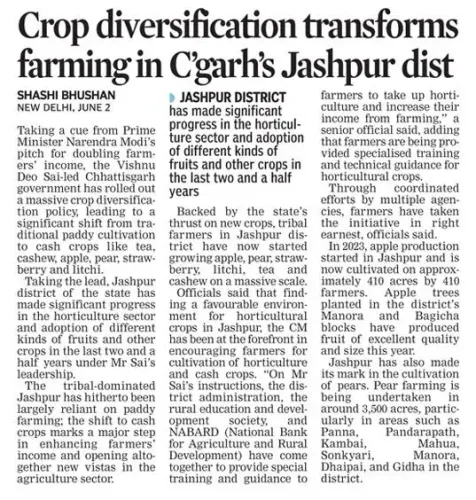
Jashpur is a tribal-dominated district in northern Chhattisgarh where rain-fed agriculture is prevalent, making assured irrigation particularly significant.
Pressurised systems reduce water conveyance losses and are suited to the hilly terrain of Jashpur , potentially enabling a second cropping season for farmers.
Chief Minister Vishnu Deo Sai credited Prime Minister Narendra Modi 's leadership for the national irrigation modernisation push underpinning the project.
The Chief Minister's Office of Chhattisgarh announced on Saturday, 20 June 2026 that a modern pressurised irrigation system is being developed in Jashpur district under the Samriddhi-M-CAD scheme, as part of the centrally sponsored Pradhan Mantri Krishi Sinchayee Yojana (PMKSY). Chief Minister Vishnu Deo Sai attributed the initiative to the national irrigation modernisation drive led by Prime Minister Narendra Modi.
Context
The CMO post, signed by Chief Minister Vishnu Deo Sai, states: 'Jashpur jile mein Samriddhi-M-CAD yojana ke madhyam se aadhunik dabित (pressure) sinchai pranali ka vikas kiya ja raha hai' — ('In Jashpur district, a modern pressurised irrigation system is being developed through the Samriddhi-M-CAD scheme'). The announcement frames this as a direct outcome of PMKSY, which the central government has been implementing since 2015 to expand irrigation access and improve water-use efficiency across states.
Jashpur is a tribal-dominated district in northern Chhattisgarh where agriculture has historically depended on rain-fed conditions and lift irrigation. The introduction of pressurised micro-irrigation is intended to give farmers more reliable and efficient access to water for their crops.
Policy Backdrop
PMKSY was launched in July 2015 under the twin objectives of 'Har Khet Ko Pani' ('Water to Every Field') and 'Per Drop More Crop'. The scheme channels central funds to states for micro-irrigation infrastructure, command area development (CAD), and modernisation of water delivery networks. Chhattisgarh has been a participant since the scheme's inception, integrating district-level irrigation projects with national funding.
The Samriddhi-M-CAD component referenced in the post represents the state government's effort to operationalise the CAD and micro-irrigation pillars of PMKSY at the district level. Pressurised systems — which deliver water through pipes under controlled pressure — reduce conveyance losses compared to conventional canal or flood irrigation, making them particularly suited to hilly and undulating terrain such as that found in Jashpur.
Stakeholders and Impact
The primary beneficiaries are farmers in Jashpur district, including a significant proportion of tribal cultivators who have limited access to assured irrigation. Pressurised systems can enable cultivation of a wider range of crops and support a second cropping season, potentially improving household incomes.
State-level implementation agencies and district agricultural departments are the key institutional actors responsible for rolling out the infrastructure. The alignment of state schemes like Samriddhi-M-CAD with central funding under PMKSY also reflects the cooperative federalism model that the BJP-led governments at both the centre and in Chhattisgarh have emphasised in agricultural policy communications.
What's Next
Progress on the Samriddhi-M-CAD project in Jashpur will be tracked through annual PMKSY progress reports for Chhattisgarh. Any additional state budget allocations for pressurised irrigation in the 2026-27 fiscal year will indicate the scale of the state's commitment beyond the central scheme's funding envelope.
If the Jashpur model demonstrates measurable gains in water-use efficiency and crop productivity, it could serve as a template for replication in other rain-fed and tribal districts across Chhattisgarh — and potentially inform how other states adapt PMKSY components to similar agro-ecological conditions.
Point of View
Reinforcing the narrative that central schemes under PM Modi are delivering tangible agricultural infrastructure at the district level. Targeting Jashpur — a tribal district — signals an intent to demonstrate inclusive development in constituencies that have historically been underserved by irrigation networks. The framing of a state scheme (Samriddhi-M-CAD) as an instrument of a central flagship (PMKSY) reflects a broader pattern of state governments aligning their own programmes with New Delhi's branding to maximise both funding access and political credit. The real test will be in verified on-ground progress and farmer uptake data, which the post does not yet provide.
NationPress
20 Jun 2026
Frequently Asked Questions
What is the Samriddhi-M-CAD scheme in Chhattisgarh?
Samriddhi-M-CAD is a Chhattisgarh state initiative designed to develop pressurised micro-irrigation and command area development infrastructure, implemented as part of the centrally sponsored Pradhan Mantri Krishi Sinchayee Yojana (PMKSY).
What is PMKSY and when was it launched?
Pradhan Mantri Krishi Sinchayee Yojana (PMKSY) is a centrally sponsored scheme launched in July 2015 with the twin objectives of 'Har Khet Ko Pani' (water to every field) and 'Per Drop More Crop', aimed at expanding irrigation coverage and improving water-use efficiency across India.
Why is pressurised irrigation important for Jashpur district?
Jashpur is a tribal-dominated district in northern Chhattisgarh where agriculture has largely depended on rain-fed conditions. Pressurised irrigation systems reduce water loss during delivery and are well-suited to the district's hilly terrain, potentially enabling more reliable crop cultivation and a second cropping season.
Who is the Chief Minister of Chhattisgarh?
Vishnu Deo Sai has been the Chief Minister of Chhattisgarh since December 2023, leading the BJP state government.
How does Chhattisgarh benefit from PMKSY?
Chhattisgarh has participated in PMKSY since its inception in 2015, receiving central funds to develop micro-irrigation infrastructure and modernise water delivery networks across districts, including tribal and rain-fed regions such as Jashpur.