CM Sai Hails National Recognition for Chhattisgarh Water Model
Synopsis
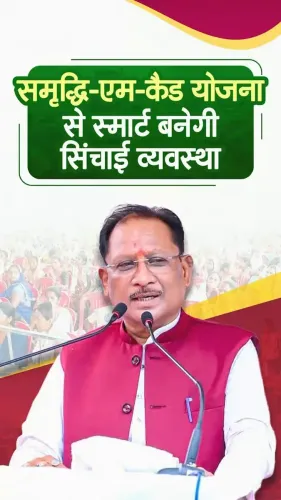
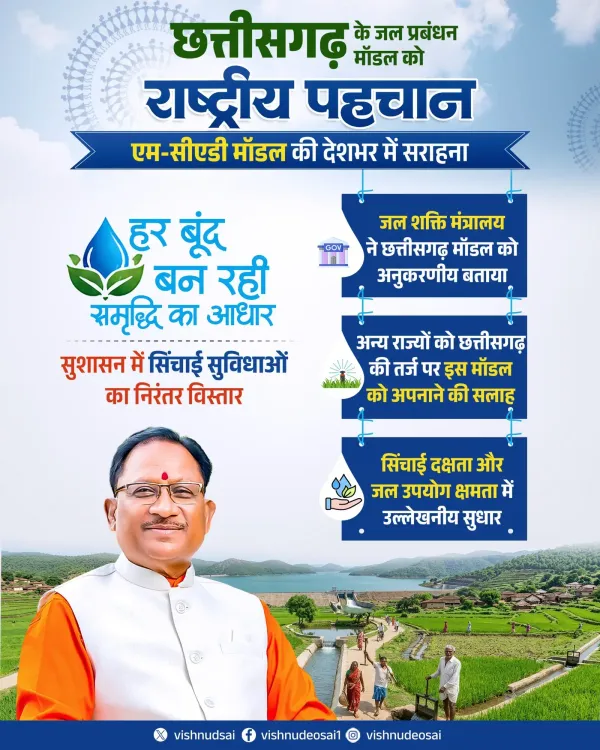
Chhattisgarh Chief Minister Vishnu Deo Sai announced on June 7, 2026 that the Ministry of Jal Shakti has appreciated the state's M-CAD water management model, calling it proof of the government's farmer-centric governance and positioning Chhattisgarh as a replicable national example in irrigation and water resource management.
Key Takeaways
CM Vishnu Deo Sai announced on June 7, 2026 that Chhattisgarh's water management model has received national recognition.
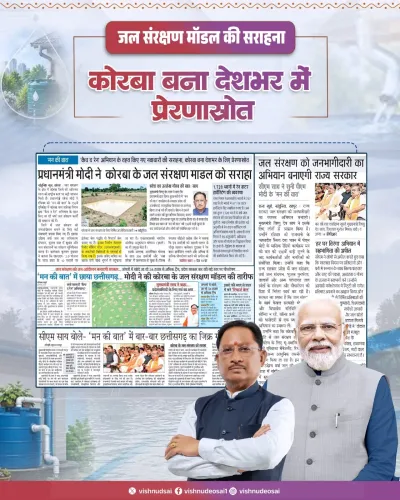
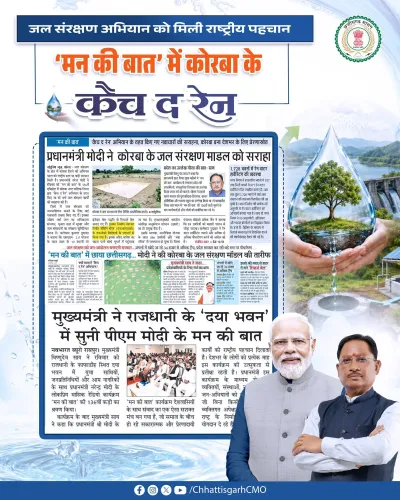
The Ministry of Jal Shakti appreciated the state's M-CAD model for effective water resource management and irrigation expansion.
CM Sai described the recognition as proof of the state's commitment to good governance and farmer-centric development .
Chhattisgarh is being positioned as an exemplary, replicable model for other states under the cooperative federalism framework.
The development aligns with central schemes including Pradhan Mantri Krishi Sinchayee Yojana (2015) and Jal Jeevan Mission (2019) .
Farmers and irrigation-dependent cultivators across the state are the primary intended beneficiaries of the model's expansion.
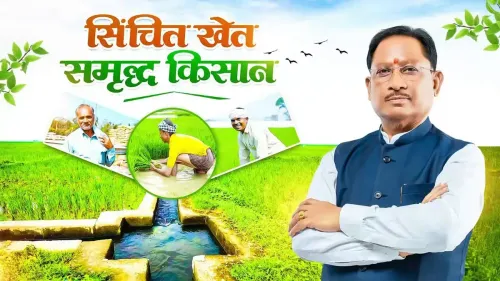
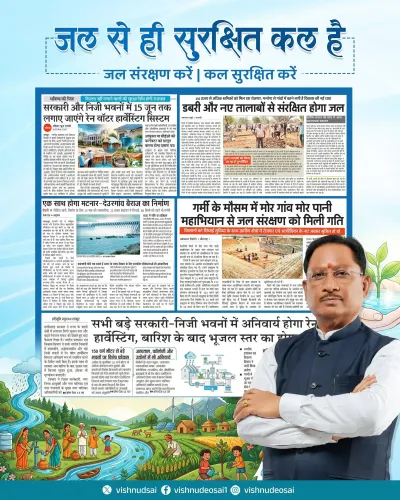
Chhattisgarh Chief Minister Vishnu Deo Sai on Sunday, June 7, 2026, credited the state's water management approach with earning national recognition, saying the Ministry of Jal Shakti's appreciation of the M-CAD model reflects the government's commitment to good governance and farmer-centric development.
Posting on X, CM Sai wrote: 'छत्तीसगढ़ के जल प्रबंधन मॉडल को मिली राष्ट्रीय पहचान सुशासन और किसान-केंद्रित विकास की हमारी प्रतिबद्धता का प्रमाण है' — translated: 'The national recognition received by Chhattisgarh's water management model is proof of our commitment to good governance and farmer-centric development.' He added that the Jal Shakti Ministry's appreciation of the M-CAD model signals that Chhattisgarh is emerging as an exemplary model for the country in effective water resource management, expansion of irrigation facilities, and agricultural prosperity.
Context
The M-CAD model refers to a water management framework adopted in Chhattisgarh aimed at improving canal-based irrigation delivery and agricultural water-use efficiency. The Ministry of Jal Shakti, the nodal central authority for water resources and irrigation policy, has acknowledged the state's approach, positioning Chhattisgarh as a replicable example for other states grappling with irrigation challenges.
Chhattisgarh is a largely agrarian state in central India with a significant tribal and farming population that depends heavily on canal and rain-fed irrigation. Reliable water access is a critical determinant of agricultural output and rural incomes across the state.
Policy Backdrop
The recognition aligns with two major central schemes. The Pradhan Mantri Krishi Sinchayee Yojana, launched in 2015, set out to expand irrigated area and improve water-use efficiency at the farm level. The Jal Jeevan Mission, launched in 2019, further emphasised source sustainability and micro-irrigation practices across states.
Under the framework of cooperative federalism, central ministries periodically spotlight state-level innovations in water management to encourage replication elsewhere. Chhattisgarh's irrigation expansion effort fits squarely within the national emphasis on agricultural resilience and efficient resource use, particularly in eastern and central Indian states where irrigation infrastructure has historically lagged.
Stakeholders and Impact
The primary beneficiaries of an expanded and better-managed irrigation network are Chhattisgarh's farming communities, especially smallholder and tribal cultivators who lack the means to invest in private water infrastructure. Improved canal delivery and water scheduling directly affect crop yields, cropping intensity, and rural incomes.
State irrigation officials and water resource departments stand to receive additional technical and financial support if the M-CAD model is formally incorporated into central scheme guidelines or highlighted at national water conferences. Other states with similar agro-climatic profiles may also look to Chhattisgarh's experience as a template.
What's Next
The state government is expected to build on this recognition to seek greater convergence with centrally sponsored irrigation and water schemes. Possible next steps include presenting the M-CAD framework at national-level water management forums and exploring inter-state knowledge-sharing arrangements facilitated by the Ministry of Jal Shakti.
Whether the model finds its way into upcoming central or state irrigation budget allocations will be a key indicator of how far the national recognition translates into tangible policy and financial support for Chhattisgarh's water sector.
Point of View
' the BJP-led state government is signalling its alignment with the Centre's irrigation and water-security agenda. The recognition also serves a cooperative federalism dynamic, where states compete for central visibility by demonstrating policy innovation. If the M-CAD model is formally adopted or referenced in central scheme guidelines, it would mark a significant policy win for the Sai administration and could unlock additional irrigation funding for the state.
NationPress
19 Sept 2026
Frequently Asked Questions
What is the M-CAD water management model in Chhattisgarh?
The M-CAD model is a water management framework adopted by Chhattisgarh to improve canal-based irrigation delivery and agricultural water-use efficiency. The exact technical components are under review at the central level, with the Ministry of Jal Shakti having appreciated its approach to effective water resource management.
Why did the Ministry of Jal Shakti appreciate Chhattisgarh's water model?
The Ministry of Jal Shakti appreciated Chhattisgarh's M-CAD model for its effective approach to water resource management, irrigation expansion, and contribution to agricultural prosperity, signalling it as a replicable example for other states.
Who is Vishnu Deo Sai?
Vishnu Deo Sai is the Chief Minister of Chhattisgarh and a senior BJP leader. He has focused his administration on agriculture, tribal welfare, and governance initiatives since taking office.
How does Chhattisgarh's irrigation model relate to central government schemes?
Chhattisgarh's water management efforts align with the Pradhan Mantri Krishi Sinchayee Yojana launched in 2015 and the Jal Jeevan Mission launched in 2019, both of which aim to expand irrigation access and improve water-use efficiency across Indian states.
What are the benefits of the Chhattisgarh water model for farmers?
The model aims to improve canal water delivery and scheduling, which directly benefits smallholder and tribal farmers in Chhattisgarh by increasing crop yields, enabling more cropping cycles per year, and reducing dependence on erratic rainfall.