CM Sai Thanks Centre, Forces for Historic Naxal Elimination Win
Synopsis
Chhattisgarh Chief Minister Vishnu Deo Sai formally thanked the Central Government and security forces in the state assembly on 14 July 2026 for achieving historic success in Naxal elimination, spotlighting years of coordinated counter-insurgency operations in one of India's most LWE-affected states.
Key Takeaways
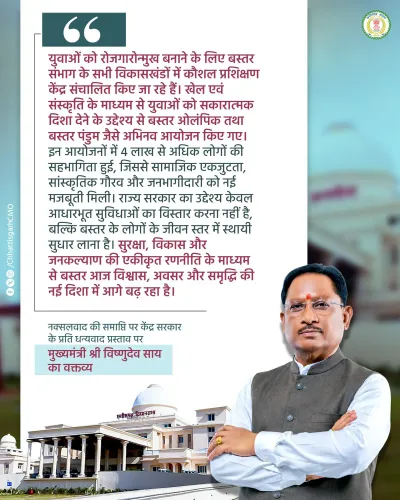
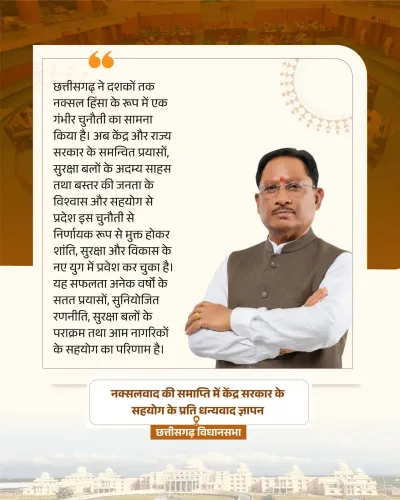
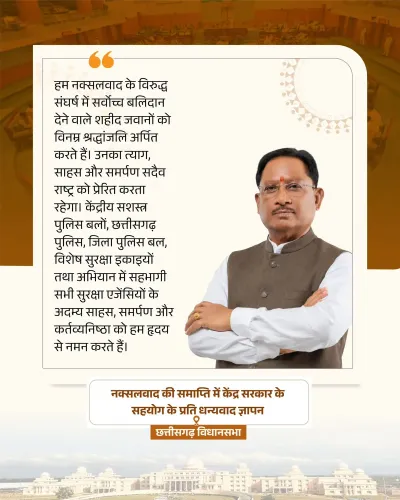
CM Vishnu Deo Sai expressed gratitude to the Central Government and security forces on the floor of the Chhattisgarh Legislative Assembly on 14 July 2026 .
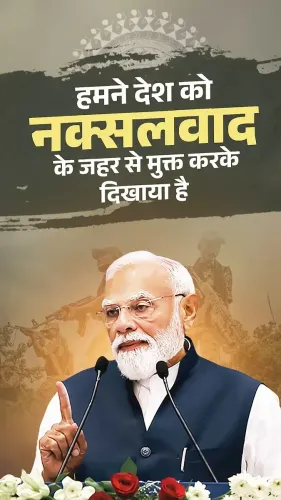
The acknowledgement was specifically for what he termed 'historic success in Naxal elimination' ( naxal unmulan ki aitihasik safalta ).
Chhattisgarh has been one of India's most severely affected states under Left Wing Extremism , with violence concentrated in its southern and central tribal districts.
The Union government's National Policy and Action Plan for LWE (2015) and coordinated operations like Operation Prahar and Operation Thunder formed the policy backbone of this campaign.
By 2023 , 44 districts across affected states had been declared Naxal-free, with Chhattisgarh as a key contributor.
The next benchmark will be the Ministry of Home Affairs annual LWE report and any fresh district re-categorisation notifications.
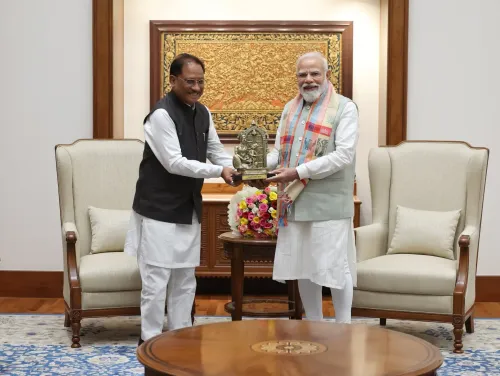
Chhattisgarh Chief Minister Vishnu Deo Sai on Tuesday, 14 July 2026 expressed gratitude to the Central Government and security forces for what he described as a historic success in Naxal elimination, making the announcement during a session of the Chhattisgarh Legislative Assembly. The Chief Minister also addressed other significant matters before the House, signalling a broad legislative agenda for the session.
Context
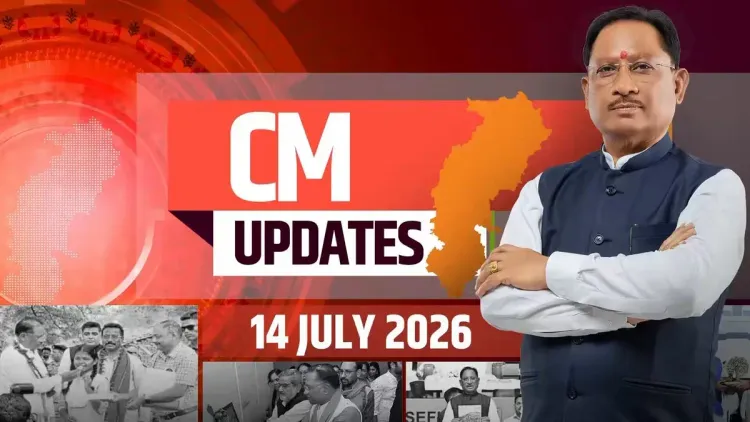
In his post on X, CM Sai summarised his assembly-floor remarks under the heading 'CM Updates', stating that he had conveyed thanks to the central government and security forces for 'naxal unmulan ki aitihasik safalta' — 'the historic success in Naxal elimination'. The reference signals that the Chief Minister formally placed this achievement on the legislative record, lending it institutional weight beyond routine administrative communication.
Chhattisgarh has for decades been among the states most severely affected by Left Wing Extremism (LWE), with violence concentrated in its southern and central districts. The state's tribal belt formed a core section of what security planners historically called the Red Corridor, stretching across central and eastern India.
Policy Backdrop
The Union government's National Policy and Action Plan for LWE (2015), administered through the Ministry of Home Affairs, outlined a multi-pronged strategy combining kinetic security operations, infrastructure development, and rehabilitation of surrendered cadres. Chhattisgarh subsequently launched coordinated operations — including Operation Prahar and Operation Thunder between 2018 and 2021 — that progressively reduced active Naxal cadres and helped liberate villages that had long been under insurgent influence.
By 2023, the Union government had declared 44 districts across affected states as Naxal-free, with Chhattisgarh contributing significantly to the reduction of highly affected districts. The Ministry of Home Affairs had also set an internal target for substantial LWE elimination by the 2025–26 period, against which the assembly statement appears to mark a milestone.
Stakeholders and Impact
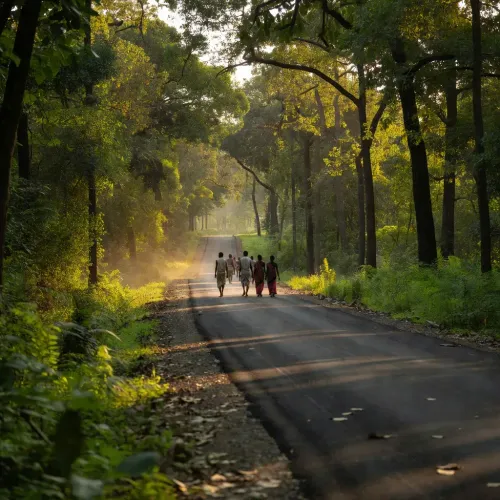
The most direct beneficiaries of reduced Naxal activity are the tribal communities of Chhattisgarh, who have borne the brunt of insurgent violence, forced displacement, and disrupted access to government welfare schemes for decades. Restored security in formerly affected villages opens pathways for infrastructure projects, healthcare delivery, and educational access that were previously impeded.
The combined security forces — comprising the Chhattisgarh Police, the Central Reserve Police Force (CRPF), the Border Security Force (BSF), and other central paramilitary units — have sustained prolonged counter-insurgency deployments in difficult terrain. CM Sai's public acknowledgement in the assembly is a formal recognition of their operational role. The broader pattern of BJP-governed states and the BJP-led Union government coordinating on LWE reduction has been a consistent feature of internal security policy in recent years.
What's Next
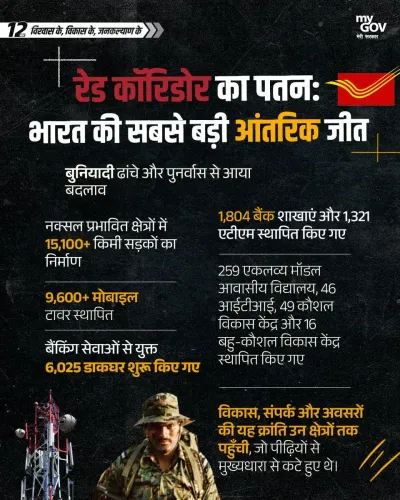
Attention will now turn to the Ministry of Home Affairs annual report on LWE violence, which tracks district-wise incident data and is the standard benchmark for assessing ground-level progress. Any fresh notification re-categorising Chhattisgarh districts out of the highly-affected or affected lists would formally codify the gains the Chief Minister referenced in the assembly. Development and rehabilitation programmes in newly secured areas — including road connectivity, banking access, and mobile infrastructure — will be the next test of whether security gains translate into lasting civilian benefit.
Point of View
Reinforcing BJP's internal-security credentials ahead of future electoral cycles. The public gratitude directed at the Centre also underscores the cooperative federal model the BJP has cultivated between state and Union governments on LWE — a contrast it has consistently drawn with previous administrations. At the same time, framing security gains as 'historic' in the assembly carries implicit pressure on the administration to deliver visible development dividends in newly secured tribal areas, where the absence of welfare infrastructure could otherwise allow grievances to resurface. The broader LWE narrative is shifting from crisis management to consolidation, and Chhattisgarh is being positioned as the flagship proof-of-concept for that transition.
NationPress
15 Jul 2026
Frequently Asked Questions
What did Chhattisgarh CM Vishnu Deo Sai say about Naxal elimination in the assembly?
CM Vishnu Deo Sai expressed formal gratitude to the Central Government and security forces during the Chhattisgarh Legislative Assembly session on 14 July 2026 for achieving what he called a historic success in Naxal elimination in the state.
What is the current status of Naxal activity in Chhattisgarh?
Chhattisgarh has seen a significant reduction in Left Wing Extremism over recent years. By 2023, the Union government had declared 44 districts across affected states as Naxal-free, with Chhattisgarh contributing substantially to that reduction through coordinated security operations.
Which security forces are involved in anti-Naxal operations in Chhattisgarh?
Anti-Naxal operations in Chhattisgarh involve a combination of the state police, the Central Reserve Police Force (CRPF), the Border Security Force (BSF), and other central paramilitary units deployed across the state's southern and central districts.
What is the Union government's policy on Left Wing Extremism?
The Union government's National Policy and Action Plan for LWE, introduced in 2015 by the Ministry of Home Affairs, outlines a multi-pronged approach combining security operations, infrastructure development, and rehabilitation of surrendered cadres to eliminate Naxal influence.
Who is Vishnu Deo Sai and which party does he belong to?
Vishnu Deo Sai is a BJP leader who has served as the Chief Minister of Chhattisgarh since December 2023, following the BJP's victory in the state assembly elections held that year.