CM Saini Hails PM Modi's Mann Ki Baat on Sports, Heritage, Ganga
Synopsis
Haryana Chief Minister Nayab Singh Saini on 31 May 2026 highlighted PM Modi's Mann Ki Baat episode covering heatwave health advisories, a Men's 100m national record, return of Chola-era copper plates from the Netherlands, the Gyan Bharatam Abhiyan, and a Namami Gange dolphin rescue ambulance initiative.
Key Takeaways
CM Nayab Singh Saini publicly endorsed the themes of PM Modi 's Mann Ki Baat episode aired on 31 May 2026 .
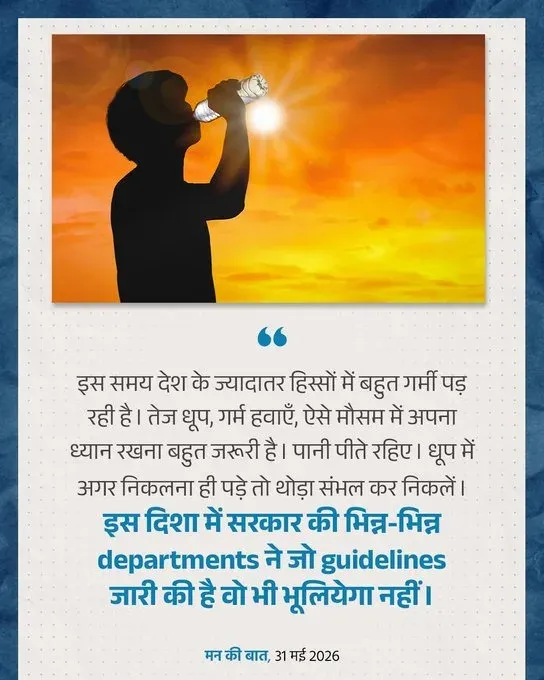
PM Modi issued a health advisory urging citizens to guard against heatwave-related illness during peak summer.
Indian athletes were congratulated for setting a new national record in the Men's 100 Metre Race ; the Aluva, Kerala swimming club was cited as a grassroots sports model.
Ancient Chola-era copper plates returned from the Netherlands were described as a significant cultural heritage achievement.
The Gyan Bharatam Abhiyan was highlighted as a platform to transmit classical Indian knowledge and astronomy to younger generations.
A dolphin rescue ambulance under the Namami Gange Abhiyan was presented as an innovative step in Ganga biodiversity conservation.
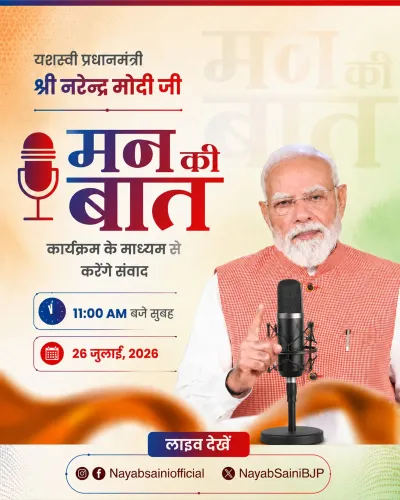
Haryana Chief Minister Nayab Singh Saini on Sunday, 31 May 2026 lauded Prime Minister Narendra Modi's monthly Mann Ki Baat address, highlighting the programme's focus on heatwave health advisories, youth sports achievements, cultural heritage repatriation, and river conservation.
Context
In his post, CM Saini summarised the key themes of the latest Mann Ki Baat episode, describing them as 'extremely useful for society and the nation.' He noted that PM Modi urged citizens to take special care of their health during intense summer heat and heatwaves — a timely advisory as large parts of India experience severe pre-monsoon temperatures.
The Chief Minister also highlighted the Prime Minister's congratulations to Indian athletes for setting a new national record in the Men's 100 Metre Race, and praised local sporting initiatives such as the swimming club in Aluva, Kerala, as models for encouraging youth participation in fitness and sport.
Policy Backdrop
Mann Ki Baat is a monthly radio programme launched in October 2014 that PM Modi uses for direct outreach to citizens on public interest issues, government schemes, and social themes. Over successive episodes, the programme has consistently spotlighted cultural repatriation, sports excellence, and environmental conservation as pillars of national development.
The return of ancient Chola-era copper plates from the Netherlands — cited by PM Modi in this episode — fits within a broader government push to recover Indian heritage artefacts from foreign collections. Similarly, the Namami Gange Abhiyan, launched in 2014 as an integrated Ganga conservation mission, continues to expand its scope, with the dolphin rescue ambulance initiative cited as a recent example of biodiversity-focused innovation under the programme.
The Gyan Bharatam Abhiyan was referenced as a vehicle for transmitting India's ancient knowledge traditions — including classical astronomy — to younger generations, reflecting the government's emphasis on linking heritage with contemporary education.
Stakeholders and Impact
Indian athletes and sports administrators stand to benefit from the national visibility that Mann Ki Baat provides to grassroots achievements. The recognition of the Aluva swimming club underscores how community-level sports infrastructure is being encouraged as part of a wider fitness push among youth.
Heritage researchers and cultural institutions involved in artefact repatriation gain policy momentum from the Prime Minister's public endorsement. Communities along the Ganga river, as well as riverine biodiversity advocates, are direct stakeholders in the dolphin rescue and conservation measures highlighted under Namami Gange.
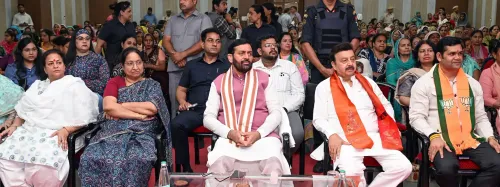
CM Saini's amplification of these themes from Haryana signals that state governments are expected to echo and implement the outreach messages delivered through the programme at the ground level.
What's Next
Subsequent Mann Ki Baat episodes are likely to track progress on the Gyan Bharatam Abhiyan rollout and report on further artefact repatriations from international institutions. The dolphin rescue ambulance initiative under Namami Gange will be watched as a benchmark for biodiversity monitoring across Ganga basin states. State governments, including Haryana, may be expected to align local sports and fitness programmes with the youth outreach themes set by the Prime Minister's address, reinforcing the pattern of centre-to-state policy signalling that Mann Ki Baat has established over more than a decade.
Point of View
Athletic glory, heritage repatriation, and river ecology — are carefully calibrated to cut across demographic lines, appealing simultaneously to health-conscious citizens, sports fans, cultural nationalists, and environmentalists. Saini's enthusiastic endorsement also serves a local purpose: it positions the Haryana government as an active relay of central welfare messaging ahead of any forthcoming state-level programme announcements. The pattern of successive Mann Ki Baat episodes building a cumulative policy narrative — from artefact returns to Ganga conservation milestones — suggests a deliberate long-arc communications strategy rather than episodic commentary.
NationPress
15 Oct 2026
Frequently Asked Questions
What did PM Modi say in Mann Ki Baat on 31 May 2026?
PM Modi's Mann Ki Baat on 31 May 2026 covered heatwave health precautions, congratulations to athletes for a Men's 100m national record, the return of Chola-era copper plates from the Netherlands, the Gyan Bharatam Abhiyan for ancient knowledge, and a Namami Gange dolphin rescue ambulance initiative.
Why did Haryana CM Nayab Singh Saini comment on Mann Ki Baat?
CM Saini shared a summary of PM Modi's Mann Ki Baat episode to amplify the programme's public interest themes — sports, heritage, health, and environment — to his social media audience, in line with BJP state leaders regularly echoing central government outreach.
What is the Namami Gange dolphin rescue ambulance?
The dolphin rescue ambulance is an initiative under the Namami Gange Abhiyan, the central government's Ganga conservation programme launched in 2014, aimed at protecting riverine biodiversity including the endangered Gangetic dolphin.
What is the Gyan Bharatam Abhiyan?
The Gyan Bharatam Abhiyan is a government initiative focused on preserving and disseminating India's ancient knowledge traditions, including classical astronomy and scholarly heritage, to new generations.
What are the Chola-era copper plates returned from the Netherlands?
PM Modi referenced the return of ancient copper plates dating to the Chola period from the Netherlands as a significant achievement in India's ongoing efforts to repatriate cultural heritage artefacts held abroad.