CM Saini marks 11 years of Digital India under PM Modi

Synopsis
Haryana Chief Minister Nayab Singh Saini marked the 11th anniversary of the Digital India programme on 1 July 2026, praising PM Narendra Modi's leadership in building a digitally empowered society and knowledge-based economy through the landmark 2015 initiative.
Key Takeaways
Haryana Chief Minister Nayab Singh Saini posted on X on 1 July 2026 to mark 11 years of Digital India .
The Digital India programme was launched on 1 July 2015 by Prime Minister Narendra Modi .
The initiative consolidated the National e-Governance Plan of 2006 and added pillars including broadband highways and e-Kranti .
Saini described the programme as a 'historic journey' toward a digitally empowered society and a knowledge-based economy.
Haryana has aligned state administrative reforms with central digital frameworks, including Common Service Centres and Aadhaar-linked DBT .
Stakeholders include Indian citizens , MSMEs , and state governments using digital tools for transparent service delivery.
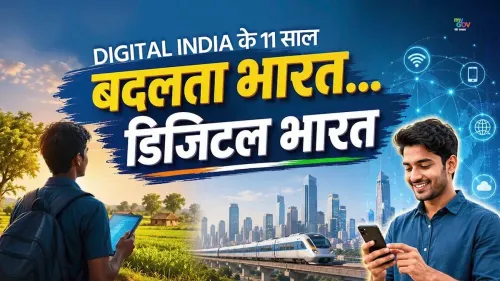
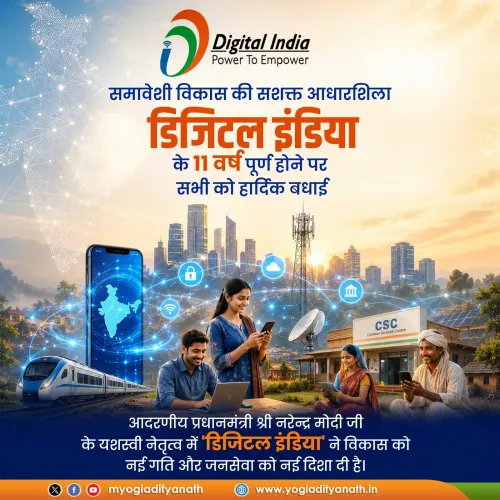
Haryana Chief Minister Nayab Singh Saini on Wednesday, 1 July 2026 marked the 11th anniversary of the Digital India programme, crediting Prime Minister Narendra Modi with steering the country toward a digitally empowered society and a knowledge-based economy.
Posting in Hindi on X, Chief Minister Saini wrote: 'तकनीक जब जन-जन तक पहुँचती है, तो विकास को नई गति और सुशासन को नई शक्ति मिलती है' — 'When technology reaches every person, development gains new momentum and good governance gains new strength.' He described the 11 years of Digital India as a 'historic journey' toward making India a digitally empowered society and a knowledge-based economy.
Context
The Digital India programme was launched on 1 July 2015 by Prime Minister Narendra Modi with the stated goal of transforming India into a digitally empowered society. The initiative consolidated earlier e-governance efforts, including the National e-Governance Plan of 2006, and introduced new pillars such as broadband highways and the e-Kranti framework for electronic delivery of services.
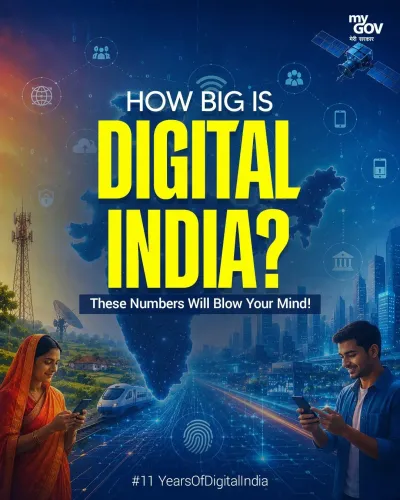
The programme's anniversary on 1 July each year has become an occasion for BJP leaders at both the central and state levels to highlight gains in digital public infrastructure. Chief Minister Saini's post carries the hashtag #11YearsOfDigitalIndia, aligning Haryana's voice with a coordinated national messaging effort.
Policy Backdrop
Digital India sits at the centre of a broader technology-led governance push that includes UPI-based payments, Aadhaar-linked Direct Benefit Transfers (DBT), and state-level portals designed to reduce leakages and improve service delivery. These tools have reshaped how citizens in states like Haryana access welfare schemes, land records, and identity documents.
Haryana has progressively aligned its administrative reforms with central digital frameworks, deploying Common Service Centres (CSCs) and integrating state departments with national platforms managed by the Ministry of Electronics and Information Technology (MeitY). The Chief Minister's endorsement signals continued state-level commitment to this convergence.
Stakeholders and Impact
The primary beneficiaries of the Digital India ecosystem span Indian citizens seeking paperless government services, micro, small and medium enterprises (MSMEs) leveraging digital payments and e-marketplaces, and state governments using data-driven tools to improve administrative efficiency. For rural populations in Haryana, CSCs have served as the last-mile touchpoints for everything from pension disbursements to certificate issuance.
The broader political significance is also notable: BJP-ruled states routinely amplify central digital milestones as evidence of governance delivery, using anniversaries to reinforce the party's technology-and-development narrative ahead of electoral cycles.
What's Next
Observers will watch Haryana's state budget allocations for digital infrastructure in the coming months, as well as any new memoranda of understanding between the state and MeitY covering data centres or expanded CSC networks. At the national level, the 11-year mark is likely to prompt a policy review of Digital India's next phase, with attention on emerging priorities such as AI-driven public services and deeper rural broadband penetration. Chief Minister Saini's public alignment with the programme suggests Haryana will seek to position itself as a model state in whatever the next chapter of the initiative looks like.
Point of View
Where state leaders amplify central scheme milestones to reinforce the party's governance narrative. The choice of language — 'historic journey,' 'knowledge-based economy' — mirrors the vocabulary used in central government communications, suggesting deliberate alignment rather than independent commentary. At a deeper level, the post reflects how digital infrastructure has become the BJP's primary proof-point for development delivery, a frame that is likely to intensify as the next general election cycle approaches. For Haryana specifically, visible endorsement of Digital India also signals the state's interest in securing priority access to the next phase of MeitY-funded programmes.
NationPress
30 Sept 2026
Frequently Asked Questions
When was Digital India launched and by whom?
Digital India was launched on 1 July 2015 by Prime Minister Narendra Modi with the goal of transforming India into a digitally empowered society and knowledge-based economy.
What did Haryana CM Nayab Singh Saini say about Digital India?
CM Saini said that when technology reaches every person, development gains new momentum and good governance gains new strength, calling the 11-year journey of Digital India 'historic.'
What is the Digital India programme?
Digital India is a flagship central government programme launched in 2015 to deliver government services electronically, expand broadband infrastructure, and build a knowledge-based economy. It consolidated the earlier National e-Governance Plan of 2006.
How has Haryana implemented Digital India?
Haryana has deployed Common Service Centres (CSCs) as last-mile service points and integrated state departments with national platforms, enabling citizens to access welfare schemes, land records, and identity documents digitally.
What comes next for Digital India after 11 years?
The 11-year mark is expected to prompt a review of the programme's next phase, with focus areas likely including AI-driven public services and deeper rural broadband penetration, with states like Haryana positioning themselves as implementation models.