CM Saini Hails 12 Years of Modi-Led Infrastructure Push
Synopsis
Haryana CM Nayab Singh Saini marked twelve years of PM Modi's governance by highlighting landmark infrastructure projects — including Chenab Bridge and Bogibeel Bridge — and policies such as Mission Gati Shakti, calling the transformation a foundation for Viksit Bharat 2047.
Key Takeaways
Haryana CM Nayab Singh Saini praised PM Modi's twelve-year infrastructure record in a post on June 16, 2026 , under #12YearsOfNayaBharatNirman .
He cited Chenab Bridge — the world's highest railway bridge — and Bogibeel Bridge over the Brahmaputra as symbols of India's engineering capability.
Mission Gati Shakti , launched in October 2021 , was highlighted as a key driver of coordinated multimodal infrastructure planning.
The Bharatmala Pariyojana (2017) targets over 34,000 km of national highways; the National Infrastructure Pipeline (2019) projected Rs 111 lakh crore in investment through 2025.
Special emphasis was placed on Northeast India connectivity as a gateway to regional economic development.
The post links infrastructure delivery to the government's broader Viksit Bharat 2047 goal.
Haryana Chief Minister Nayab Singh Saini on Tuesday, June 16, 2026, credited Prime Minister Narendra Modi's twelve years of leadership with delivering a historic transformation in India's infrastructure and connectivity landscape, calling the ongoing development journey a matter of pride for every citizen.
Context
Posting under the hashtag #12YearsOfNayaBharatNirman, CM Saini wrote that schemes today are not merely announced but are being implemented swiftly on the ground — 'केवल घोषित नहीं होतीं, बल्कि तेज़ी से धरातल पर उतरकर' ('not merely declared but swiftly brought to the ground') — bringing positive change to the lives of ordinary people. The post is part of a coordinated BJP campaign marking twelve years since Narendra Modi assumed office as Prime Minister in May 2014.
The message highlights a broad sweep of infrastructure milestones, framing them as symbols of a capable and self-assured India rather than isolated engineering achievements.
Policy Backdrop
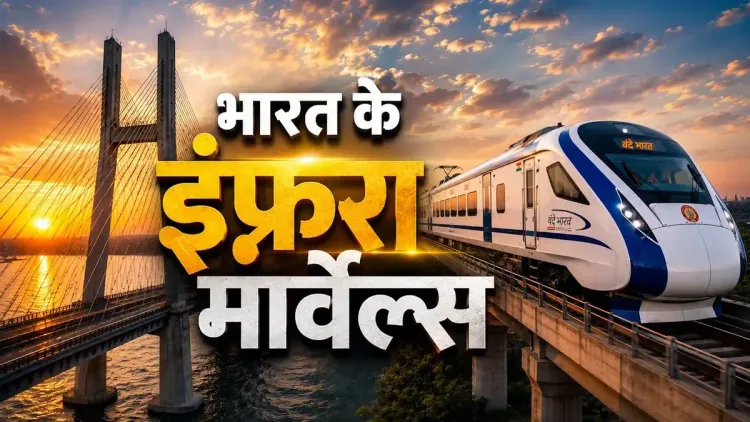
CM Saini specifically named four landmark structures: Atal Setu, Sudarshan Setu, the Bogibeel Bridge over the Brahmaputra in Assam, and the Chenab Bridge in Jammu and Kashmir — the world's highest railway bridge, built as part of the Udhampur-Srinagar-Baramulla Rail Link. He described these not just as engineering marvels but as symbols of a strong India's capability.
The post also invoked Mission Gati Shakti, the national master plan launched in October 2021 to coordinate multimodal infrastructure planning across ministries, alongside modern expressway networks, metro expansion, and comprehensive railway modernisation. These efforts build on the Bharatmala Pariyojana approved in 2017 for over 34,000 km of national highways, and the National Infrastructure Pipeline announced in 2019 with a projected investment of Rs 111 lakh crore through 2025.
Special emphasis was placed on Northeast India, where connectivity improvements are described as having 'opened new doors of development' — 'विकास के नए द्वार खोले हैं'.
Stakeholders and Impact
Residents of Northeast India and Jammu and Kashmir stand among the most direct beneficiaries of the projects cited, as improved rail and road links reduce travel times, ease freight movement, and strengthen regional economic integration. The logistics sector more broadly gains from the multimodal connectivity push under Mission Gati Shakti's digital planning platform, which was designed to reduce inter-ministerial delays.
CM Saini framed India's infrastructure today as not merely an expansion of amenities but as the 'strong foundation of the resolve of a Viksit Bharat' — 'विकसित भारत के संकल्प की मजबूत नींव' — aligning the message with the government's stated goal of a developed India by 2047.
What's Next
Further sections of national expressways and dedicated freight corridors remain under construction, with Union Budget allocations continuing to shape the pace of rail and metro project completions. The #12YearsOfNayaBharatNirman campaign signals that infrastructure delivery will remain a central political and policy theme for the BJP heading into upcoming electoral cycles.
As India pushes toward its Viksit Bharat 2047 vision, the pace at which announced projects translate into commissioned infrastructure will be the key metric by which the government's record is ultimately judged.
Point of View
Using landmark engineering projects to reinforce the party's governance credibility ahead of electoral cycles. By anchoring the message in concrete, named structures — Chenab Bridge, Bogibeel Bridge — rather than aggregate statistics, the communication sidesteps the verification problem while maximising visual and emotional resonance. The invocation of 'Viksit Bharat 2047' is significant: it ties short-term project delivery to a long-horizon national aspiration, making infrastructure spending a patriotic rather than merely administrative act. This framing has become a durable feature of BJP's political messaging since 2021, and Saini's post signals that Haryana's leadership intends to stay closely aligned with the Centre's narrative priorities.
NationPress
15 Sept 2026
Frequently Asked Questions
What is the Chenab Bridge and why is it significant?
The Chenab Bridge in Jammu and Kashmir is the world's highest railway bridge, built as part of the Udhampur-Srinagar-Baramulla Rail Link. It stands as a major engineering achievement aimed at improving rail connectivity to the Kashmir Valley.
What is Mission Gati Shakti?
Mission Gati Shakti is a national master plan launched in October 2021 to coordinate infrastructure planning across central ministries through a unified digital platform, reducing project delays and enabling multimodal connectivity.
What is the Bogibeel Bridge?
The Bogibeel Bridge is India's longest rail-cum-road bridge, spanning the Brahmaputra river in Assam. It significantly improved connectivity to Northeast India by reducing travel time and boosting freight movement.
What is Viksit Bharat 2047?
Viksit Bharat 2047 is the Indian government's stated goal of becoming a fully developed nation by the centenary of independence in 2047. Infrastructure investment is positioned as a foundational pillar of this vision.
Why did Haryana CM Nayab Singh Saini post about national infrastructure?
CM Saini's post is part of the BJP's #12YearsOfNayaBharatNirman campaign marking twelve years since PM Modi took office in May 2014, with state leaders amplifying the party's national governance narrative.