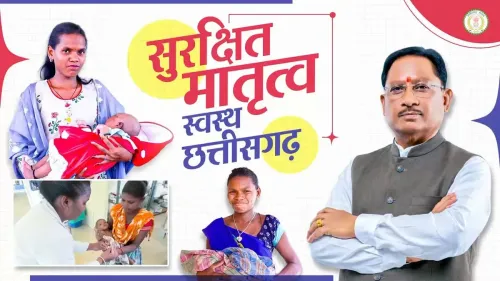
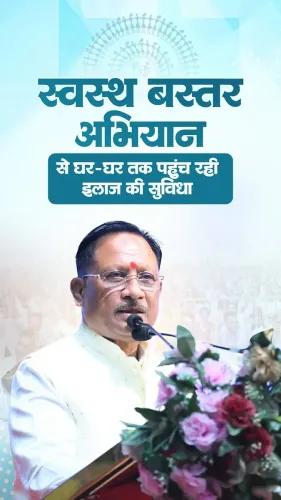
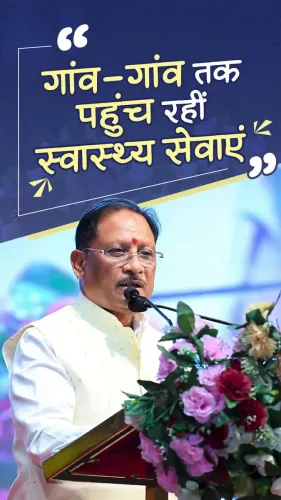
CM Sai's Swasth Bastar Abhiyan Brings Safe Deliveries to Naxal Zones
Synopsis
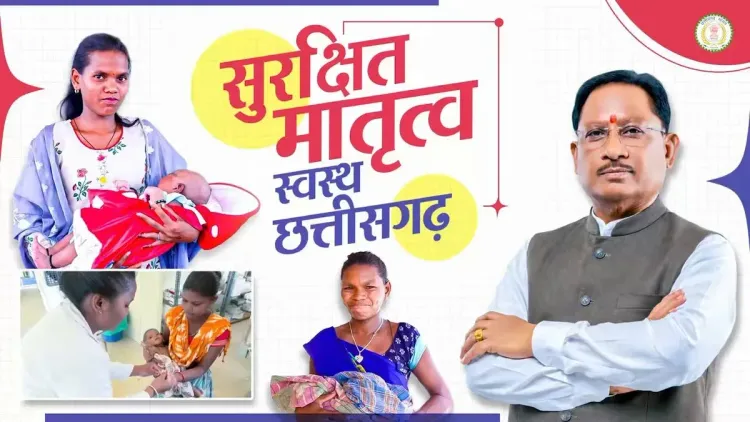
The Chief Minister's Office of Chhattisgarh says the Mukhyamantri Swasth Bastar Abhiyan, led by CM Vishnu Deo Sai, has driven institutional delivery rates in Sukma to 98.6%, transforming maternal healthcare in districts once paralysed by Naxal violence.
Key Takeaways
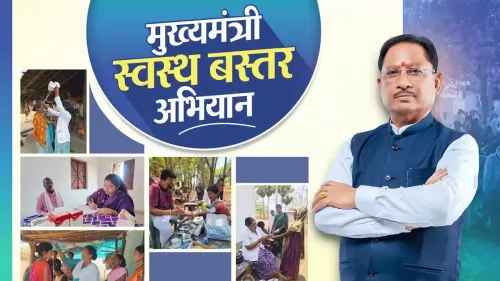
The Mukhyamantri Swasth Bastar Abhiyan is a state health campaign targeting maternal care in Chhattisgarh's Bastar division .
Sukma district has recorded an institutional delivery rate of 98.6 per cent under the scheme, according to the CMO.
The initiative provides pregnant women with free ambulance services, timely health check-ups , and access to institutional delivery facilities.
The Bastar region historically lacked medical access due to left-wing extremism and remote terrain.
Chief Minister Vishnu Deo Sai is credited with leading the initiative, with co-implementation by the Women and Child Development department.
Seven Bastar-division districts — including Bijapur, Dantewada, Narayanpur, Kondagaon, Kanker , and Bastar — are covered under the Abhiyan.
The Chief Minister's Office of Chhattisgarh announced on Saturday, 25 July 2026 that the Mukhyamantri Swasth Bastar Abhiyan is delivering measurable gains in maternal health across the Bastar region, an area long denied basic medical access due to Naxal violence. The post credited Chief Minister Vishnu Deo Sai with driving the initiative, which provides pregnant women with timely health check-ups, free ambulance services, and institutional delivery facilities.
Context
The CMO's post states that the scheme has pushed institutional delivery rates in Sukma to 98.6 per cent — a striking figure for a district that sits at the heart of one of India's most conflict-affected corridors. The post notes that in the same region, 'kabhī naksal bhay se chikitsīya suvidhaen pānā bhī mushkil thā' ('even accessing medical facilities was once difficult due to the fear of Naxals'). The campaign specifically targets districts including Sukma, Bijapur, Dantewada, Narayanpur, Kondagaon, Kanker, and Bastar.
Policy Backdrop
The Mukhyamantri Swasth Bastar Abhiyan is a state-level health campaign built on the foundation of the National Rural Health Mission, launched nationally in 2005 to expand institutional delivery and rural health access. Chhattisgarh's Bastar belt has historically recorded some of the worst maternal and child health indicators in the country, compounded by decades of left-wing extremism that kept state services out of remote tribal hamlets. The current initiative represents an effort to close that governance gap by embedding health infrastructure in districts once considered inaccessible.
State governments across central India have increasingly paired security operations with development programmes in insurgency-prone zones, using maternal health schemes as a visible marker of restored state presence. Free ambulance access — a key component of this Abhiyan — directly addresses the last-mile barrier that has historically forced tribal women to deliver at home without skilled attendance.
Stakeholders and Impact
The primary beneficiaries are pregnant women and tribal communities across the seven Bastar-division districts. For generations, geography, insurgency, and poverty combined to make institutional delivery a distant aspiration in these areas; the scheme attempts to make it the norm. Women's and Child Development departments of Chhattisgarh — tagged in the original post as @WCDCgGov — are co-implementing partners, signalling an inter-departmental approach to maternal welfare.
The gains, if sustained, would also move the needle on Chhattisgarh's Maternal Mortality Ratio, which has been a persistent concern in national health rankings. Higher institutional delivery rates are directly correlated with reductions in maternal and neonatal deaths, making Sukma's reported figure a potential model for the remaining high-burden districts.
What's Next
Attention will now turn to whether the institutional delivery gains reported in Sukma can be replicated across the remaining Bastar districts, particularly Bijapur and Narayanpur, where security conditions remain more volatile. The state government is expected to publish updated district-wise maternal health data as the Abhiyan matures. Analysts will also watch whether the free ambulance network — the operational backbone of the scheme — can be scaled without supply-chain and staffing bottlenecks in terrain that remains logistically challenging.
Frequently Asked Questions
What is the Mukhyamantri Swasth Bastar Abhiyan?
The Mukhyamantri Swasth Bastar Abhiyan is a Chhattisgarh state health campaign focused on improving maternal healthcare in the Bastar division, offering pregnant women free ambulances, regular health check-ups, and access to institutional delivery facilities in districts long affected by Naxal violence.
What is the institutional delivery rate in Sukma under this scheme?
According to the Chief Minister's Office of Chhattisgarh, the institutional delivery rate in Sukma has reached 98.6 per cent under the Mukhyamantri Swasth Bastar Abhiyan.
Which districts are covered under the Mukhyamantri Swasth Bastar Abhiyan?
The scheme covers seven Bastar-division districts: Sukma, Bijapur, Dantewada, Narayanpur, Kondagaon, Kanker, and Bastar district itself.
Who is leading the Swasth Bastar Abhiyan in Chhattisgarh?
Chief Minister Vishnu Deo Sai, who has led Chhattisgarh since 2023, is credited with driving the Mukhyamantri Swasth Bastar Abhiyan, with co-implementation by the state's Women and Child Development department.
Why was healthcare difficult in Bastar before this scheme?
The Bastar region suffered decades of left-wing extremism that made it dangerous and logistically difficult for the state to maintain medical facilities or for residents to access them, leaving tribal communities — especially pregnant women — without reliable healthcare.