CM Samrat Choudhary credits PM Modi for steering India out of energy crisis
Synopsis
Bihar Chief Minister Samrat Choudhary on 4 July 2026 shared a video quoting PM Modi, crediting India's timely crisis assessment, balanced resource use, and diplomatic power for overcoming what the post calls the 21st century's biggest energy crisis.
Key Takeaways
Bihar CM Samrat Choudhary posted on 4 July 2026 , quoting PM Narendra Modi on India's energy crisis recovery.
The post credits five factors: early assessment, effective strategy, balanced resource use, diplomatic power, and national willpower.
India is the world's third-largest energy consumer and faced severe pressure after the 2022 Russia-Ukraine conflict disrupted global energy markets.
India's policy response drew on the National Energy Policy (2017) , expanded strategic petroleum reserves , and the International Solar Alliance (2015) .
The Ujjwala LPG scheme (2016) reduced rural biomass dependence, cushioning millions of households from the price shock.
Upcoming COP commitments and petroleum ministry data will serve as benchmarks for India's claimed energy management success.
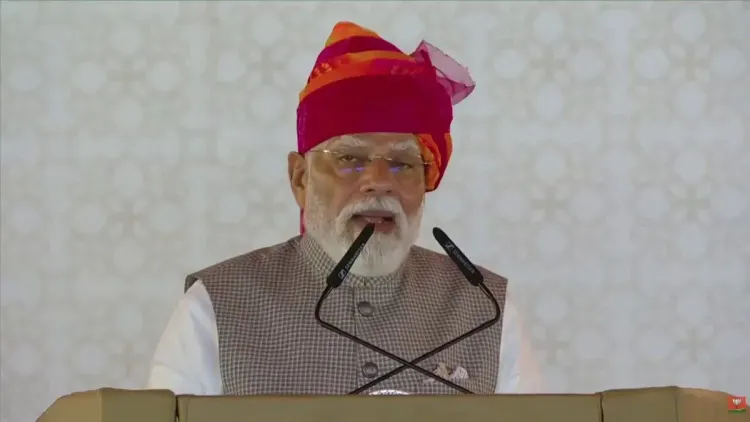
Bihar Chief Minister Samrat Choudhary on Saturday, 4 July 2026, credited Prime Minister Narendra Modi with steering India through what he described as the biggest energy crisis of the 21st century, citing timely assessment, strategic resource use, and diplomatic skill as the pillars of India's recovery.
Context
Sharing a video on X, CM Choudhary quoted PM Modi directly: '21वीं सदी के सबसे बड़े ऊर्जा संकट पर, 21वीं सदी के नए भारत की इच्छा-शक्ति और भारत के प्रयास भारी पड़े हैं' — ['On the biggest energy crisis of the 21st century, the willpower of new 21st-century India and India's efforts have prevailed']. The post outlines a five-part formula attributed to the Prime Minister: accurate early assessment of the crisis, an effective strategy, balanced use of India's resources, and positive deployment of India's diplomatic power.
The statement comes amid continued global energy market volatility that intensified following the Russia-Ukraine conflict of 2022, which disrupted supply chains and pushed crude prices sharply higher across importing nations. India, as the world's third-largest energy consumer, faced acute pressure on its import bill and energy security calculus during that period.
Policy Backdrop
India's response to the energy shock drew on a policy architecture built over the preceding decade. The National Energy Policy framework of 2017 had already set out a roadmap to balance fossil-fuel dependence with rapid scaling of renewables and efficiency improvements. Expansion of strategic petroleum reserves — accelerated after 2014 — provided a critical buffer when global supply tightened.
On the diplomatic front, India diversified its crude import basket, engaging multiple supplier nations rather than depending on a single bloc. The International Solar Alliance, launched in 2015 as an India-initiated multilateral body, reinforced New Delhi's positioning as a constructive actor in global clean-energy diplomacy. The Ujjwala LPG scheme of 2016 had meanwhile reduced rural dependence on biomass, insulating millions of households from the worst of the price shock.
Stakeholders and Impact
The constituencies most directly affected by India's energy management include household energy consumers, oil importers and refiners, and renewable energy developers who benefited from sustained policy support even during the crisis period. For Bihar, a state with historically high energy poverty, stable national energy policy translates into continued electrification progress and LPG access for rural families.
CM Choudhary's post is part of a broader pattern in which state-level BJP leaders amplify central government policy narratives, signalling coherence between New Delhi and the states on governance outcomes. By attributing the recovery directly to PM Modi's leadership, the post reinforces the party's messaging ahead of future electoral cycles.
What's Next
India's energy trajectory will be tested at the next round of COP climate commitments, where New Delhi is expected to present updated renewable capacity targets and import-diversification data. The petroleum ministry's forthcoming data releases on crude sourcing and domestic capacity addition will offer a measurable benchmark against which the claims of crisis management can be assessed.
With global energy markets remaining volatile, the diplomatic and strategic frameworks cited by PM Modi — and amplified by leaders like CM Choudhary — will face continued scrutiny from both domestic consumers and international partners watching India's energy autonomy ambitions unfold.
Point of View
Positioning the Modi government as a decisive actor in a chaotic global environment. By invoking a crisis that affected every Indian household through fuel prices, the message grounds an abstract geopolitical achievement in everyday lived experience. The timing in mid-2026 suggests the party is building a governance record ahead of upcoming electoral contests, with energy security as a credible, data-adjacent pillar of that record.
NationPress
4 Jul 2026
Frequently Asked Questions
What did Bihar CM Samrat Choudhary say about India's energy crisis?
CM Samrat Choudhary on 4 July 2026 shared a video quoting PM Modi, stating that India's willpower, accurate crisis assessment, balanced resource use, and diplomatic power helped the country overcome the biggest energy crisis of the 21st century.
What is India's biggest energy crisis in the 21st century?
The reference is widely understood to relate to the global energy market disruption triggered by the Russia-Ukraine conflict in 2022, which caused crude oil and gas prices to spike sharply, placing significant pressure on India as a major energy importer.
How did India manage its energy crisis under PM Modi?
India combined early crisis assessment, strategic petroleum reserve deployment, diversification of crude import sources, expansion of renewable energy through bodies like the International Solar Alliance, and active energy diplomacy to navigate the supply shock.
What is the International Solar Alliance and how does it relate to India's energy policy?
The International Solar Alliance is a multilateral body launched by India in 2015 to accelerate solar energy deployment among member nations. It positions India as a leader in clean-energy diplomacy and complements domestic renewable targets.
Why is Bihar CM Samrat Choudhary posting about national energy policy?
As a senior BJP leader and state chief minister, Choudhary regularly amplifies central government policy achievements on social media, reinforcing the party's unified messaging on governance and development across national and state levels.