CM Samrat Choudhary Hails Digital India's Growth
Synopsis
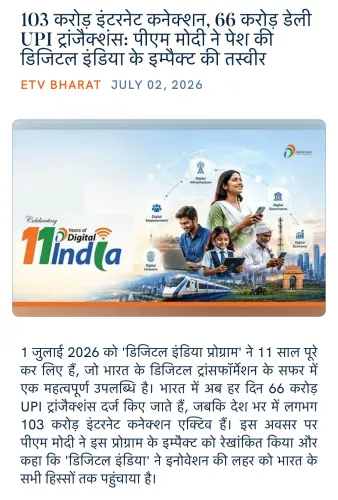
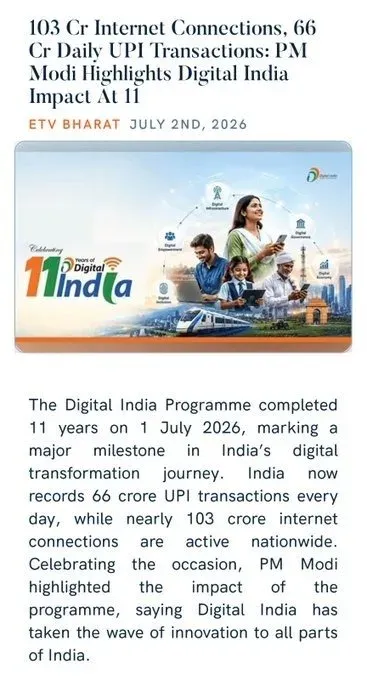
Bihar Chief Minister Samrat Choudhary on 3 July 2026 lauded Digital India's scale, pointing to 103 crore internet connections and over 66 crore daily UPI transactions as evidence of PM Modi's digital vision reshaping citizens' lives and driving economic formalisation.
Key Takeaways
Bihar CM Samrat Choudhary praised the Digital India programme on 3 July 2026 via a post on X.
He cited 103 crore internet connections across India as a marker of digital penetration.
Over 66 crore UPI transactions are conducted daily, according to the figures he referenced.
The Digital India programme was launched on 1 July 2015 by PM Narendra Modi to build digital infrastructure and e-governance services.
UPI , introduced in August 2016 by NPCI , has become central to India's cashless economy and financial inclusion drive.
The post connects these milestones to the broader Viksit Bharat 2047 national development vision.
Bihar Chief Minister Samrat Choudhary on Friday, 3 July 2026, took to X to champion the Digital India programme, citing 103 crore internet connections and over 66 crore daily UPI transactions as proof of the initiative's transformative reach under Prime Minister Narendra Modi.
Context
In his post, CM Choudhary wrote — 'डिजिटल इंडिया आज नए भारत की सबसे बड़ी शक्ति बन चुका है' ('Digital India has today become the greatest strength of new India') — framing the programme not merely as a government scheme but as a civilisational shift. He credited PM Modi's 'visionary leadership' for making technology, transparency, and ease of access a part of every citizen's daily life.
The post, hashtagged #DigitalIndia, reflects a broader effort by senior BJP leaders across states to reinforce the Centre's digital narrative ahead of policy milestones linked to the Viksit Bharat 2047 vision.
Policy Backdrop
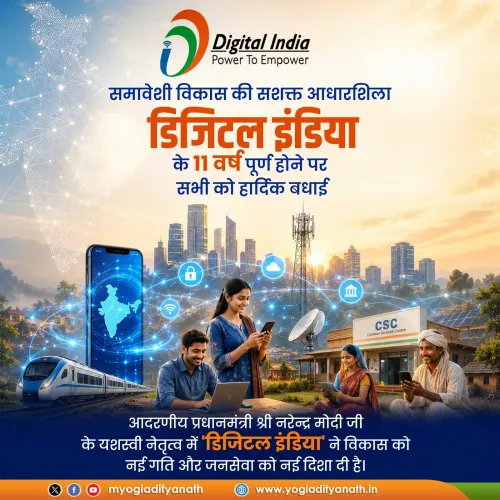
The Digital India programme was formally launched on 1 July 2015 by PM Modi, with the stated goal of transforming India into a digitally empowered society and a knowledge economy. The initiative has since expanded to cover digital infrastructure, e-governance services, and digital literacy at scale.
The Unified Payments Interface (UPI), introduced in August 2016 by the National Payments Corporation of India (NPCI) in partnership with the Reserve Bank of India, has been a cornerstone of India's digital payments revolution. Combined with Aadhaar biometric identity and Jan Dhan bank accounts, UPI forms the backbone of what the government describes as digital public infrastructure — a stack designed to expand financial inclusion and reduce leakages in welfare delivery.
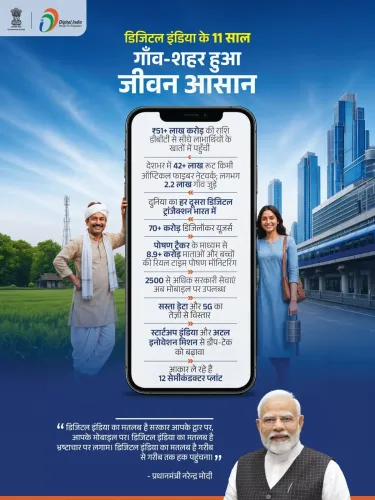
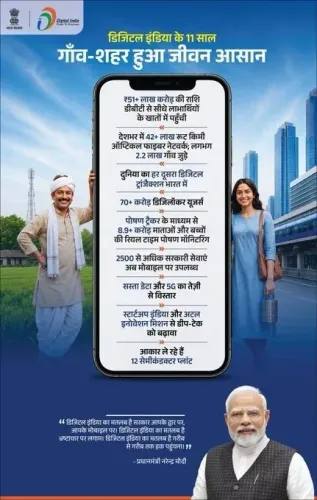
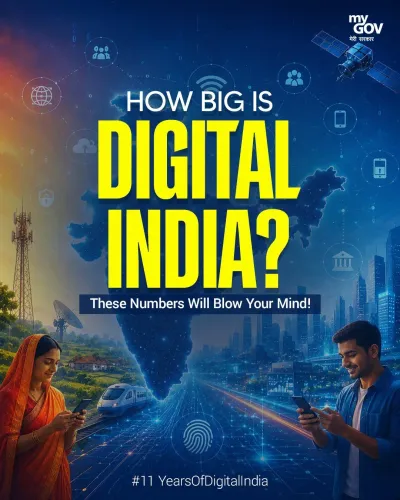
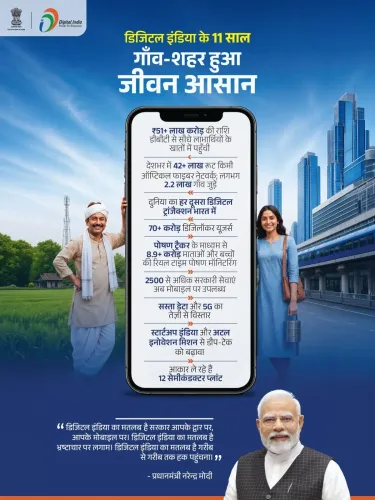
The figures cited by CM Choudhary — 103 crore internet connections and 66 crore-plus daily UPI transactions — illustrate the scale at which these systems now operate, reflecting years of investment in broadband connectivity and mobile-first payment adoption across urban and rural India alike.
Stakeholders and Impact
The beneficiaries of India's digital expansion span a wide spectrum: individual citizens accessing government services online, small businesses and street vendors using UPI for cashless transactions, and the broader financial sector which has seen rapid formalisation of the economy as a result. For a state like Bihar, historically underserved in terms of banking access and infrastructure, digital inclusion carries particular significance.
CM Choudhary's remarks also signal alignment between state and central leadership on the technology agenda — an important political signal as Bihar prepares for continued development pushes under the NDA alliance framework.
What's Next
Attention will now turn to parliamentary and budgetary updates on Digital India Phase 2 targets, including new broadband rollout goals and digital literacy allocations in upcoming Union Budgets. State-level implementations, particularly in eastern India, will be closely watched as indicators of whether the headline numbers translate into last-mile impact. The Viksit Bharat 2047 roadmap positions digital infrastructure as a non-negotiable pillar of India's development story — and statements like CM Choudhary's suggest that political consensus around this agenda remains strong across the ruling coalition.
Point of View
Large-scale figures on internet access and UPI usage, he frames the programme's success as empirical rather than rhetorical, lending it a data-driven credibility that resonates with both urban and aspirational rural audiences. The invocation of 'Viksit Bharat' ties the digital story to a long-horizon national vision, signalling that the BJP intends to run on this record well into the next electoral cycle. For Bihar specifically, where digital and financial inclusion gains are politically salient, such statements also serve a state-level constituency-building function.
NationPress
3 Jul 2026
Frequently Asked Questions
What did Bihar CM Samrat Choudhary say about Digital India?
Bihar CM Samrat Choudhary stated on 3 July 2026 that Digital India has become the greatest strength of new India, citing 103 crore internet connections and over 66 crore daily UPI transactions as evidence of PM Modi's transformative digital leadership.
What is the Digital India programme?
Digital India is a flagship government programme launched on 1 July 2015 by Prime Minister Narendra Modi, aimed at building digital infrastructure, delivering e-governance services, and expanding digital literacy across India.
How many UPI transactions happen daily in India?
According to Bihar CM Samrat Choudhary's post on 3 July 2026, more than 66 crore UPI transactions are conducted every day in India, reflecting the rapid mainstream adoption of digital payments.
Who is Samrat Choudhary?
Samrat Choudhary is the Chief Minister of Bihar and a senior leader of the Bharatiya Janata Party (BJP), known for his close alignment with the NDA government's development and digital agenda.
What is Viksit Bharat 2047?
Viksit Bharat 2047 is the Indian government's long-term vision to make India a developed nation by the centenary of its independence in 2047, with digital infrastructure and technology identified as core pillars of this goal.