CM Samrat Choudhary Hails DRDO Kusha Missile Test Success
Synopsis
Bihar Chief Minister Samrat Choudhary praised DRDO scientists on 24 July 2026 after the successful first test of the Kusha long-range surface-to-air missile, calling it a landmark in India's defence self-reliance and a boost to the Atmanirbhar Bharat vision.
Key Takeaways
Bihar Chief Minister Samrat Choudhary congratulated DRDO on the successful first test of the Kusha long-range surface-to-air missile on 24 July 2026 .
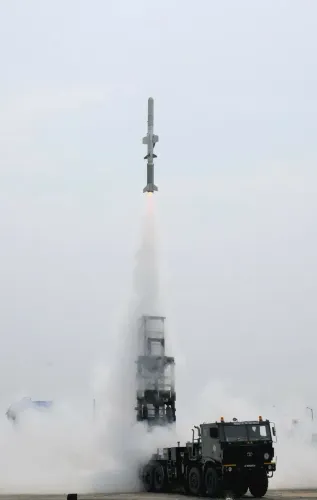
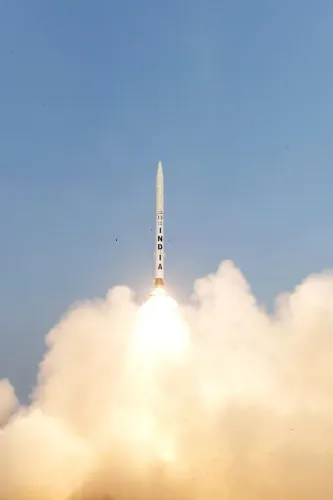
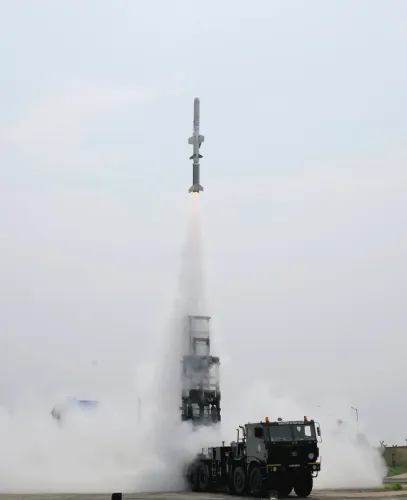
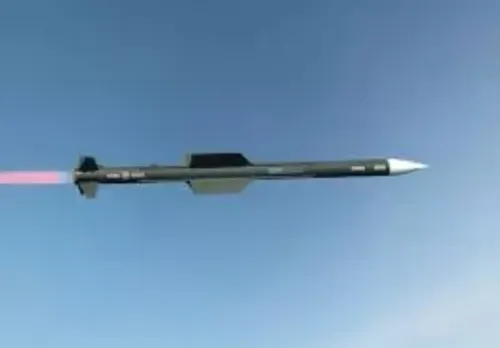
The Kusha missile is an indigenously developed long-range surface-to-air system designed to extend India's air defence capabilities beyond existing platforms.
India's indigenous missile journey began with the Integrated Guided Missile Development Programme in 1983 ; the Akash system was inducted around 2015 .
The test is framed within the Atmanirbhar Bharat initiative announced in 2020 , which prioritises domestic defence production and reduced import dependence.
Further flight trials across varied operational parameters will be required before the Kusha system can be formally inducted into the Indian armed forces .
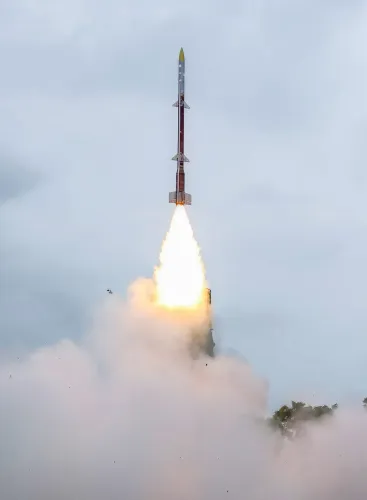
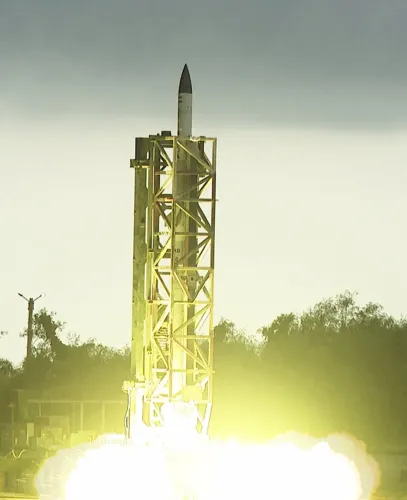
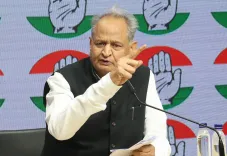
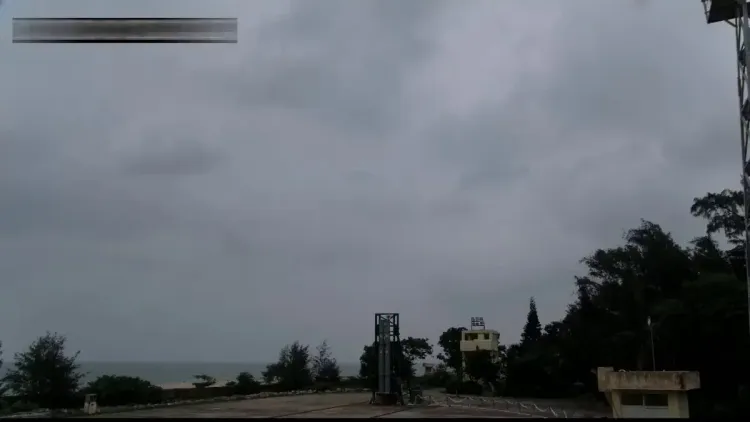
Bihar Chief Minister Samrat Choudhary on Friday, 24 July 2026, congratulated DRDO scientists and personnel on the successful first test of the indigenously developed long-range surface-to-air missile 'Kusha', calling it a historic milestone in India's defence self-reliance.
Context
Posting on X, CM Choudhary described the Kusha test as 'रक्षा आत्मनिर्भरता की दिशा में एक और ऐतिहासिक उपलब्धि' — 'another historic achievement on the path to defence self-reliance.' He extended congratulations to DRDO's scientists, officers, and all personnel associated with the milestone. The post underscores the political salience that successful indigenous defence trials have acquired across party lines in India.
The Kusha missile is a long-range surface-to-air system developed by the Defence Research and Development Organisation (DRDO) aimed at bolstering India's air defence architecture. Its first flight trial marks a significant step in extending the envelope of domestically built air defence capabilities beyond the medium-range Akash system inducted into service around 2015.
Policy Backdrop
India's pursuit of indigenous missile technology dates to the launch of the Integrated Guided Missile Development Programme (IGMDP) in 1983, which produced systems including Prithvi, Agni, and Akash. The Atmanirbhar Bharat initiative, announced in 2020, gave fresh impetus to domestic defence production by prioritising reduced import dependence and channelling resources into indigenous research and development.
DRDO has been the institutional backbone of these efforts, progressively working to extend the range and capability of surface-to-air systems. The Kusha programme is positioned as the next-generation layer in India's integrated air defence network, designed to intercept aerial threats at longer ranges than its predecessors.
Stakeholders and Impact
DRDO's scientific community stands at the centre of this development, with the successful trial validating years of research investment. The Indian Air Force and the broader armed forces are the primary intended beneficiaries, as an operationally inducted Kusha system would add a critical long-range tier to India's air defence grid.
For the BJP-led government and its political allies — including senior leaders such as CM Choudhary — the test reinforces the 'Viksit Bharat' and 'Atmanirbhar Bharat' narrative ahead of ongoing strategic and budgetary discussions. The milestone also carries export potential, as India has been actively marketing indigenous defence platforms to partner nations.
What's Next
The first successful flight trial typically marks the beginning of an extended test series. Further trials will be needed to validate the Kusha system across varied operational parameters before it can be considered for formal induction into the armed forces. Parliamentary and budgetary updates on the programme's induction timeline are expected to follow as the test series progresses.
If the Kusha system clears successive trials and enters service, it would represent a qualitative leap in India's ability to defend its airspace with homegrown technology — reinforcing the country's ambition to become a net exporter of advanced defence systems by the end of this decade.
Point of View
And the swift political acknowledgement from a senior BJP leader like CM Choudhary, illustrates how indigenous defence milestones have become a key pillar of the ruling coalition's 'Viksit Bharat' messaging. By framing a DRDO technical achievement in the language of national sovereignty, the statement aligns routine defence progress with a broader electoral and ideological narrative. The pattern echoes a deliberate strategy of associating state capacity with political identity — a trend that has intensified since the Atmanirbhar Bharat push of 2020. How quickly Kusha moves from trial to induction will determine whether this milestone translates into substantive strategic gain or remains primarily symbolic.
NationPress
24 Jul 2026
Frequently Asked Questions
What is the Kusha missile developed by DRDO?
Kusha is a long-range surface-to-air missile being developed by India's Defence Research and Development Organisation (DRDO) to strengthen the country's air defence capabilities beyond the range of existing systems like the Akash missile.
When was the first test of the Kusha missile conducted?
The first flight trial of the DRDO-developed Kusha missile was conducted around 24 July 2026, according to Bihar Chief Minister Samrat Choudhary's post on X congratulating the DRDO team.
What did Bihar CM Samrat Choudhary say about the Kusha missile test?
CM Choudhary called the successful first test a 'historic achievement' in India's defence self-reliance, extended congratulations to DRDO scientists and personnel, and said the milestone would strengthen the nation's security and the Atmanirbhar Bharat vision.
What is India's Atmanirbhar Bharat initiative in defence?
Atmanirbhar Bharat, launched in 2020, is a government initiative to make India self-reliant in defence production by reducing imports and boosting indigenous research, development, and manufacturing of military equipment.
What is India's history of indigenous surface-to-air missile development?
India's indigenous missile programme traces back to the Integrated Guided Missile Development Programme launched in 1983. The Akash surface-to-air missile, developed under DRDO, was inducted into the Indian Air Force around 2015, and the Kusha system is intended as a longer-range successor.