CM Samrat Choudhary hails India's first hydrogen train as green milestone

Synopsis
Bihar Chief Minister Samrat Choudhary praised India's first hydrogen train on 27 June 2026 as a symbol of the country's clean-energy resolve, linking it to PM Modi's Viksit Bharat vision and the Atmanirbhar Bharat framework for self-reliant, sustainable development.
Key Takeaways
Bihar CM Samrat Choudhary on 27 June 2026 publicly endorsed India's first hydrogen train as a green milestone.
He described the train as a symbol of India's commitment to environmental conservation and sustainable development, not just a technical feat.
Indian Railways first proposed hydrogen fuel-cell trains in its 2022-23 budget, targeting net-zero emissions by 2030 .
The initiative is part of the National Green Hydrogen Mission (2023) and India's COP26 pledge to reach net-zero by 2070 .
The Atmanirbhar Bharat framework underpins the push for domestically developed hydrogen-rail technology.
Further route trials and dedicated allocations in the next railway budget will determine the pace of scaling.
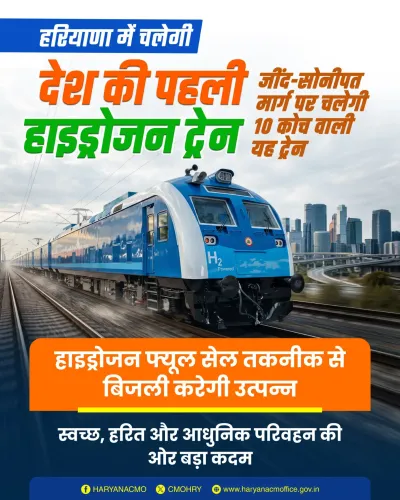
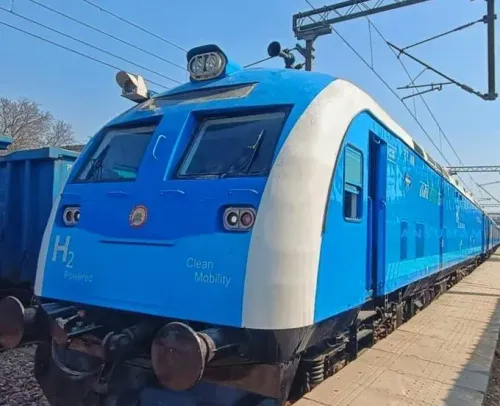
Bihar Chief Minister Samrat Choudhary on Saturday, 27 June 2026, praised India's first hydrogen train as a landmark in the country's clean-energy journey, calling it a symbol of commitment to environmental protection and sustainable development under Prime Minister Narendra Modi's leadership.
Context
Posting on X, CM Choudhary wrote: 'नई सोच, नई तकनीक और स्वच्छ ऊर्जा के साथ भारत रेल परिवहन के भविष्य को नई दिशा दे रहा है' — 'With new thinking, new technology, and clean energy, India is giving a new direction to the future of rail transport.' He described the hydrogen train not merely as a technical achievement but as 'a powerful symbol of our commitment to environmental conservation and sustainable development.'
The Chief Minister also invoked the Viksit Bharat vision, stating that under PM Modi's leadership the country is emerging as a new example of development and self-reliance — referencing the government's flagship goal of a developed India by 2047.
Policy Backdrop
Indian Railways first outlined plans for hydrogen fuel-cell trains in its 2022-23 budget proposals, aligned with the network's target to reach net-zero emissions by 2030. The hydrogen train initiative sits within India's broader National Green Hydrogen Mission, launched in 2023, which seeks to position the country as a global hub for green hydrogen production and application.
These efforts are also anchored in India's pledge at COP26 to reach net-zero emissions by 2070 and in the Atmanirbhar Bharat framework, which encourages domestic development of advanced technologies rather than reliance on imports. A hydrogen-powered train represents a convergence of both goals: decarbonising public transport while building indigenous capability.
Stakeholders and Impact
Railway passengers across the country stand to benefit from quieter, emission-free journeys if hydrogen trains are scaled beyond trials. The renewable energy sector — particularly green hydrogen producers — could see significant demand growth as Indian Railways, one of the world's largest rail networks, expands adoption of alternative propulsion.
For Bihar and other states with large rail-dependent populations, a shift to cleaner trains carries direct public-health implications by reducing diesel exhaust in densely populated corridors. CM Choudhary's endorsement also signals that state-level political leaders are aligning their messaging with the Centre's green-infrastructure narrative ahead of upcoming policy cycles.
What's Next
Attention will now turn to further route trials of hydrogen trains and any dedicated budget allocations in the next railway budget or progress reports from the National Green Hydrogen Mission. Analysts will watch whether the government accelerates procurement timelines or announces dedicated hydrogen-rail corridors as part of a broader push toward the Viksit Bharat 2047 goal.
If hydrogen trains move from demonstration to deployment at scale, Indian Railways could become one of the largest clean-transport operators in the world — a milestone that would reinforce India's positioning in global climate negotiations.
Point of View
Technologically advanced India. Coming as the National Green Hydrogen Mission seeks to demonstrate early results, such endorsements from chief ministers help build a political constituency for what remains a capital-intensive, long-horizon investment. The broader pattern suggests that green technology is fast becoming a bipartisan electoral asset, with state leaders across the BJP ecosystem eager to associate themselves with visible clean-energy milestones.
NationPress
27 Jun 2026
Frequently Asked Questions
What is India's first hydrogen train?
India's first hydrogen train is a fuel-cell-powered rail vehicle developed under Indian Railways' decarbonisation programme, first proposed in the 2022-23 railway budget as part of the network's net-zero emissions target by 2030.
Why did Bihar CM Samrat Choudhary post about the hydrogen train?
CM Choudhary posted on X on 27 June 2026 to praise the hydrogen train as a symbol of India's environmental commitment and self-reliance under PM Narendra Modi, aligning with the ruling party's Viksit Bharat messaging.
What is the National Green Hydrogen Mission?
The National Green Hydrogen Mission, launched in 2023, aims to make India a global hub for green hydrogen production and use, including applications in transport and industry, supporting the country's 2070 net-zero pledge.
How does the hydrogen train connect to Viksit Bharat?
The Viksit Bharat vision targets a developed, self-reliant India by 2047; the hydrogen train is cited as evidence of indigenous technological capability and sustainable infrastructure development under that framework.
What is the current status of hydrogen trains in India?
As of the available information, hydrogen trains are in a trial and development phase; exact operational deployment dates have not been officially confirmed, and further route trials and budget allocations are expected to determine the scale-up timeline.