CM Samrat Choudhary Hails Tri-Commissioning of Navy Warships
Synopsis
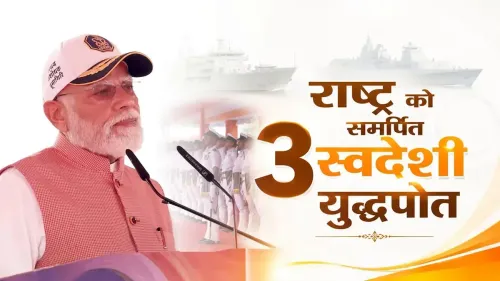
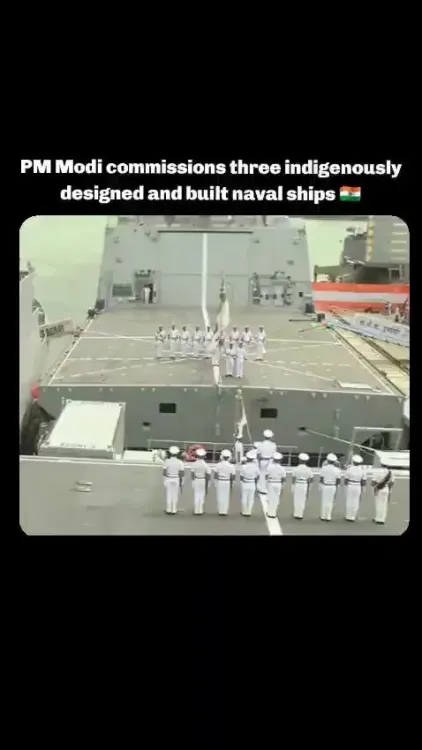
Bihar Chief Minister Samrat Choudhary has praised the simultaneous commissioning of three Indian Navy warships — INS Dunagiri, INS Agray, and INS Sanshodhak — describing it as a historic milestone in India's indigenous defence manufacturing and a marker of the country's rising maritime power.
Key Takeaways
Bihar CM Samrat Choudhary welcomed the tri-commissioning of INS Dunagiri , INS Agray , and INS Sanshodhak on 22 June 2026 .
Choudhary credited Prime Minister Narendra Modi 's leadership for India's emergence as a global maritime power.
He called the simultaneous induction a 'historic achievement' of indigenous defence production under #AatmanirbharBharat .
The development follows the 2022 commissioning of INS Vikrant , India's first domestically built aircraft carrier.
The Indian Navy 's fleet expansion through domestic shipyards is central to India's strategy of becoming a net security provider in the Indian Ocean Region .
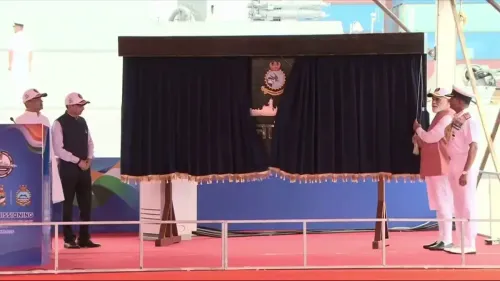
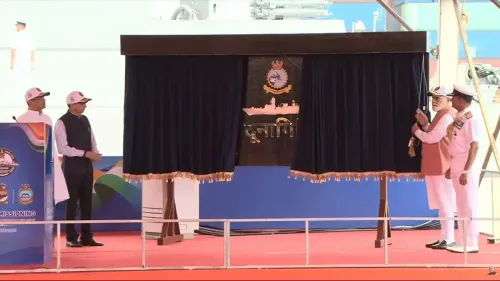
Bihar Chief Minister Samrat Choudhary on Monday, 22 June 2026, praised the simultaneous commissioning of three Indian Navy vessels — INS Dunagiri, INS Agray, and INS Sanshodhak — calling the tri-commissioning a historic milestone in India's indigenous defence manufacturing and a demonstration of the country's growing maritime power under Prime Minister Narendra Modi.
Context
Choudhary's post, written in Hindi, declared: 'समुद्र से सुरक्षा, स्वदेशी शक्ति से समृद्धि' ('Security from the sea, prosperity through indigenous strength'). He described the simultaneous induction of the three warships as a 'historic achievement of India's growing strategic capability and indigenous defence production,' adding that the vessels would strengthen the nation's security and assert India's 'strong presence in the Indian Ocean.'
The senior BJP leader framed the development as emblematic of 'New India' — defined, in his words, by 'indigenous strength, secure borders, and India's growing pride in the world,' closing with the hashtag #AatmanirbharBharat.
Policy Backdrop
The tri-commissioning sits within a sustained policy shift that began after 2014, when the government began prioritising domestic defence production and reducing dependence on imports. The formal architecture for this approach was formalised with the launch of the Aatmanirbhar Bharat Abhiyan in May 2020, which placed indigenous manufacturing at the centre of national security planning.
The commissioning of INS Vikrant — India's first domestically built aircraft carrier — in September 2022 marked a landmark in naval indigenisation and set the template for subsequent fleet expansion through domestic shipyards. The induction of INS Dunagiri, INS Agray, and INS Sanshodhak continues that trajectory, with the Indian Navy increasingly sourcing vessels from home-grown construction programmes.
Stakeholders and Impact
The primary beneficiary is the Indian Navy, which has been expanding its fleet to protect critical sea lanes and project power across the Indian Ocean Region. Domestic shipyards stand to gain from sustained government orders as the policy preference for indigenous procurement deepens.
India's strategic calculus in the Indian Ocean is closely watched by regional and global powers. A larger, indigenously built fleet directly supports New Delhi's stated ambition to act as a net security provider in the maritime domain — a role that carries significant diplomatic weight with neighbouring island nations and littoral states.
What's Next
The commissioning of these three vessels is expected to prompt renewed parliamentary scrutiny of naval modernisation funding and procurement timelines in the upcoming budget cycle. Further indigenously constructed warships are in various stages of construction at domestic yards, and the government's defence production targets under Aatmanirbhar Bharat will be measured against commissioning schedules in the coming months.
As India's maritime ambitions grow, the pace at which the Navy can induct domestically built platforms will be a key indicator of whether the self-reliance drive is translating from policy intent into operational capability.
Point of View
He connects a naval event to a broader electoral identity — 'New India' as a self-reliant, assertive power. The tri-commissioning, regardless of individual vessel specifications, serves as symbolic capital for the ruling coalition's claim that the post-2014 policy shift is yielding tangible military output. The pattern of state leaders amplifying central defence achievements suggests a coordinated messaging strategy as the government approaches a period of heightened geopolitical attention to the Indian Ocean.
NationPress
22 Jun 2026
Frequently Asked Questions
What is the tri-commissioning of INS Dunagiri, INS Agray and INS Sanshodhak?
The tri-commissioning refers to the simultaneous induction of three Indian Navy vessels — INS Dunagiri , INS Agray , and INS Sanshodhak — into active service, an event Bihar CM Samrat Choudhary described as a historic milestone in India's indigenous defence manufacturing.
What did Bihar CM Samrat Choudhary say about the Indian Navy commissioning?
Samrat Choudhary called the tri-commissioning a 'historic achievement of India's growing strategic capability and indigenous defence production,' and said the warships would strengthen India's security and presence in the Indian Ocean .
What is Aatmanirbhar Bharat in defence?
Aatmanirbhar Bharat Abhiyan , launched in May 2020 , is the government's self-reliance campaign with a strong focus on domestic defence production, aimed at reducing India's dependence on imported military equipment and building a home-grown defence industrial ecosystem.
What was India's first indigenous aircraft carrier?
INS Vikrant , commissioned in September 2022 , is India's first domestically built aircraft carrier and remains the most prominent symbol of the country's naval indigenisation programme.
Why is the Indian Ocean important for India's defence strategy?
The Indian Ocean Region is critical to India's trade routes, energy supplies, and strategic influence. India aims to be a net security provider in the region, and expanding its indigenously built naval fleet is central to asserting that role.