CM Sarma flags North East as India-Japan cooperation hub
Synopsis
The Chief Minister's Office of Assam has flagged North East India's emergence as a pivotal hub for India-Japan strategic and economic cooperation, reinforcing the Act East Policy's role in linking the eight-state region to Indo-Pacific partnerships anchored by Japanese financing and bilateral forums.
Key Takeaways
The CMO Assam on 3 July 2026 highlighted North East India as a key hub for India-Japan strategic and economic cooperation .
Japan has been India's Special Strategic and Global Partner since 2006 , with sustained JICA-led investment in North Eastern infrastructure.
The India-Japan Act East Forum , established in 2017 , is the principal bilateral mechanism coordinating Japanese assistance in Assam, Manipur and neighbouring states.
The Assam government signed multiple MoUs with Japanese agencies between 2021 and 2023 for industrial parks, skill development and logistics.
The North East's role as a gateway to ASEAN and East Asia is a core pillar of PM Modi's Act East Policy , announced at the 2014 India-ASEAN Summit .
Upcoming India-Japan summit talks and JICA corridor rollouts in Assam and Manipur are the next milestones to watch.
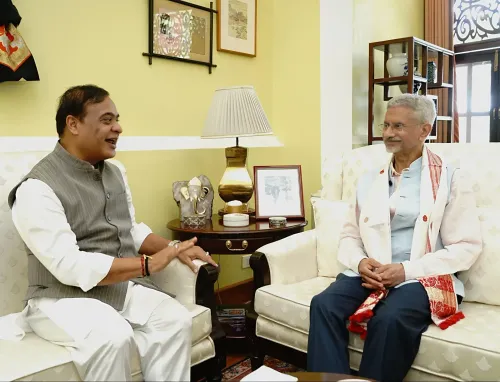
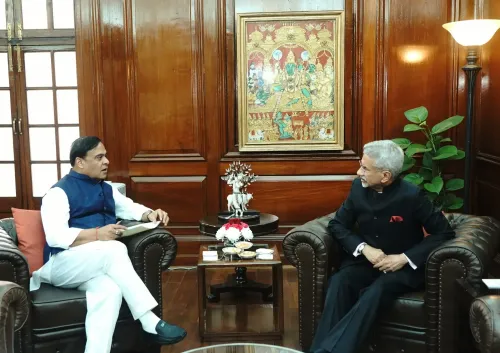
The Chief Minister's Office of Assam on Friday, 3 July 2026 highlighted the North Eastern Region's emergence as a key hub for India-Japan strategic and economic cooperation, amplifying the growing bilateral focus on the eight-state region as a corridor for Indo-Pacific engagement.
Context
The post by the CMO Assam draws attention to the deepening role of India's North East in the country's foreign economic architecture. The region, which borders Myanmar, Bangladesh and Bhutan, has long been positioned under Prime Minister Narendra Modi's Act East Policy as the physical gateway for India's outreach to ASEAN and East Asia. Japan, India's Special Strategic and Global Partner since 2006, has emerged as the most active external financier in this corridor.
Chief Minister Himanta Biswa Sarma, who has led Assam since May 2021, has consistently prioritised international economic partnerships for the region, including sustained engagement with Japanese government agencies and private investors.
Policy Backdrop
The Act East Policy was formally announced at the 2014 India-ASEAN Summit, elevating North East connectivity from a domestic development concern to a core pillar of India's Indo-Pacific strategy. To operationalise Japanese participation, both governments established the India-Japan Act East Forum in 2017, a dedicated bilateral mechanism to coordinate assistance for projects in Assam, Manipur, Nagaland and neighbouring states.
JICA, Japan's primary development finance agency, has financed urban, transport and water infrastructure projects across the North East since the early 2000s. During the 2022 India-Japan Annual Summit, both governments reaffirmed their commitment to developing the North East as an economic corridor hub. The Assam government signed multiple MoUs with Japanese agencies between 2021 and 2023 covering industrial parks, skill development and logistics.
Stakeholders and Impact
The beneficiaries of this deepening partnership span multiple layers: North Eastern state governments gain infrastructure financing and technology transfer; Japanese investors access a strategically located manufacturing and logistics base; and local MSMEs and border trade communities stand to gain from improved connectivity and supply-chain integration with East Asian markets.
Analysts note that Japanese financing and technology are being positioned as low-risk complements to Indian public investment, part of a broader Indo-Pacific framework that pairs the Act East Policy with strategic ties to Japan, the United States and Australia. This pattern is widely seen as building alternative connectivity routes that reduce dependence on corridors passing through regions of Chinese geopolitical influence.
What's Next
Attention will now turn to the next India-Japan Annual Summit for fresh project announcements, and to rollout timelines for JICA-funded transport corridors and industrial estates in Assam and Manipur. The CMO Assam's post signals that Guwahati intends to remain at the centre of this bilateral narrative, using high-visibility communications to attract further Japanese investment and reinforce the region's hub status in India's eastward economic diplomacy.
Point of View
Projecting Assam as a foreign-policy asset — not merely a development recipient — strengthens his leverage in federal resource allocation and positions the state as indispensable to national strategic goals. The move also reflects a broader pattern in which sub-national governments in India are increasingly active participants in foreign economic diplomacy, bypassing traditional central-government gatekeeping. Whether this translates into accelerated JICA project disbursements or new Japanese private-sector commitments will be the true measure of the hub narrative's substance.
NationPress
3 Jul 2026
Frequently Asked Questions
Why is North East India important for India-Japan relations?
North East India borders Myanmar, Bangladesh and Bhutan, making it the physical corridor for India's Act East Policy outreach to ASEAN and East Asia. Japan has channelled significant development finance through JICA into the region's transport, urban and logistics infrastructure, and the India-Japan Act East Forum, established in 2017, specifically coordinates this bilateral cooperation.
What is the India-Japan Act East Forum?
The India-Japan Act East Forum is a bilateral mechanism launched in 2017 to coordinate Japanese technical and financial assistance for infrastructure and development projects in North Eastern states including Assam, Manipur and Nagaland.
What has JICA done in Assam?
JICA, Japan's primary development finance agency, has financed multiple urban, transport and water infrastructure projects in Assam and neighbouring North Eastern states since the early 2000s, complementing Indian public investment in the region.
What is India's Act East Policy?
The Act East Policy was formally announced by Prime Minister Narendra Modi at the 2014 India-ASEAN Summit. It elevated North East India's connectivity as a core pillar of India's economic and strategic engagement with Southeast and East Asia, upgrading the earlier Look East Policy.
What MoUs has Assam signed with Japan?
The Assam government signed multiple MoUs with Japanese agencies between 2021 and 2023 covering industrial parks, skill development and logistics projects, as part of the broader India-Japan strategic partnership framework.