CM Sawant Hails 11 Years of Digital India Under PM Modi
Synopsis
On the eleventh anniversary of Digital India, Goa Chief Minister Pramod Sawant praised PM Modi's digital push — citing UPI, BharatNet, Direct Benefit Transfers and citizen services — as proof that India now leads the world in digital empowerment and innovation.
Key Takeaways
Digital India completes 11 years on 1 July 2026 , having been launched by PM Modi on 1 July 2015.
Goa CM Pramod Sawant credited the programme with transforming governance and connectivity for more than 140 crore Indians .
Key pillars cited include the UPI revolution , Direct Benefit Transfers , BharatNet rural broadband and affordable internet access.
Startups, MSMEs and youth are identified as major beneficiaries alongside individual citizens accessing e-governance services.
The digital journey is framed as a foundation for the Viksit Bharat 2047 goal of India becoming a developed nation by the centenary of independence.
India's digital public infrastructure model has been positioned internationally as a replicable framework for other developing economies.
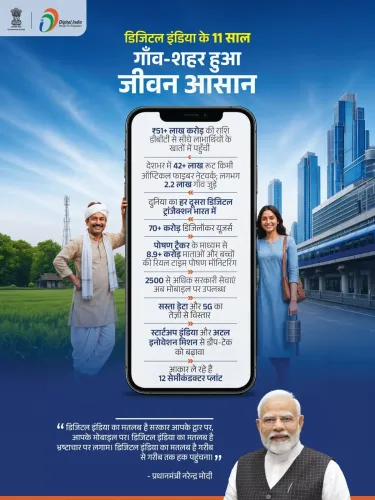
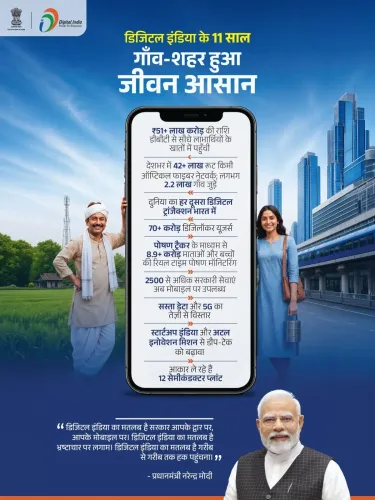
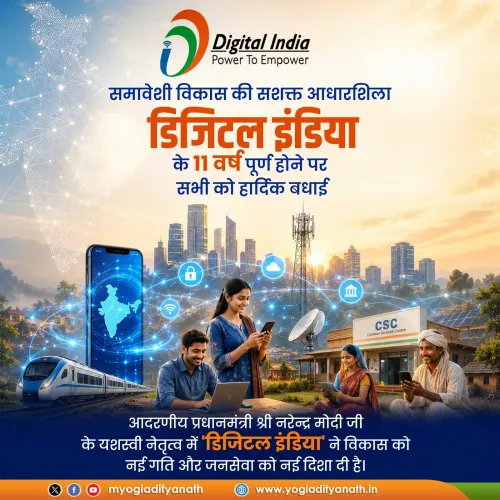
Goa Chief Minister Pramod Sawant on Wednesday, 1 July 2026 credited Prime Minister Narendra Modi with transforming governance, connectivity and everyday life for more than 140 crore Indians over the past eleven years, marking the anniversary of the Digital India programme with a post on X.
Context
Digital India was formally launched by Prime Minister Modi on 1 July 2015, making 1 July 2026 its eleventh anniversary. The programme was built on nine pillars — including broadband highways, digital literacy and e-governance — and has since become the umbrella under which most of the Centre's technology-led welfare and infrastructure initiatives are grouped.
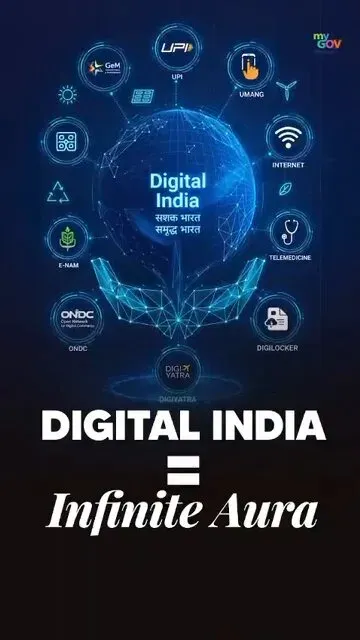
CM Sawant wrote that the 'digital transformation of Bharat has stunned the world,' pointing to the UPI revolution, Direct Benefit Transfers, affordable internet, BharatNet connectivity and citizen-centric digital services as evidence of India's emergence as a 'global leader in digital empowerment and innovation.'
Policy Backdrop
The Unified Payments Interface (UPI), developed by the National Payments Corporation of India (NPCI) and publicly launched in April 2016, became the financial backbone of the Digital India push, enabling real-time, interoperable payments at scale. Direct Benefit Transfer (DBT), scaled nationally from 2013 onwards and later integrated with Aadhaar and digital payments, is credited with reducing leakage in welfare delivery.
BharatNet, the national rural broadband project, was first approved in 2011 with a subsequent Phase-II approved in 2019, aiming to provide high-speed internet connectivity to gram panchayats across the country. Together, these initiatives form the core of India's digital public infrastructure stack, which successive governments have positioned as a replicable model for other developing economies.
Stakeholders and Impact
CM Sawant specifically cited startups, MSMEs and youth as direct beneficiaries of the digital push, alongside ordinary citizens accessing government services online. Goa under BJP leadership has consistently aligned state-level schemes with national digital stacks, and Sawant's post underlines that alignment on the programme's anniversary.
India's digital public infrastructure approach has also drawn international attention, with the country positioning itself as a supplier of digital public goods through technology diplomacy. The #11YearsOfDigitalIndia hashtag trended as BJP leaders and state governments marked the milestone across social media platforms.
What's Next
CM Sawant linked the eleven-year digital journey explicitly to Viksit Bharat 2047, the government's official vision for India to become a developed nation by the centenary of independence. The next phase of Digital India is expected to focus on deeper state-level integration of digital services, with the Digital Personal Data Protection Rules also awaiting parliamentary movement.
As the Union Budget cycle approaches, state governments including Goa are likely to align new digital service announcements with the national framework, reinforcing the Centre-state partnership that has been central to the programme's reach over the past decade.
Point of View
DBT, BharatNet — rather than abstract claims, the message attempts to ground political credit in tangible infrastructure. The explicit invocation of 'Viksit Bharat 2047' signals that Digital India is no longer just a standalone scheme but a long-arc civilisational project the party intends to campaign on. Goa's alignment with this national digital stack also positions the state as a model implementer, giving Sawant a dual audience: national party leadership and local voters.
NationPress
1 Jul 2026
Frequently Asked Questions
When was Digital India launched and by whom?
Digital India was formally launched by Prime Minister Narendra Modi on 1 July 2015 , making 2026 its eleventh anniversary. The programme was built around nine pillars including broadband highways, e-governance and digital literacy.
What is UPI and how does it relate to Digital India?
UPI (Unified Payments Interface) is a real-time interoperable payment system developed by the National Payments Corporation of India (NPCI) and publicly launched in April 2016 . It became the financial backbone of the Digital India programme, enabling instant digital transactions for hundreds of millions of Indians.
What is Viksit Bharat 2047?
Viksit Bharat 2047 is the Indian government's official vision to transform India into a developed nation by 2047 , the centenary of independence. Digital infrastructure and programmes like Digital India are frequently cited as foundational pillars of this long-term roadmap.
Why did Goa CM Pramod Sawant post about Digital India?
Goa Chief Minister Pramod Sawant posted on 1 July 2026 to mark the eleventh anniversary of the Digital India programme, crediting PM Modi's leadership for the country's digital transformation. As a BJP leader, Sawant's tribute aligns with the party's broader effort to highlight governance achievements of the decade.