CM Sawant Highlights Goa Woman Farmer's Success Under Swayampurna Goa
Synopsis
Goa CM Pramod Sawant on 23 June 2026 showcased woman farmer Smt Leela Gaonkar from Dharbandora as a Swayampurna Goa success, citing Agriculture Department support and assured market access through the Goa State Horticultural Corporation as drivers of her growth.
Key Takeaways
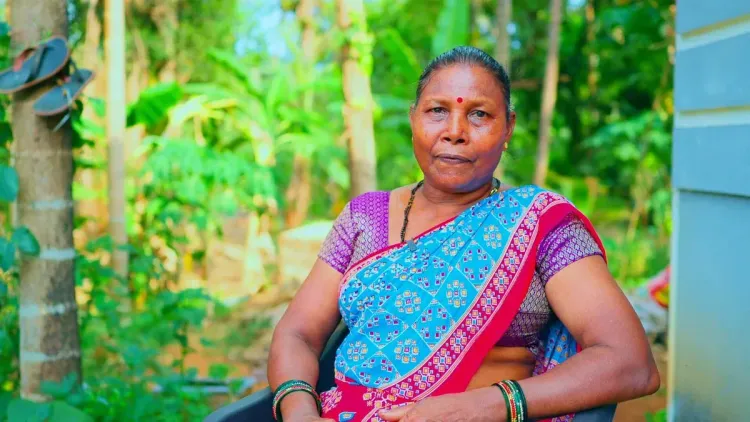
Goa CM Pramod Sawant spotlighted Smt Leela Gaonkar of Kirlapal, Dharbandora as a model small farmer under the Swayampurna Goa initiative on 23 June 2026 .
The Agriculture Department provided quality seeds, training, and technical guidance to support her farming activity.
Assured market access through the Goa State Horticultural Corporation is cited as a key factor in her agricultural success.
The post was tagged #SwayampurnaGoa and directed at @PMOIndia , linking state welfare delivery to national self-reliance goals.
Swayampurna Goa aims at saturation coverage of welfare schemes and local self-sufficiency, drawing from the Atmanirbhar Bharat Abhiyan framework.
The Goa government's monsoon session is expected to discuss expansion of the Horticultural Corporation's procurement network in interior talukas.
Goa Chief Minister Pramod Sawant on Tuesday, 23 June 2026 spotlighted the agricultural journey of Smt Leela Gaonkar, a small farmer from Kirlapal village in Dharbandora taluka, as a model of grassroots food security and self-reliance under the state's Swayampurna Goa initiative.
Context
In his post, CM Sawant noted that Smt Gaonkar is 'demonstrating how small farms can make a big contribution towards food security and self-reliance.' He credited support from the Agriculture Department — including quality seeds, training, and technical guidance — alongside assured market access through the Goa State Horticultural Corporation (GSHC) as key enablers of her progress. The post, tagged with #SwayampurnaGoa and directed at @PMOIndia, signals the state government's intent to link its local welfare delivery to the broader national self-reliance agenda.
Policy Backdrop
Swayampurna Goa is a flagship state government scheme designed to achieve saturation coverage of welfare programmes and promote local self-sufficiency, including in agriculture and horticulture. The initiative draws conceptual lineage from Prime Minister Narendra Modi's Atmanirbhar Bharat Abhiyan, launched in May 2020, which emphasised food production and farm-sector resilience as pillars of national self-reliance.
The Goa State Horticultural Corporation plays a central role in this ecosystem by providing market linkages, procurement support, and technical assistance to smallholders — addressing one of the most persistent challenges in Indian agriculture: post-harvest losses and unpredictable price realisations for small and marginal farmers.
Stakeholders and Impact
Dharbandora, an interior taluka of Goa, is home to a significant population of small and tribal farmers who have historically had limited access to institutional agricultural support. Spotlighting a woman farmer from this region underscores the Goa government's stated focus on gender-inclusive agricultural development and outreach to underserved rural communities.
The model being highlighted — state-backed inputs combined with assured procurement — mirrors approaches adopted in other states to reduce smallholder dependence on intermediaries and volatile open markets. For farmers like Smt Gaonkar, assured market access through the GSHC can translate directly into more stable incomes and an incentive to scale up cultivation.
What's Next
The Goa legislative assembly's upcoming monsoon session is expected to include discussions on the agriculture budget and potential expansion of the Horticultural Corporation's procurement network across the state's interior talukas. How the government scales individual success stories like Smt Gaonkar's into a replicable framework for other small farmers will be a key indicator of Swayampurna Goa's on-ground reach. Continued tagging of @PMOIndia in such posts also suggests the state is positioning these outcomes for visibility at the national policy level.
Point of View
CM Sawant is deploying a well-worn BJP state-government playbook: translating welfare scheme delivery into visible, human-interest narratives that reinforce both local and national political messaging. The Dharbandora focus is notable — interior, less-developed talukas are politically sensitive terrain, and showcasing women beneficiaries there signals an effort to demonstrate inclusive reach beyond Goa's coastal belt. The explicit linkage between Swayampurna Goa and the Atmanirbhar Bharat framework suggests the state is positioning its agriculture programme as a direct implementation arm of central policy, which could strengthen its case for additional central funding. Whether these spotlight moments translate into measurable improvements in smallholder incomes across the state remains the harder question for the monsoon budget session to answer.
NationPress
23 Jun 2026
Frequently Asked Questions
What is Swayampurna Goa?
Swayampurna Goa is a Goa government initiative aimed at achieving saturation coverage of welfare schemes and promoting local self-reliance, including in agriculture and horticulture. It is conceptually aligned with the national Atmanirbhar Bharat Abhiyan.
What support does the Goa Agriculture Department provide to small farmers?
The Goa Agriculture Department provides quality seeds, training, and technical guidance to small farmers as part of state welfare and self-reliance programmes like Swayampurna Goa.
What is the Goa State Horticultural Corporation?
The Goa State Horticultural Corporation (GSHC) is a state body that provides market linkages, procurement support, and technical assistance to horticulture farmers in Goa, helping them access assured markets for their produce.
Who is Smt Leela Gaonkar and why is she in the news?
Smt Leela Gaonkar is a small farmer from Kirlapal village in Dharbandora taluka, Goa. She was highlighted by Chief Minister Pramod Sawant on 23 June 2026 as an example of how state agricultural support and assured market access can help small farms contribute to food security.
Where is Dharbandora located in Goa?
Dharbandora is an interior taluka of Goa, home to a significant population of small and tribal farmers. It is part of the South Goa district and is known for its forested, rural landscape.