CM Sawant Highlights Mayem Pharmacist Backed by Rojgar Yojana
Synopsis
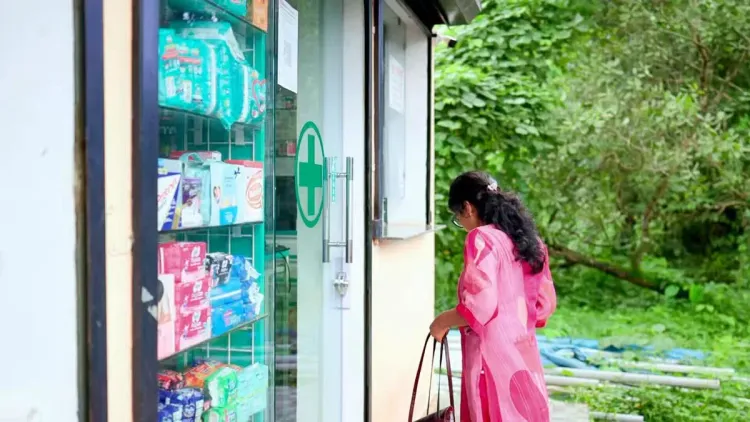
Goa CM Pramod Sawant highlighted a qualified pharmacist from Mayem who leveraged years as a medical representative and state support under the Chief Minister's Rojgar Yojana and Swayampurna Goa to open her own village pharmacy.
Key Takeaways
Goa CM Pramod Sawant shared the story of a woman from Mayem , North Goa, who opened her own pharmacy with state support.
The beneficiary is a qualified graduate of Goa College of Pharmacy with prior experience as a medical representative.
Funding and facilitation came through the Chief Minister's Rojgar Yojana , a Goa government micro-enterprise support scheme.
The initiative is part of the Swayampurna Goa campaign, which promotes grassroots self-reliance and local entrepreneurship.
A village pharmacy in Mayem provides rural residents with a qualified healthcare touchpoint closer to home.
A pharmacy degree from Goa College of Pharmacy, years on the road as a medical representative, and then — finally — a shop of her own in her home village. Goa Chief Minister Pramod Sawant shared this story on Friday, 25 September 2026, spotlighting a woman from Mayem in North Goa who converted professional experience into a village-level pharmacy with support from the Chief Minister's Rojgar Yojana.
From medical rep to village pharmacist in Mayem
The woman at the centre of the post is a qualified pharmacist who spent years working as a medical representative — the boots-on-ground salesforce of India's pharmaceutical supply chain. That experience gave her product knowledge and market instincts. What the Chief Minister's Rojgar Yojana gave her was the financial scaffolding to turn that knowledge into an independent enterprise back in Mayem, a village in North Goa.
CM Sawant framed her story under the #SwayampurnaGoa banner — the state government's wider campaign for local self-reliance and grassroots entrepreneurship. The message is deliberate: skilled women who might otherwise migrate to urban centres for stable employment can, with targeted state support, build livelihoods in their own communities.
What the Rojgar Yojana actually does
The Chief Minister's Rojgar Yojana was designed to provide financial and facilitative support to unemployed youth and women seeking to launch micro-enterprises in Goa. Healthcare retail — pharmacies, in particular — fits neatly into the scheme's logic: it addresses a genuine service gap in rural villages while deploying trained professionals where they are most needed.
The broader pattern is familiar across Indian states. Targeted self-employment schemes that combine skill validation with seed funding tend to work best when they back people who already have a qualification and relevant experience — precisely the profile this story presents. The Goa government has positioned Swayampurna Goa as the umbrella identity for exactly these outcomes.
The rural healthcare angle
A village pharmacy is not a small thing. In rural India, the local pharmacist is often the first — and sometimes only — healthcare touchpoint for a community. A qualified pharmacist setting up in Mayem means villagers gain access to prescription fulfilment, basic medical advice, and over-the-counter care without travelling to a town. That is a concrete, daily-life impact that sits behind the hashtag.
Whether the Rojgar Yojana can replicate this outcome at scale depends on how many qualified professionals it reaches and how effectively it removes the capital barrier to entry. Impact reports and beneficiary numbers, when released, will tell that story.
Point of View
Moving from basic livelihood creation toward skill-deployment in underserved rural sectors. It also fits a wider BJP state-government pattern of amplifying women-beneficiary narratives in the healthcare and services space as proof-of-concept for flagship welfare programmes. Whether these individual spotlights translate into published aggregate impact data remains the test of genuine accountability.
NationPress
25 Sept 2026
Frequently Asked Questions
What is the Chief Minister's Rojgar Yojana in Goa?
The Chief Minister's Rojgar Yojana is a Goa state government scheme that provides financial and facilitative support to unemployed youth and women to help them start micro-enterprises, including businesses in sectors like healthcare retail.
What is Swayampurna Goa?
Swayampurna Goa is a Goa government campaign promoting self-reliance and local entrepreneurship, under which initiatives like the Rojgar Yojana are branded and communicated.
Where is Mayem village located?
Mayem is a village in North Goa where the pharmacy featured in CM Sawant's post was established.
What does Goa College of Pharmacy offer?
Goa College of Pharmacy is a state institution that provides pharmacy education and qualifications, producing trained professionals like the beneficiary highlighted in CM Sawant's post.
How does the Rojgar Yojana help women entrepreneurs in Goa?
The scheme provides financial assistance and support to help qualified women set up independent small businesses in their communities, reducing barriers to self-employment in rural areas.