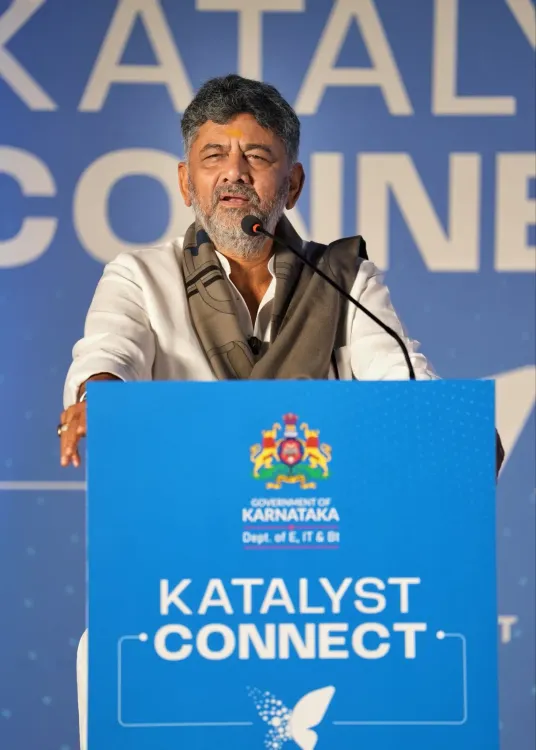
CM Shivakumar Chairs KATALYST CONNECT with GCC Leaders
Synopsis
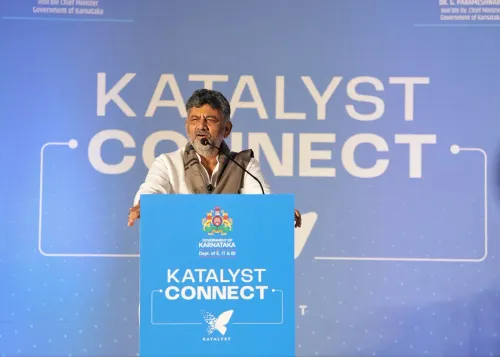
Chief Minister D.K. Shivakumar chaired KATALYST CONNECT on 8 July 2026, engaging Global Capability Centre leaders to reinforce Karnataka's position as India's leading GCC destination and pledging a business environment built for global-scale innovation.
Key Takeaways
Shivakumar chaired KATALYST CONNECT on 8 July 2026 , a strategic interaction with Global Capability Centre leaders.
The event reaffirmed the Karnataka government's commitment to maintaining the state as India's leading GCC destination .
Shivakumar stated that GCCs in Karnataka are 'shaping global products, engineering breakthrough technologies and driving enterprise transformation.' Karnataka , anchored by Bengaluru , has built its GCC appeal through successive industrial policies targeting technology investment since the late 1990s.
India is the world's largest GCC location, with states competing actively to attract and retain these high-value offshore innovation centres.
Follow-up announcements on GCC-specific incentives or infrastructure projects are expected in the coming months.
The Chief Minister's Office of Karnataka announced on Wednesday, 8 July 2026, that Chief Minister D.K. Shivakumar chaired KATALYST CONNECT, a government-convened strategic interaction with leaders of Global Capability Centres (GCCs), reaffirming the state's ambition to remain India's foremost GCC destination.
Context
Speaking at the event, Chief Minister Shivakumar said: 'Karnataka's partnership with Global Capability Centres has helped build one of the world's most dynamic innovation ecosystems. Today, GCCs in our State are shaping global products, engineering breakthrough technologies and driving enterprise transformation.' He added that the government remains 'committed to creating an environment where businesses can innovate with confidence, access world-class talent and scale globally.'
KATALYST CONNECT was framed as a platform for direct dialogue between the state government and multinational GCC executives, signalling that Karnataka intends to go beyond passive hosting and actively co-shape the GCC growth agenda.
Policy Backdrop
Karnataka, anchored by its capital Bengaluru, has cultivated its technology ecosystem through successive industrial policies dating to the late 1990s that explicitly targeted software and technology-services investment. Those foundational choices built the talent base and infrastructure that today underpin the state's GCC appeal.
India has emerged as the world's largest GCC location, with states competing intensely to attract these offshore research, engineering, and enterprise-services units of multinational corporations. Karnataka's historically high share of this activity reflects decades of ecosystem investment, but competition from other states has made proactive government engagement increasingly necessary.
GCCs differ from conventional IT outsourcing in that they function as genuine innovation arms of their parent companies — developing proprietary products, running global engineering teams, and driving enterprise transformation from Indian soil. Their presence generates high-value employment and significant technology spillovers into the local economy.
Stakeholders and Impact
The primary beneficiaries of a thriving GCC ecosystem are technology professionals in Karnataka, who gain access to roles in cutting-edge product development rather than traditional services delivery. Multinational corporations, in turn, benefit from the state's deep talent pool and established support infrastructure.
Smaller technology firms and startups in Bengaluru also stand to gain, as GCC presence typically stimulates demand for specialist vendors, co-innovation partnerships, and ancillary services. Local academic institutions and skilling bodies are indirect stakeholders, as GCC expansion sustains strong demand for engineering and management graduates.
What's Next
The government's language at KATALYST CONNECT points toward follow-up policy action. Observers will watch for announcements on GCC-specific incentive packages, dedicated infrastructure projects, or streamlined regulatory pathways in the coming months.
Chief Minister Shivakumar closed with a forward commitment: 'Together, we will ensure that the next generation of global technologies and enterprise capabilities continues to be imagined, engineered and scaled from Karnataka.' Whether that pledge translates into concrete fiscal or regulatory measures will determine how the GCC community responds over the near term.
Point of View
Chief Minister Shivakumar is deploying executive visibility as a retention and attraction tool, a tactic that reflects how intensely states now compete for high-value technology investment. The emphasis on 'innovation with confidence' and 'world-class talent' suggests the government is positioning Karnataka not merely as a cost-arbitrage location but as a genuine global innovation partner. Whether this translates into measurable policy commitments — fiscal incentives, infrastructure pledges, or regulatory easing — will be the true test of the forum's strategic value.
NationPress
8 Jul 2026
Frequently Asked Questions
What is KATALYST CONNECT in Karnataka?
KATALYST CONNECT is a government-convened strategic forum in Karnataka where Chief Minister D.K. Shivakumar met leaders of Global Capability Centres on 8 July 2026 to discuss ecosystem support and future investment in the state.
What are Global Capability Centres and why are they important for Karnataka?
Global Capability Centres are offshore innovation and engineering units of multinational corporations. They are important for Karnataka because they generate high-value employment, drive technology development, and contribute significantly to the state's economy, with Bengaluru historically hosting a large share of India's GCC activity.
Is Karnataka the top GCC destination in India?
Karnataka, particularly Bengaluru, has historically held one of the highest shares of GCC activity in India owing to its established talent base and technology infrastructure. The state government's KATALYST CONNECT initiative is aimed at sustaining and strengthening that position amid growing competition from other states.
What did CM DK Shivakumar say at the GCC meeting?
Chief Minister D.K. Shivakumar said that Karnataka's partnership with GCCs has built 'one of the world's most dynamic innovation ecosystems' and pledged that the government will ensure 'the next generation of global technologies and enterprise capabilities continues to be imagined, engineered and scaled from Karnataka.'
What policy steps is Karnataka expected to take for GCCs after KATALYST CONNECT?
While specific measures were not announced at KATALYST CONNECT, observers expect follow-up announcements on GCC-specific incentive packages, dedicated infrastructure projects, or streamlined regulatory processes in the coming months.