CM Shivakumar visits Karnataka Bronze Ware show in Mysuru
Synopsis
Karnataka CM D.K. Shivakumar visited a Karnataka Bronze Ware exhibition at Mysuru's Kaveri Emporium on 11 November 2026, organised by the KSHDC. He called preserving traditional arts and passing craft heritage to future generations a shared responsibility.
Key Takeaways
Shivakumar visited the Karnataka Bronze Ware exhibition at Kaveri Emporium, Mysuru on 11 November 2026 .
The exhibition was organised by the Karnataka State Handicrafts Development Corporation (KSHDC) .
Shivakumar called preserving traditional arts, culture, and handicraft heritage 'the responsibility of all of us.' He stressed the importance of introducing the craft tradition's significance to future generations .
Karnataka's bronze-casting tradition uses the ancient lost-wax technique and covers devotional, decorative, and utilitarian objects.
The Kaveri Emporium in Mysuru is a key government-backed showcase and marketplace for Karnataka artisans.
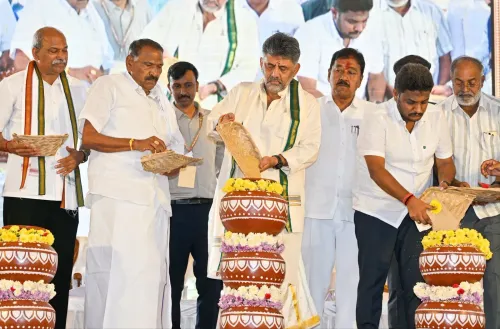
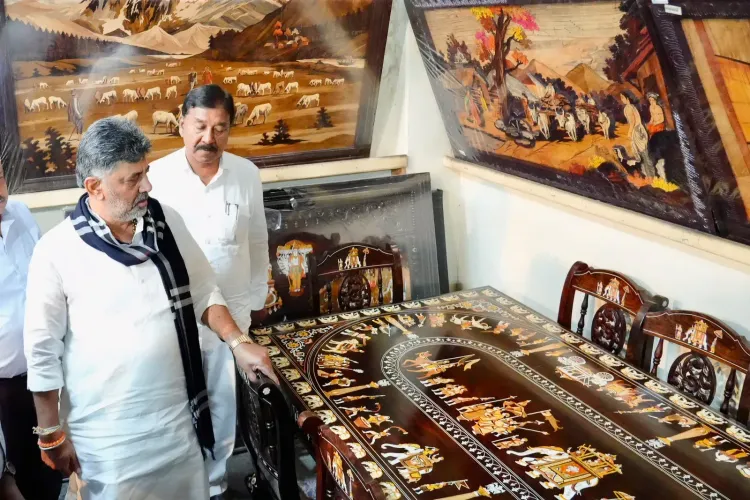
Centuries of craft, alive in metal — Karnataka Chief Minister D.K. Shivakumar walked through the Kaveri Emporium in Mysuru on Wednesday, 11 November 2026, taking in the intricate bronze sculptures and artefacts created by the state's master artisans at an exhibition organised by the Karnataka State Handicrafts Development Corporation (KSHDC).
What the CM said at Kaveri Emporium
Shivakumar, visibly engaged with the artworks on display, underlined that preserving and promoting Karnataka's traditional arts, culture, and handicraft heritage was 'the responsibility of all of us.' He added that introducing the significance of these crafts to the next generation was equally essential — a message directed as much at policymakers as at the public visiting the exhibition.
Karnataka Bronze Ware — a craft the state calls its pride
Karnataka's bronze-casting tradition, known locally as kanchina vasthugalu (bronze articles), spans centuries and encompasses devotional idols, decorative panels, and utilitarian objects shaped through the ancient lost-wax casting technique. The state government, through the KSHDC, periodically stages exhibitions and maintains emporia like the one in Mysuru to give artisans a platform that the open market increasingly struggles to provide. Mysuru itself has long served as a cultural hub for Karnataka's craft ecosystem, with the Kaveri Emporium acting as a government-backed marketplace and showcase space.
Artisan visibility at the centre of cultural outreach
The Chief Minister's visit is part of a broader pattern of leadership-level engagement with Karnataka's handicraft communities — appearances that lend visibility to artisans who often work in isolation and depend on institutional support for access to markets. The KSHDC functions as the primary state conduit for training, marketing, and exhibiting the work of these communities. Shivakumar's emphasis on intergenerational transmission echoes messaging on intangible cultural heritage that southern Indian state governments have consistently amplified over the past decade.
Whether Wednesday's visit translates into new artisan-support schemes, expanded Geographical Indication (GI) tag pursuits for Karnataka crafts, or a bigger platform at national cultural festivals will be the real test of intent.
Point of View
High-symbolism cultural gesture — but symbols matter when artisan communities feel invisible. Karnataka governments have long used KSHDC exhibitions as soft-power moments to signal heritage commitment without committing to hard budgetary lines. The emphasis on intergenerational transmission is strategically smart: it reframes craft preservation as a civic duty rather than a niche subsidy, broadening public buy-in. The real policy signal to watch is whether this visit precedes new GI tag filings or expanded artisan training budgets in the next state budget cycle.
NationPress
11 Nov 2026
Frequently Asked Questions
What is Karnataka Bronze Ware?
Karnataka Bronze Ware refers to traditional metal artefacts — including devotional idols, decorative panels, and utilitarian objects — crafted using ancient techniques such as lost-wax casting, a tradition that spans several centuries in the state.
Where is the Kaveri Emporium in Mysuru?
The Kaveri Emporium is a government-run handicrafts exhibition and sales venue located in Mysuru, Karnataka, operated to promote and showcase traditional crafts from across the state.
What did CM DK Shivakumar say at the Bronze Ware exhibition?
Shivakumar said that preserving and promoting Karnataka's traditional arts, culture, and handicraft heritage, as well as introducing their significance to future generations, is 'the responsibility of all of us.'
What does the Karnataka State Handicrafts Development Corporation do?
The KSHDC is a state government body responsible for promoting, training, marketing, and exhibiting the work of Karnataka's traditional handicraft artisan communities, including through exhibitions at venues like the Kaveri Emporium.
Will there be new government schemes for Karnataka artisans after this event?
No new schemes were announced at the exhibition. Observers are watching for any follow-up announcements on artisan training programmes, GI tag expansions for Karnataka crafts, or enhanced participation in national cultural festivals.