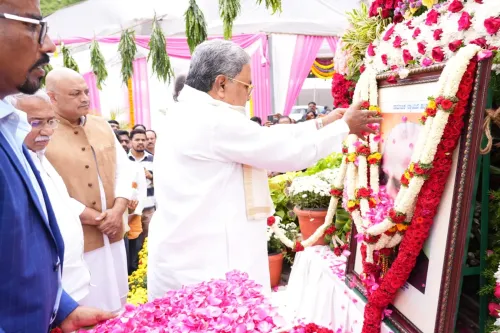
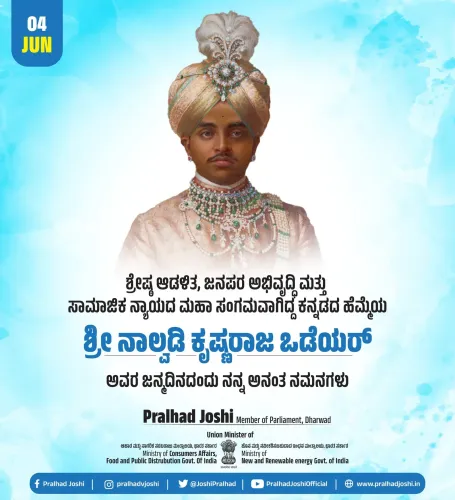
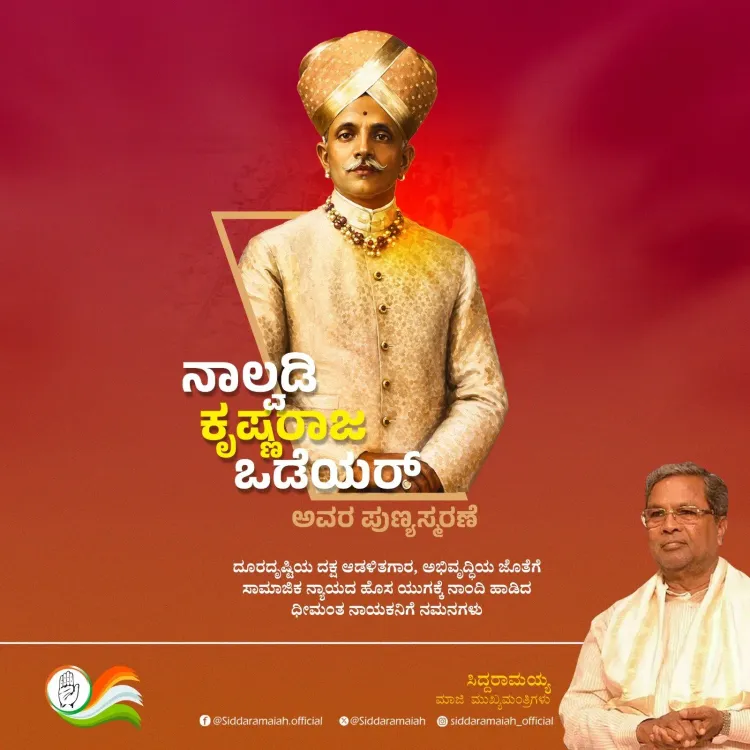
CM Siddaramaiah Pays Tribute to Nalvadi Krishnaraja Wodeyar
Synopsis
Karnataka CM Siddaramaiah paid tribute to Nalvadi Krishnaraja Wodeyar IV, the Mysore Maharaja who ruled from 1902 to 1940 and pioneered Asia's first hydroelectric power, the University of Mysore, the Krishnaraja Sagar Dam, and India's first formal reservations for backward communities.
Key Takeaways
CM Siddaramaiah paid tribute to Nalvadi Krishnaraja Wodeyar IV on 3 August 2026 , honouring the Mysore Maharaja's reign from 1902 to 1940 .
Wodeyar oversaw Asia's first hydroelectric power generation during his administration of Mysore State .
The University of Mysore , founded in 1916 , was the sixth university in India and the first in present-day Karnataka.
The Krishnaraja Sagar Dam on the Cauvery river, completed in the early 1930s, remains a key irrigation and power asset in the region.
The Miller Committee of 1918 led to India's earliest formal reservations in education and government jobs for backward communities — a legacy Siddaramaiah explicitly connected to modern social justice policy.
Siddaramaiah described Wodeyar as a 'people's king, democratic thinker, and champion of an equal society' — framing historical reform as precedent for current OBC welfare governance.
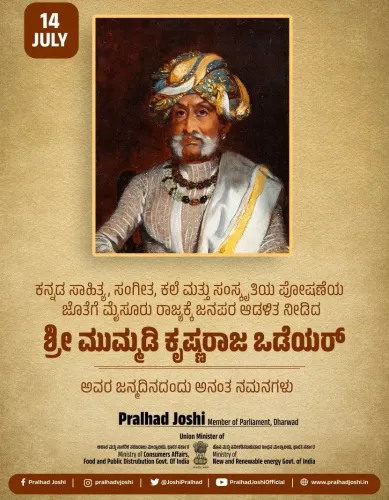
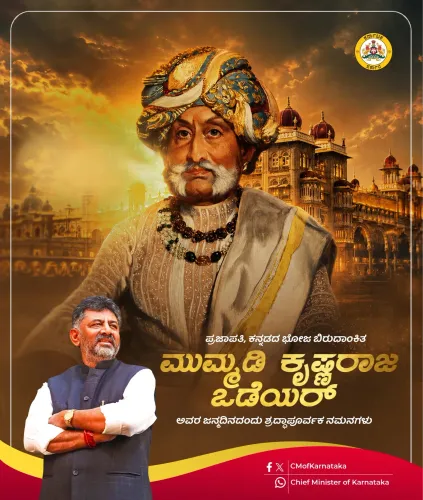
He gave Asia its first hydroelectric power, Karnataka its first university, and India its first formal reservations for backward communities — and on Monday, 3 August 2026, Karnataka Chief Minister Siddaramaiah paused to bow before that legacy, paying tribute to Nalvadi Krishnaraja Wodeyar IV, the visionary Maharaja of Mysore whose reign is remembered as a golden chapter in the state's history.
In his post, written in Kannada, Siddaramaiah recalled the Maharaja as 'dooradrushTiya daksha aaDaLitaagaara' — 'a far-sighted, efficient administrator' — who gave the touch of modernity to the Mysore princely state and built a nation that made all of India take notice. He offered his 'infinite salutations' (ananta namanagaLu) to a ruler he described as a people's king, a democratic thinker, and a champion of an equal society.
A Reign That Rewrote What a Princely State Could Be
Nalvadi Krishnaraja Wodeyar ruled Mysore State from 1902 to 1940, transforming a feudal princely state into one of the most administratively progressive regions in early 20th-century India. The list Siddaramaiah recited is staggering in its breadth: a representative assembly (Praja Pratinidhi Sabha), free primary education, social reform legislation, the founding of the University of Mysore in 1916, the construction of the Krishnaraja Sagar Dam across the Cauvery, an iron and steel factory at Bhadravathi, the iconic Mysore Sandal Soap factory, and — crucially — hydroelectric power generation that was a first for Asia.
The University of Mysore, established by royal decree in 1916, was the sixth university in all of India at the time, a remarkable achievement for a princely state operating under British suzerainty. The Krishnaraja Sagar reservoir, completed in the early 1930s, remains a cornerstone of irrigation and power infrastructure in the region nearly a century later.
India's First Reservation Policy — Born in Mysore
Perhaps the most politically resonant part of Siddaramaiah's tribute was his emphasis on social justice. He credited Wodeyar with being the first ruler in the country to introduce reservations in education and government employment for backward communities — a measure that predates independent India's constitutional provisions by decades.
This policy trace runs through the Miller Committee, constituted in 1918 to examine the representation of backward communities in Mysore's administration and educational institutions. The committee's recommendations seeded what we now understand as affirmative action — and Siddaramaiah, himself a champion of OBC rights and the architect of Karnataka's current social justice agenda, was deliberate in drawing that line from Wodeyar's court to the present day.
Why a Karnataka CM Keeps Returning to This Legacy
Tributes to the Wodeyar era are not incidental in Karnataka political discourse — they are load-bearing. Successive governments have invoked the Mysore State's early reforms when framing reservation policy, irrigation investment, and public education spending. For Siddaramaiah, who has staked much of his political identity on backward-class welfare and the Guarantee schemes of his current term, the Maharaja's legacy offers historical legitimacy: proof that Karnataka's soil has always nurtured social equity, long before the Constitution mandated it.
The kicker is in what Siddaramaiah chose to emphasise — not the palace, not the pageantry, but the dam, the factory, the university, and the reservation order. That is a political reading of history as much as a tribute, and it lands with precision.
Point of View
The CM anchors his own OBC-welfare agenda in a pre-constitutional, princely-state precedent that transcends party lines. It is a reminder that Karnataka's identity as a social-justice laboratory predates the republic itself. As debates over reservation expansion and OBC sub-categorisation intensify nationally, invoking Mysore's 1918 Miller Committee is a quiet but pointed argument — that Karnataka was here first, and that its current government sees itself as the rightful heir to that tradition.
NationPress
3 Aug 2026
Frequently Asked Questions
Who was Nalvadi Krishnaraja Wodeyar?
Nalvadi Krishnaraja Wodeyar IV was the Maharaja of Mysore who ruled from 1902 to 1940. His reign is considered a golden era for the region, marked by the founding of the University of Mysore, construction of the Krishnaraja Sagar Dam, Asia's first hydroelectric power generation, and India's earliest formal reservations for backward communities.
Why did CM Siddaramaiah pay tribute to Krishnaraja Wodeyar?
Karnataka Chief Minister Siddaramaiah posted a tribute on 3 August 2026 honouring Wodeyar's contributions to modernisation, social reform, and backward-class welfare — themes that align closely with Siddaramaiah's own political identity and governance agenda centred on OBC rights and social justice.
What is the Miller Committee and why does it matter?
The Miller Committee was constituted in 1918 in Mysore State to examine the representation of backward communities in government administration and education. Its recommendations led to what historians regard as India's first formal reservation policy for backward classes, decades before the Constitution of India was adopted.
When was the University of Mysore established?
The University of Mysore was established in 1916 by royal decree during Krishnaraja Wodeyar's reign. It was the sixth university in India at the time and the first institution of higher education in present-day Karnataka.
What is the significance of the Krishnaraja Sagar Dam?
The Krishnaraja Sagar Dam, built across the Cauvery river and completed in the early 1930s under Wodeyar's administration, is a major irrigation and hydroelectric reservoir that continues to support agriculture and power generation in Karnataka today.