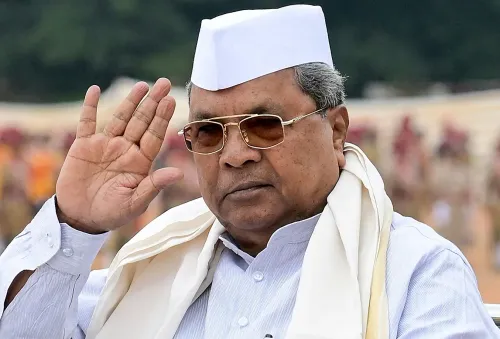
CM Siddaramaiah Questions Election Commission's Independence
Synopsis
Karnataka Chief Minister Siddaramaiah posted a pointed challenge to the Election Commission of India's independence on September 26, invoking Article 324, citing reported internal dissent within the body, and arguing that protecting the Commission's credibility is foundational to democracy itself.
Key Takeaways
Karnataka CM Siddaramaiah posted on September 26, 2026 questioning the Election Commission of India 's independence.
He argued the Commission's constitutional loyalty must be to the Constitution alone — not to any government or party.
He cited 'serious objections being raised from within the Commission itself,' escalating the criticism beyond routine opposition rhetoric.
The Election Commission was established under Article 324 of the Constitution in 1950 with explicit insulation from executive influence.
Siddaramaiah framed protecting the Commission's credibility as equivalent to protecting democracy itself.
Specific details of the alleged internal dissent have not been independently verified.
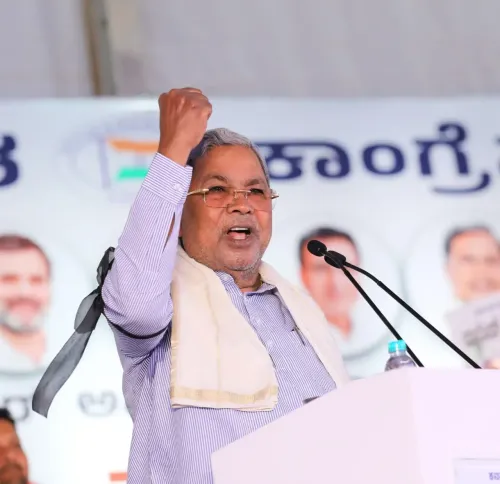
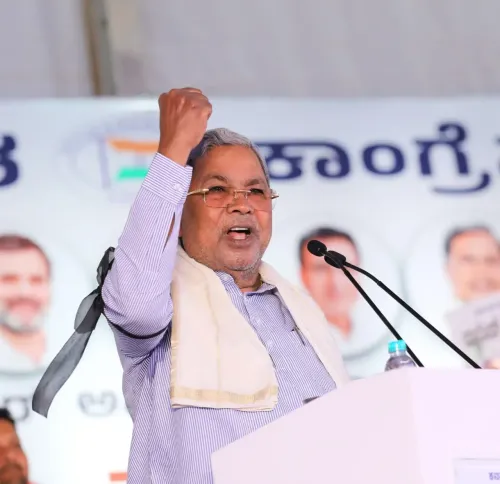
A direct challenge to the Election Commission of India's institutional standing landed on Saturday, September 26, 2026, when Karnataka Chief Minister Siddaramaiah posted a pointed statement asserting that the poll body's credibility is inseparable from democracy itself — and that credibility, he argued, is now under question.
The core charge: loyalty to the Constitution, not the government
Siddaramaiah anchored his argument in constitutional principle: 'The Election Commission is a constitutional institution, and its responsibility is to conduct elections independently, impartially and transparently. It cannot be loyal to any government or political party; its loyalty must be only to the Constitution.' The formulation is deliberate — framing the issue not as a political grievance but as a structural obligation the Commission carries under Article 324 of the Constitution.
He went further, citing what he described as 'serious objections being raised from within the Commission itself' — a reference to internal dissent within the body. That is a significant escalation. Opposition criticism of the Election Commission from outside its walls is routine in Indian politics; invoking apparent internal discord is a sharper, harder-to-dismiss claim.
Article 324 and the long war over the Commission's independence
Article 324, which established the Election Commission of India in 1950, vests in it the power to superintend, direct, and control elections to Parliament and state legislatures. The drafters of the Constitution gave the Commission deliberate insulation from the executive — fixed tenures, removal procedures mirroring those for Supreme Court judges — precisely to firewall it from political pressure.
Yet questions about that firewall have recurred across decades of Indian democracy. Opposition parties — whichever formation happens to be out of power at any given moment — have periodically questioned the body's independence, citing decisions on election scheduling, model code enforcement, or appointments. The Congress party, which Siddaramaiah represents, has been among the most vocal critics in the current political cycle.
Why 'from within the Commission' changes the equation
What distinguishes Siddaramaiah's post from routine political criticism is the specific invocation of internal dissent. If members or officials of the Commission itself are raising objections about its functioning — as the Chief Minister asserts — the debate shifts from partisan allegation to institutional stress. That is a qualitatively different story, and it is one the public, the judiciary, and Parliament would have strong reason to examine.
The Election Commission has not publicly acknowledged any such internal dissent. As the research notes, the specifics of the objections referenced in the post remain unverified. But the political signal is unmistakable: Siddaramaiah is demanding that the Commission's conduct be treated as a matter of democratic health, not electoral tactics.
The stakes: credibility as the Commission's only currency
An election body that citizens distrust is an election body that cannot function. Every disputed result, every contested schedule, every perceived tilt in model-code enforcement chips away at the one asset that makes the Commission's authority real — the public's belief that the count is honest. Siddaramaiah's closing line carries that logic to its endpoint: 'Protecting the credibility of the Election Commission is essential to protecting democracy itself.'
Whether one agrees with the Congress leader's reading of events or not, the framing forces a serious question onto the national agenda. A constitutional institution is only as strong as the trust invested in it. That trust, once spent, is extraordinarily difficult to earn back.
Point of View
But the explicit reference to internal dissent within the body is an unusual escalation that moves the argument onto structural, rather than merely partisan, terrain. For the Congress party, keeping institutional-integrity questions alive ahead of election cycles is a strategic priority — it pre-frames any adverse outcome as a process failure rather than a political defeat. The deeper question the post raises is whether India's democratic architecture has adequate, transparent mechanisms for the Commission to signal its own concerns publicly, without waiting for opposition leaders to do it for them.
NationPress
26 Sept 2026
Frequently Asked Questions
Why is Siddaramaiah criticising the Election Commission of India?
Karnataka Chief Minister Siddaramaiah posted on September 26, 2026 arguing that the Election Commission must be loyal solely to the Constitution — not to any government or political party — and that serious objections being raised from within the Commission itself make questions about its independence impossible to dismiss.
What does Article 324 of the Constitution say about the Election Commission?
Article 324, enacted in 1950, vests the Election Commission of India with the power to superintend, direct, and control all elections to Parliament and state legislatures, and provides the body with institutional insulation from executive interference.
Has there been internal dissent within the Election Commission of India?
Siddaramaiah's post references 'serious objections being raised from within the Commission itself,' but the specific nature of those objections has not been independently verified and the Election Commission has not made any public statement acknowledging internal dissent.
Is criticising the Election Commission new in Indian politics?
No — debates over the Election Commission's autonomy have recurred across Indian political history, with opposition parties of all stripes questioning its impartiality at various points. What distinguishes Siddaramaiah's statement is the invocation of alleged internal dissent rather than only external political criticism.
What could follow Siddaramaiah's statement on the Election Commission?
To watch: whether the Election Commission issues a response, whether other opposition or ruling-party leaders weigh in, and whether the matter is raised in Parliament or before any judicial body.