CM Yogi: 3 Crore Families Get Gharauni Property Rights
Synopsis
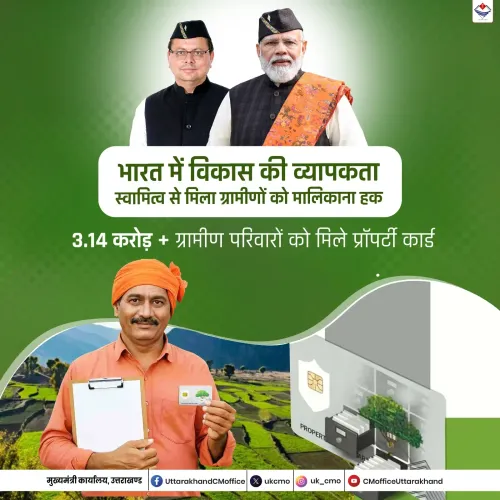
The Chief Minister's Office of Uttar Pradesh announced on 12 June 2026 that 3 crore families have received Gharauni property ownership documents under the SVAMITVA scheme, with women designated as primary title holders in a landmark rural land rights drive.
Key Takeaways
3 crore families received Gharauni property ownership documents on 12 June 2026 .
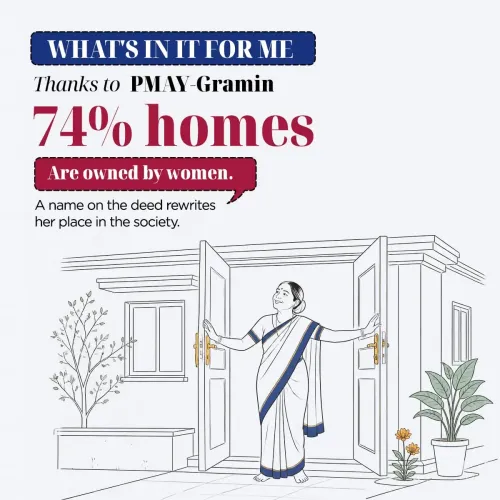
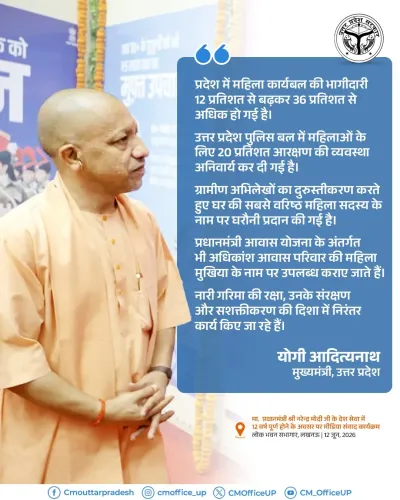
The rights were extended especially to women as primary title holders.
Gharauni is Uttar Pradesh's term for property cards issued under the central government's SVAMITVA Scheme .
SVAMITVA uses drone technology to map rural land parcels and issue legally recognised ownership documents.
Uttar Pradesh has been conducting phased Gharauni distribution drives since 2021 .
Formal property titles can enable rural households to access institutional credit and reduce land disputes.
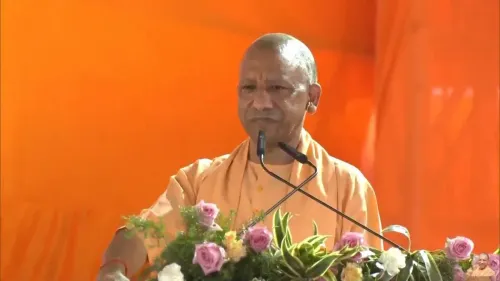
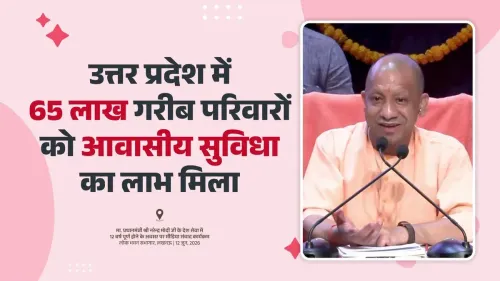
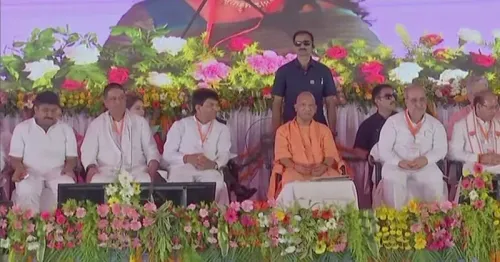
The Chief Minister's Office of Uttar Pradesh announced on Friday, 12 June 2026 that 3 crore families across the country have received ownership rights over their homes through the Gharauni distribution drive, with the rights extended particularly to women as primary title holders.
Quoting Chief Minister Yogi Adityanath, the official CMO post stated: 'Aaj gharauni vitaran ke madhyam se desh ke 3 crore parivaron ko unke aawas ka malikanaa adhikar prapt hua hai' — 'Today, through Gharauni distribution, 3 crore families of the country have received ownership rights over their homes. This right has been made available especially to women.'
Context
The Gharauni is Uttar Pradesh's term for the property ownership document issued to rural households under the central government's SVAMITVA Scheme. The scheme, launched nationally in April 2020, uses drone technology to map rural land parcels and generate legally recognised property cards. The Uttar Pradesh government began phased Gharauni distribution drives from 2021 onward, with a stated focus on registering women as primary title holders.Policy Backdrop
The SVAMITVA (Survey of Villages and Mapping with Improvised Technology in Village Areas) scheme was designed to address a long-standing gap in rural India: the absence of formal land records for residential properties in villages. Before the scheme, most rural households lacked documented proof of ownership, limiting their ability to use property as collateral for formal credit. The programme forms part of a broader digital land records modernisation effort that traces its lineage to earlier initiatives under the Digital India Land Records Modernisation Programme. Naming women as primary beneficiaries of property titles reflects a gender-focused reform strand visible across multiple Indian states in recent years, aiming to strengthen women's economic security and legal standing within households.Stakeholders and Impact
The primary beneficiaries are rural families, and within those households, women who are now formally recorded as property owners. A legal property title can unlock access to institutional credit, reduce inter-family and boundary disputes, and provide security against eviction. Analysts tracking the programme note that formalised land rights in rural areas can have downstream effects on women's bargaining power and financial inclusion. At the national scale, a distribution of this size — 3 crore families — would represent one of the largest single-day property rights events in independent India's history, spanning multiple states beyond Uttar Pradesh.What's Next
Further phases of the SVAMITVA property card distribution are expected to cover remaining villages across states yet to complete drone surveys. State-level assessments of whether Gharauni holders are successfully accessing formal credit or experiencing fewer land disputes will be a key measure of the programme's on-ground impact. Uttar Pradesh is likely to continue using large-scale distribution events as milestones to track progress toward universal rural property documentation.Point of View
With the scale of 3 crore families suggesting a coordinated multi-state event rather than a routine state drive. The deliberate centering of women as primary title holders is consistent with a broader political and policy strategy to position welfare delivery through a gender lens ahead of electoral cycles. For CM Yogi Adityanath, associating Uttar Pradesh's administration with a nationally visible property rights moment reinforces the state's image as a front-runner in implementing central schemes. The long-term test will be whether formal title translates into measurable gains in women's credit access and dispute resolution at the village level.
NationPress
21 Sept 2026
Frequently Asked Questions
What is Gharauni in Uttar Pradesh?
Gharauni is the name used in Uttar Pradesh for the property ownership document issued to rural households under the central government's SVAMITVA scheme, which uses drone surveys to map village land and create legal title records.
What is the SVAMITVA scheme?
SVAMITVA (Survey of Villages and Mapping with Improvised Technology in Village Areas) is a central government scheme launched in April 2020 that uses drone technology to map rural residential land and issue property cards to households, giving them formal ownership rights.
How many families received Gharauni property rights in June 2026?
According to the Chief Minister's Office of Uttar Pradesh, 3 crore families received property ownership rights through the Gharauni distribution drive on 12 June 2026.
Why are women the focus of Gharauni property rights?
The Uttar Pradesh government has prioritised women as primary title holders under Gharauni distribution to strengthen their economic security, legal standing, and access to institutional credit, reflecting a gender-focused reform approach seen across multiple Indian states.
What benefit does a Gharauni document provide to rural families?
A Gharauni property card provides legal proof of home ownership, which can be used as collateral to access formal bank credit, helps resolve boundary and inheritance disputes, and gives households — especially women — greater economic and legal security.