CM Yogi Highlights 9 Years of Ayodhya's Transformation
Synopsis
Chief Minister Yogi Adityanath's office says nine years of double-engine governance between Lucknow and New Delhi have transformed Ayodhya Dham, with the city now shining in its new grandeur following the Ram Mandir inauguration and a sweeping infrastructure master plan.
Key Takeaways
The Chief Minister's Office of Uttar Pradesh posted a statement from CM Yogi Adityanath on 26 June 2026 crediting nine years of double-engine government for Ayodhya's transformation.
The 'double-engine' model refers to political and policy alignment between the BJP state government in Lucknow and the central government in New Delhi .
The Ram Mandir at Ayodhya was inaugurated on 22 January 2024 following the Supreme Court 's 2019 verdict on the title dispute.
The Uttar Pradesh government's Ayodhya master plan includes a new airport, upgraded railway station, road widening, and riverfront development along the Saryu .
Pilgrims, tourists, and local businesses are the primary stakeholders expected to benefit from the city's elevated infrastructure and profile.
Remaining phases of the Ayodhya master plan and post-inauguration tourism data will serve as benchmarks for the government's development claims.
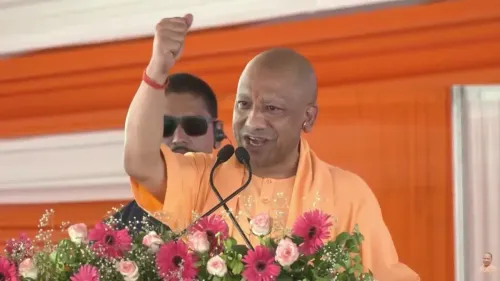
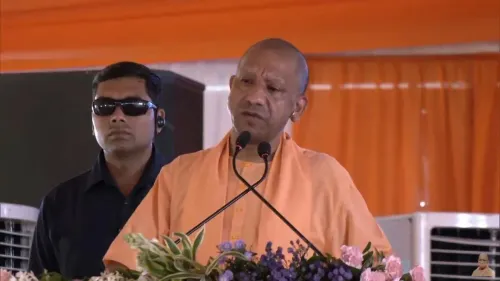
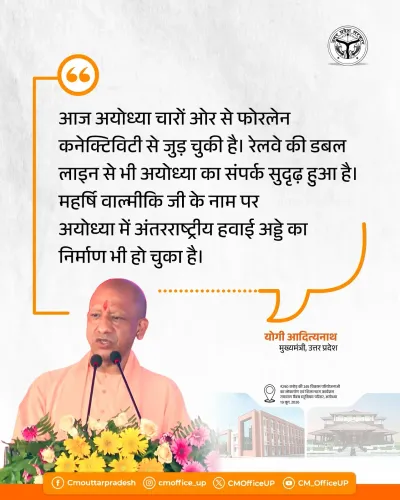
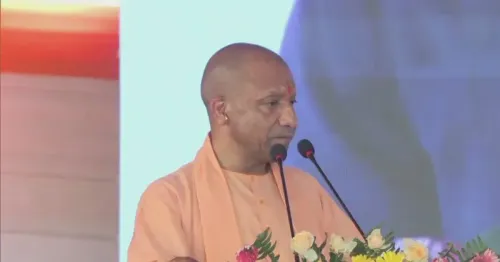
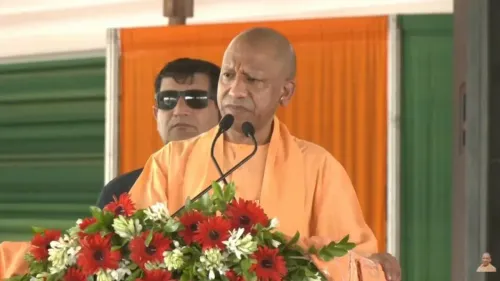
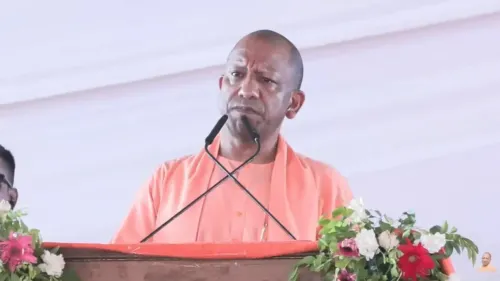
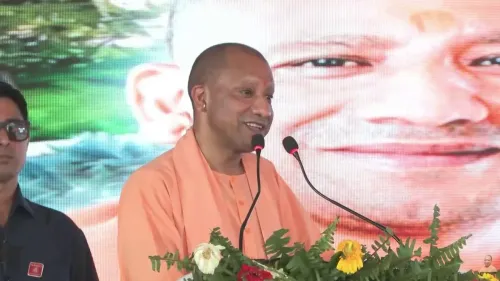
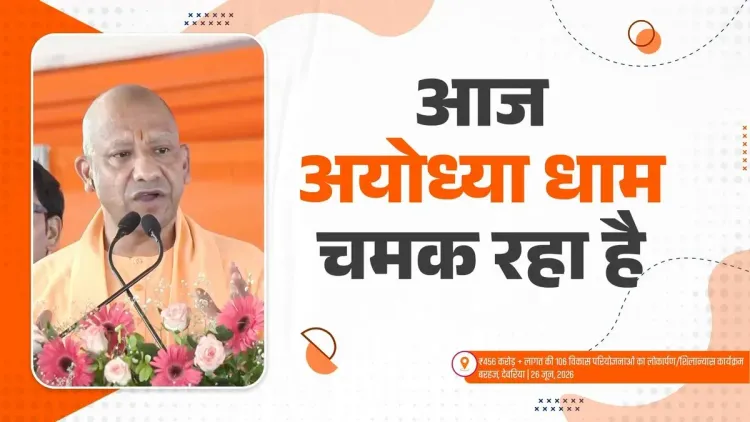
The Chief Minister's Office of Uttar Pradesh on Friday, 26 June 2026, shared a statement from Chief Minister Yogi Adityanath crediting nine years of 'double-engine government' for the sweeping redevelopment of Ayodhya, describing the city as now radiating grandeur in its new form.
In the post, CM Yogi Adityanath stated: 'Vigat 9 varshon mein double engine sarkar ne Ayodhya ko sajaya-sanwara hai' — 'In the past 9 years, the double-engine government has adorned and transformed Ayodhya. Today, Ayodhya Dham is shining in its magnificence and new form.'
Context
Ayodhya, the historic city in Uttar Pradesh revered as the birthplace of Lord Rama, has been at the centre of one of India's most ambitious urban and religious infrastructure programmes. The phrase 'double-engine government' refers to the political alignment between the Bharatiya Janata Party-led state government in Lucknow and the central government in New Delhi, enabling coordinated funding and project execution.
The statement comes nine years after the BJP first came to power in Uttar Pradesh in 2017, with CM Yogi Adityanath at the helm. The remark marks what the Chief Minister's Office frames as a milestone moment in the city's ongoing revival.
Policy Backdrop
The transformation of Ayodhya accelerated after the Supreme Court of India's verdict in November 2019 on the decades-long title dispute, which cleared the path for construction of the Ram Mandir. Prime Minister Narendra Modi performed the bhoomi pujan (ground-breaking ceremony) for the temple in August 2020, and the Ram Mandir was formally inaugurated on 22 January 2024.
Alongside the temple, the Uttar Pradesh government rolled out a comprehensive master plan for Ayodhya covering a new international airport, an upgraded railway station, widened roads, and riverfront development along the Saryu. These projects were funded through a combination of state and central government allocations under the double-engine framework.
The model mirrors similar redevelopment drives undertaken at Varanasi and other major pilgrimage centres in Uttar Pradesh, where coordinated state-central investment has been used to upgrade civic infrastructure and tourism capacity.
Stakeholders and Impact
The primary beneficiaries of Ayodhya's redevelopment are the millions of pilgrims and tourists who visit the city each year, as well as local businesses — hotels, eateries, transport operators, and artisans — whose livelihoods are tied to religious tourism. The inauguration of the Ram Mandir in January 2024 was widely expected to sharply increase footfall to the region.
Residents of Ayodhya have also experienced changes in civic amenities, road connectivity, and urban aesthetics as part of the master plan. The broader Uttar Pradesh economy stands to gain from increased domestic and international tourism linked to the city's elevated profile.
What's Next
Remaining phases of the Ayodhya master plan — including further riverfront beautification and hospitality infrastructure — are expected to be executed over the coming years. Official assessments of post-inauguration tourist arrivals and their economic impact on the region will be a key benchmark for the government's claims of transformation. The Chief Minister's Office statement signals that Ayodhya's development will remain a central pillar of Uttar Pradesh's governance narrative going forward.
Point of View
Timed to underscore nine years of BJP governance in Uttar Pradesh with Ayodhya — the most symbolically charged city in the party's political narrative — as the centrepiece. By invoking the 'double-engine' framework, the messaging reinforces the argument that BJP alignment at state and central levels produces tangible outcomes, a theme likely to feature prominently in future electoral communications. The post arrives after the Ram Mandir inauguration, which has already elevated Ayodhya's national and international profile, giving the government a concrete landmark to anchor its development claims. Observers will watch whether subsequent official data on tourist arrivals and local economic growth substantiates the transformation narrative.
NationPress
26 Jun 2026
Frequently Asked Questions
What is the double-engine government that CM Yogi refers to in Ayodhya?
The 'double-engine government' refers to the political alignment between the BJP-led Uttar Pradesh state government headed by CM Yogi Adityanath and the BJP-led central government under Prime Minister Narendra Modi, enabling coordinated funding and faster execution of projects like those in Ayodhya.
What development work has been done in Ayodhya in the past 9 years?
Since 2017, Ayodhya has seen the construction and inauguration of the Ram Mandir, a new international airport, an upgraded railway station, road widening, and riverfront development along the Saryu river, all under a state-central master plan.
When was the Ram Mandir in Ayodhya inaugurated?
The Ram Mandir in Ayodhya was inaugurated on 22 January 2024 by Prime Minister Narendra Modi, following the Supreme Court's November 2019 verdict on the Ayodhya title dispute.
What is the Ayodhya master plan?
The Ayodhya master plan is a comprehensive urban redevelopment programme launched by the Uttar Pradesh government post-2017, covering temple infrastructure, a new airport, railway upgrades, road expansion, and beautification of the Saryu riverfront to boost pilgrimage and tourism.
How has Ayodhya's transformation affected local businesses and pilgrims?
The redevelopment of Ayodhya has benefited pilgrims through improved connectivity and civic amenities, while local businesses including hotels, transport operators, and artisans have seen increased economic activity driven by growing religious tourism, particularly after the Ram Mandir inauguration.