CM Yogi highlights four farm welfare schemes for UP farmers
Synopsis
Chief Minister Yogi Adityanath's office on 10 July 2026 spotlighted four farm welfare schemes active in Uttar Pradesh — PM-KISAN, PM Krishi Sinchayee Yojana, PM Fasal Bima Yojana, and the state's own accident-compensation scheme that pays ₹5 lakh to bereaved families within 24 hours.
Key Takeaways
The Chief Minister's Office of Uttar Pradesh posted on 10 July 2026 highlighting four active farm welfare schemes.
PM-KISAN provides eligible farmers ₹6,000 annually via direct benefit transfer, launched in February 2019 .
PM Fasal Bima Yojana offers subsidised crop insurance against natural calamity losses, operational since Kharif 2016 .
PM Krishi Sinchayee Yojana (launched 2015 ) expands irrigation access and water-use efficiency across farmland.
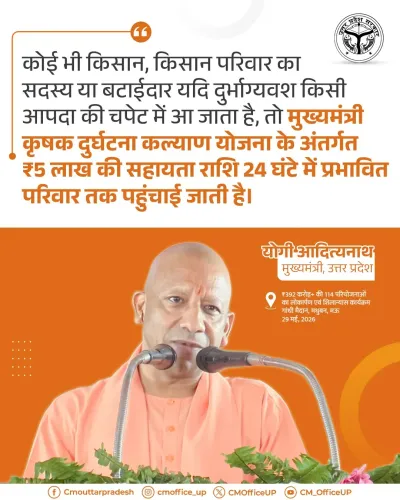
The state-run Mukhyamantri Krishak Durghatna Kalyan Yojana disburses up to ₹5 lakh to accident-affected farm families within 24 hours .
Uttar Pradesh has over 70 per cent of its workforce in agriculture, making these schemes critical to the rural economy.
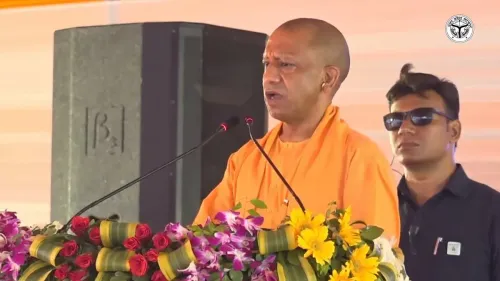
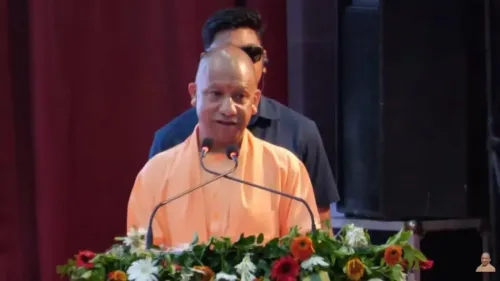
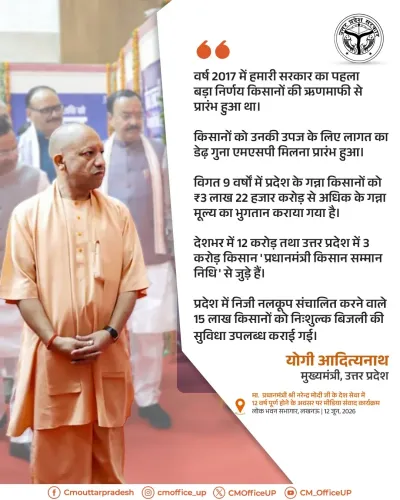
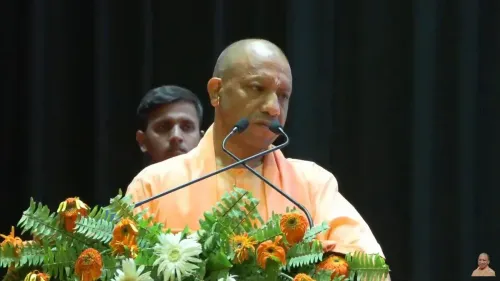
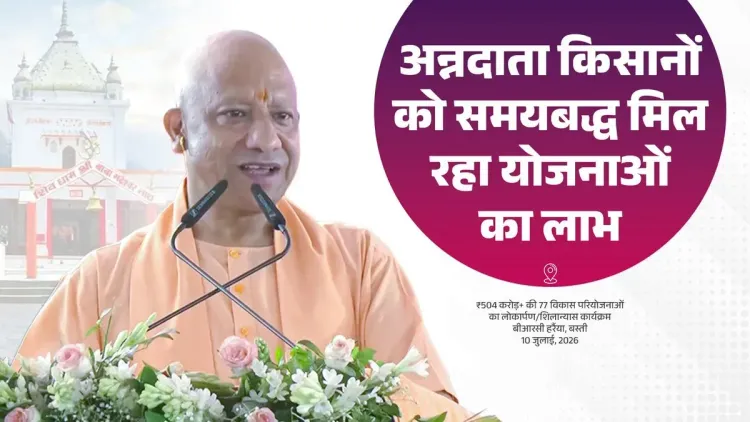
The Chief Minister's Office of Uttar Pradesh, on behalf of Chief Minister Yogi Adityanath, on Friday, 10 July 2026, underscored the range of central and state welfare programmes currently benefiting farmers across the state, drawing attention to income support, irrigation access, crop insurance, and accident compensation.
Quoting Chief Minister Adityanath directly, the post stated: 'आज अन्नदाता प्रधानमंत्री किसान सम्मान निधि, प्रधानमंत्री कृषि सिंचाई योजना और प्रधानमंत्री फसल बीमा योजना का लाभ प्राप्त कर रहे हैं' — 'Today, the food-providers [farmers] are receiving the benefits of the PM Kisan Samman Nidhi, the PM Krishi Sinchayee Yojana, and the PM Fasal Bima Yojana.' The statement also highlighted that under the state's accident-welfare scheme, bereaved families receive ₹5 lakh within 24 hours.
Context
Uttar Pradesh is India's most populous state, with over 70 per cent of its workforce engaged in agriculture and allied activities, making farm welfare a central political and administrative priority. The post comes amid continued government emphasis on demonstrating tangible delivery of entitlements to rural households. The four schemes mentioned span both central government programmes and a state-specific top-up, reflecting a layered approach to agricultural support.
Policy Backdrop
The Pradhan Mantri Kisan Samman Nidhi (PM-KISAN), launched in February 2019, provides eligible landholding farmers with an annual direct benefit transfer of ₹6,000 in three equal instalments. The Pradhan Mantri Krishi Sinchayee Yojana, operational since 2015, aims to expand irrigation coverage and improve water-use efficiency across agricultural land. The Pradhan Mantri Fasal Bima Yojana, introduced in 2016 and active from Kharif 2016 onwards, replaced earlier crop-insurance products with a subsidised-premium model that compensates farmers for yield losses caused by natural calamities.
Complementing these central schemes, the Mukhyamantri Krishak Durghatna Kalyan Yojana — introduced by the Uttar Pradesh government in 2018 — provides an ex-gratia payment of up to ₹5 lakh to families of farmers killed or permanently disabled in accidents. The scheme's stated commitment to disbursement within 24 hours of a claim is a distinguishing feature emphasised by the state administration.
Stakeholders and Impact
The primary beneficiaries are farming households across Uttar Pradesh, a state where agricultural income volatility and rural distress have historically been acute. By combining income support (PM-KISAN), risk mitigation (Fasal Bima), infrastructure access (Sinchayee Yojana), and accident compensation (Krishak Durghatna Kalyan Yojana), the state positions itself as operating a comprehensive safety net for the annadata — a term meaning 'food-provider', used to refer to farmers. Families of farmers who have suffered accidental death or disability stand to benefit most directly from the state scheme's rapid-disbursal commitment.
The broader pattern mirrors layered welfare models adopted in other large agrarian states, where central transfers are supplemented by state-funded schemes to address gaps in coverage or speed of delivery.
What's Next
Uttar Pradesh's state budget documents for 2026-27 will be a key indicator of whether the compensation amounts or eligibility norms under the Krishak Durghatna Kalyan Yojana are revised upward. Analysts will also watch for updates on PM-KISAN instalment disbursements and any expansion of the Sinchayee Yojana's coverage in the state's rain-shadow and drought-prone districts. The government's continued public communication around these schemes signals that farm welfare will remain a focal point of the administration's outreach ahead of future electoral cycles.
Point of View
The messaging positions the administration as both an implementer and an extender of the national agricultural safety net. The emphasis on 24-hour disbursement under the Krishak Durghatna Kalyan Yojana is a deliberate administrative signal — speed of delivery has become a political differentiator in large agrarian states. With state budget deliberations for 2026-27 ongoing, such statements may also foreshadow announcements on enhanced compensation limits or expanded beneficiary eligibility.
NationPress
10 Jul 2026
Frequently Asked Questions
What is the Mukhyamantri Krishak Durghatna Kalyan Yojana?
It is a Uttar Pradesh state government scheme, introduced in 2018 , that provides an ex-gratia payment of up to ₹5 lakh to the families of farmers who die or are permanently disabled in accidents, with disbursement committed within 24 hours of a claim.
How much money do farmers get under PM-KISAN?
Under Pradhan Mantri Kisan Samman Nidhi (PM-KISAN) , eligible landholding farmers receive ₹6,000 per year in three equal instalments of ₹2,000 each, transferred directly to their bank accounts.
What does the PM Fasal Bima Yojana cover?
The Pradhan Mantri Fasal Bima Yojana is a subsidised crop-insurance scheme that compensates farmers for yield losses caused by natural calamities such as drought, floods, and unseasonal rainfall; it has been operational since Kharif 2016 .
What is PM Krishi Sinchayee Yojana and how does it help farmers?
The Pradhan Mantri Krishi Sinchayee Yojana , launched in 2015 , is a national irrigation programme designed to expand water access to agricultural land and improve water-use efficiency, reducing dependence on rainfall for crop production.
Why did CM Yogi highlight farm schemes on 10 July 2026?
The Chief Minister's Office of Uttar Pradesh posted the statement to publicly reaffirm the state's commitment to farmer welfare, drawing attention to both central and state-level schemes benefiting the annadata (farmers) of Uttar Pradesh .