CM Yogi Invokes Sanskrit Verse to Frame Nature as Divine

Synopsis
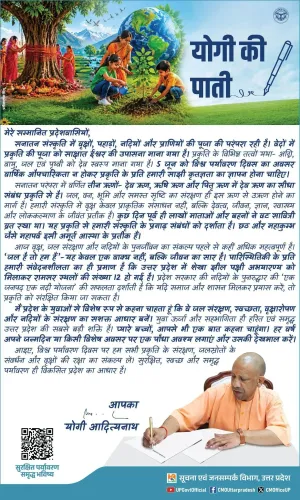
Chief Minister Yogi Adityanath invoked the ancient Sanskrit verse 'Mata Bhumih Putroham Prithivyah' on 19 November 2026, framing India's ecological duty through Vedic tradition — every tree divine, every river a goddess — in a pointed environmental message from the UP CMO.
Key Takeaways
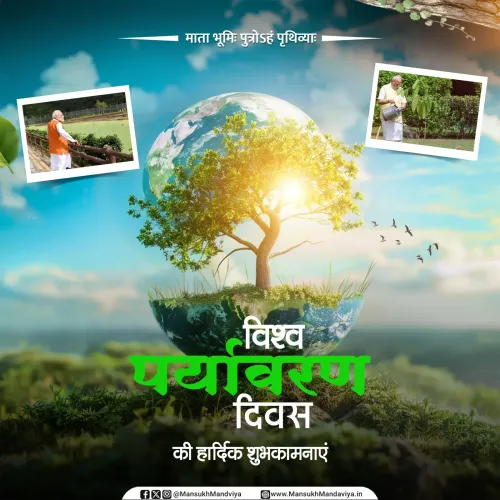
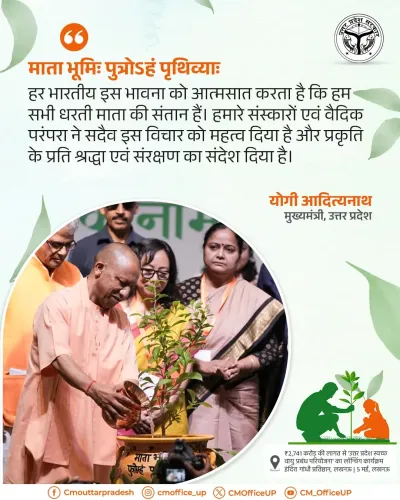
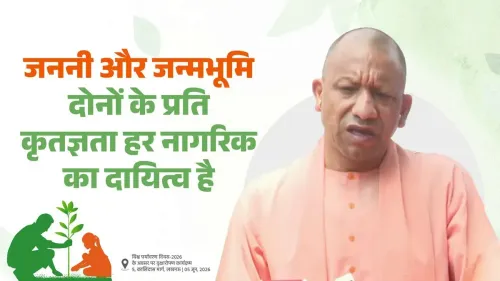
CM Yogi Adityanath quoted the Atharva Veda verse 'Mata Bhumih Putroham Prithivyah' — 'This earth is our mother and we are her sons' — in an official post on 19 November 2026 .
The statement frames ecological protection as a spiritual and cultural duty rooted in Indian civilisational tradition, not merely a regulatory requirement.
CM Yogi described every tree in a forest as a divine dwelling and every river as a manifestation of the goddess.
Uttar Pradesh administrations have consistently paired such philosophical messaging with state-level conservation programmes including plantation drives and Namami Gange initiatives.
No specific triggering event or linked programme has been confirmed for this particular statement; follow-on policy action is what to watch.
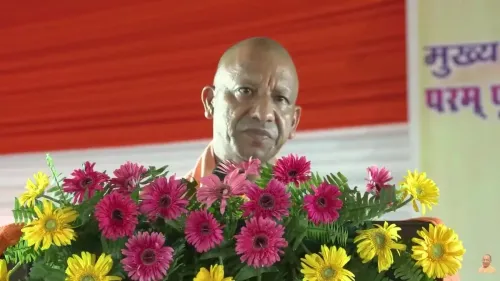
Every tree a deity, every river a goddess — that is the vision Chief Minister Yogi Adityanath put before Uttar Pradesh and the country on Thursday, 19 November 2026, anchoring an environmental message in one of Hinduism's oldest ecological declarations.
Quoting the Sanskrit verse 'Mata Bhumih Putro'ham Prithivyah' — 'This earth is our mother and we are all her sons' — from the Atharva Veda, CM Yogi argued that when every Indian looks at nature through this same lens, the forest and the river stop being resources to be managed and become sacred presences to be honoured. 'He sees the divine residing in every single tree of the forest and beholds the goddess in every single river,' the statement reads.
A 3,000-Year-Old Verse Doing Modern Work
The verse itself — a cornerstone of Vedic ecological thought — has long been invoked by scholars and policymakers alike as evidence that reverence for the natural world is not an imported idea in India but a civilisational inheritance. By centering it in a public statement, CM Yogi is doing something deliberate: recasting conservation not as a bureaucratic obligation but as a spiritual and cultural duty that every citizen already carries. The framing matters. When ecology is rooted in devotion rather than regulation, the argument goes, compliance becomes voluntary and intrinsic. A farmer who sees a river as a goddess is less likely to poison it than one who sees it as a water-supply corridor subject to distant rules.UP's Conservation Record and What This Could Signal
Uttar Pradesh administrations under CM Yogi have repeatedly linked cultural and religious rhetoric to on-ground conservation priorities — from the high-profile Namami Gange riverfront renewal work in Varanasi and Prayagraj to large-scale plantation drives framed around traditional forest reverence. The pattern is consistent: a philosophical anchor in public communication, followed by state-level programme rollout. Whether this November 2026 statement precedes a fresh afforestation campaign, a river-conservation drive, or a public-awareness initiative is not yet confirmed. But Indian state governments rarely deploy high-visibility Sanskrit invocations without an accompanying action — something to watch in the days ahead. The message lands at a moment when ecological anxiety is high across the Gangetic plain, with groundwater depletion, urban air quality, and the ecological health of the Ganga remaining live political and policy concerns for the state's 240 million residents. When the Chief Minister frames a tree as a divine dwelling and a river as a goddess, he is not speaking in abstractions — he is offering a cultural vocabulary for crises that are very much material.Point of View
The UP government sidesteps the enforcement gap that plagues regulation-only environmental policy. The move also reinforces a broader BJP-aligned civilisational narrative — that Hindu philosophical traditions offer ready-made solutions to modern crises, requiring rediscovery rather than new institutional design. The practical test, as always, is whether the rhetoric translates into measurable outcomes on UP's rivers and forests.
NationPress
19 Nov 2026
Frequently Asked Questions
What does 'Mata Bhumih Putroham Prithivyah' mean?
The Sanskrit phrase, drawn from the Atharva Veda , translates as 'This earth is our mother and I am her son' — one of the oldest expressions of ecological reverence in Indian literature.
What did CM Yogi Adityanath say about nature on 19 November 2026?
CM Yogi stated that when every Indian views nature through this Vedic sentiment, they perceive the divine in every tree and see every river as a goddess, making conservation a spiritual act.
Is this linked to any specific UP government scheme?
No specific scheme or campaign has been officially confirmed in connection with this statement. It is consistent with UP's broader pattern of linking environmental messaging to cultural and religious traditions.
What is Uttar Pradesh's track record on river and forest conservation?
Under CM Yogi, Uttar Pradesh has participated in the Namami Gange programme for Ganga riverfront renewal — particularly in Varanasi and Prayagraj — and has conducted large-scale plantation drives framed around traditional forest reverence.
Why do Indian politicians quote Sanskrit on environmental issues?
Invoking ancient Sanskrit verses roots ecological duty in cultural identity rather than external obligation, aiming to make conservation feel intrinsic to Indian citizens rather than a bureaucratic imposition.