CM Yogi Orders State-Wide Ghat Prep for Chhath Mahaparv
Synopsis
Chief Minister Yogi Adityanath announced that ghats across Uttar Pradesh have been cleaned, additional ghats built, and ritual vedi platforms constructed ahead of Chhath Mahaparv 2026, with an assurance of zero disruption for devotees.
Key Takeaways
The Chief Minister's Office of Uttar Pradesh quoted CM Yogi Adityanath on 15 November 2026 confirming Chhath Mahaparv preparations.
State-wide ghat cleaning , construction of additional ghats , and vedi (ritual platform) building have been carried out ahead of the festival.
The Chief Minister's directive mandates that 'no problem of any kind' arises anywhere in the state during celebrations.
Uttar Pradesh's river systems — including the Ganga, Yamuna, and Gomti — serve as primary venues for Chhath worship by millions of devotees.
The preparations follow an established administrative model also used for Kumbh Mela and underpinned by the Namami Gange programme since 2014.
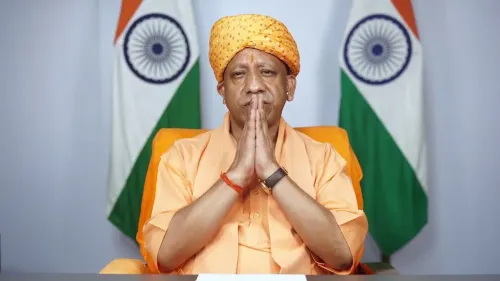
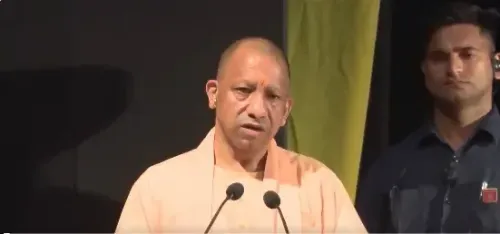
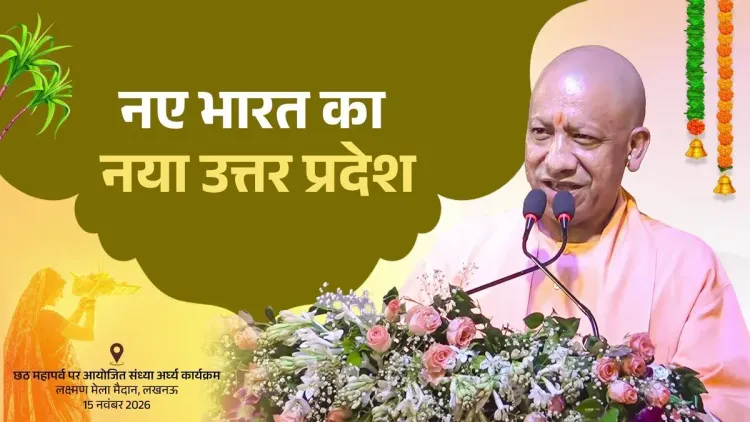
Millions of Chhath devotees across Uttar Pradesh will step onto cleaned, reinforced ghats this festival season — because the state administration has been working ahead of their arrival. The Chief Minister's Office of Uttar Pradesh posted on Sunday, 15 November 2026, quoting Chief Minister Yogi Adityanath directly on the preparations undertaken for Chhath Mahaparv.
In his own words: 'पूरे प्रदेश में छठ महापर्व के दृष्टिगत घाटों की साफ-सफाई कराई गई है, अतिरिक्त घाटों का निर्माण कराया गया है और घाटों पर वेदियां बनाई गई हैं।' — 'Across the entire state, ghats have been cleaned in view of Chhath Mahaparv, additional ghats have been constructed, and ritual platforms (vedis) have been built at the ghats. It has been ensured that there is no problem of any kind anywhere.'
What Went Into the Chhath Ghat Makeover
The directive covers three distinct operational pillars: cleanliness drives at existing riverside ghats, construction of additional ghats to absorb crowd overflow, and the building of vedis — raised ritual platforms where devotees perform the sun-worship offerings central to Chhath. The Chief Minister's emphasis that 'no problem of any kind should arise anywhere' signals a zero-failure brief sent to district administrations across the state.
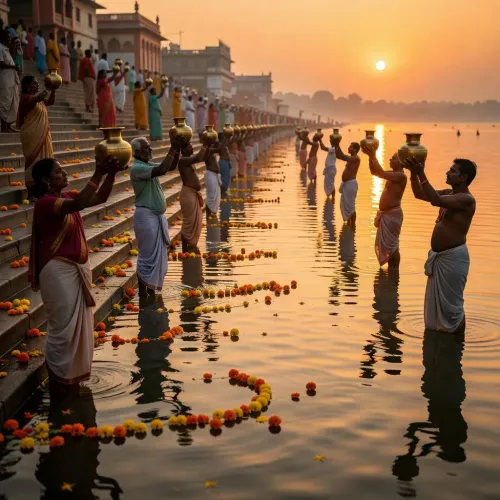
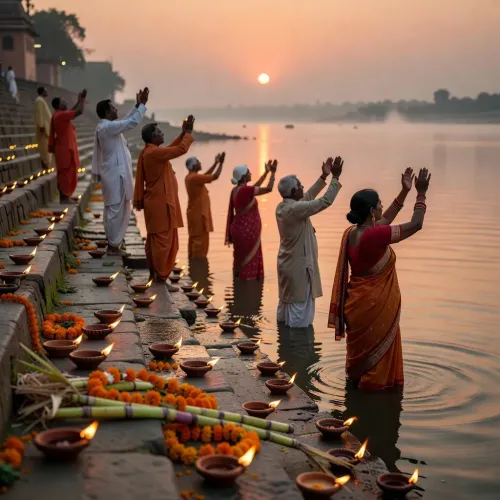
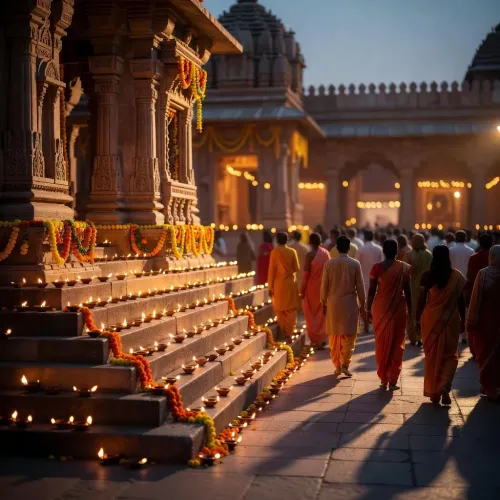
Uttar Pradesh sits at the heart of Chhath country. Its river systems — the Ganga, Yamuna, Gomti, and dozens of smaller tributaries — become open-air temples during the four-day festival, drawing worshippers in numbers that rival the state's largest religious congregations. Managing that scale is a logistical exercise the state has refined over years.
Roots in Namami Gange and the Kumbh Playbook
The ghat-readiness push sits within a longer administrative tradition. The Namami Gange programme, launched in 2014, made ghat renovation and river-cleanliness a standing priority along the Ganga basin in Uttar Pradesh. The Yogi government has since applied a similar large-event logistics framework to Kumbh Mela operations — temporary infrastructure, coordinated cleaning, and crowd-safety measures scaled to tens of millions of visitors.
Chhath, in that context, is not a one-off — it is an annual stress-test of the same system. What changes year to year is the ambition of the baseline: how many new ghats, how thoroughly cleaned, how many vedis ready before the first devotee arrives at dawn.
What Devotees Can Expect at the Ghats
For the crores of Chhath worshippers who observe the arghya (sun offering) rituals at sunrise and sunset, the assurance is practical: more space, cleaner access, and designated worship platforms already in place. The administration's guarantee that 'no problem of any kind will arise anywhere' is a high bar — but it is the bar the Chief Minister has publicly set, making accountability visible.
Festival attendance, the condition of the newly built temporary ghats, and whether any additional structures are retained for future years will tell the fuller story once Chhath concludes.
Point of View
Pre-festival declaration of ghat readiness is a deliberate piece of political signalling — it frames festival logistics as a governance deliverable, not merely a religious accommodation. For a state where Chhath commands mass participation across caste and class lines, visible administrative preparedness carries real electoral currency. The move also fits a broader pattern of the UP government using large religious events to demonstrate administrative capacity, building on the template refined during the 2019 and 2025 Kumbh Melas. The public guarantee of zero disruption raises the accountability stakes: any incident at a newly built ghat now becomes a headline the administration owns.
NationPress
15 Nov 2026
Frequently Asked Questions
What preparations has the UP government made for Chhath Mahaparv 2026?
The Uttar Pradesh government, under Chief Minister Yogi Adityanath, has carried out state-wide cleaning of existing ghats, constructed additional ghats to handle crowds, and built ritual vedi platforms at ghat sites across the state.
What is a vedi in the context of Chhath puja?
A vedi is a raised ritual platform built at riverside ghats where Chhath devotees perform sun-worship offerings, known as arghya, during sunrise and sunset ceremonies central to the festival.
Which rivers in Uttar Pradesh are used for Chhath puja?
Major rivers including the Ganga, Yamuna, and Gomti, along with numerous smaller tributaries, serve as worship venues for Chhath devotees across Uttar Pradesh.
What is the Namami Gange programme's role in UP ghat management?
The Namami Gange programme, launched in 2014, includes ghat renovation and river-cleanliness components along the Ganga basin in Uttar Pradesh, providing a standing infrastructure framework that the state uses ahead of festivals like Chhath.
How does UP manage large Chhath gatherings?
Uttar Pradesh deploys an administrative model similar to Kumbh Mela management — involving pre-event ghat cleaning, temporary construction, vedi platforms, and district-level coordination — to handle the millions of Chhath worshippers who gather at riverbanks.