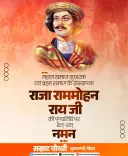
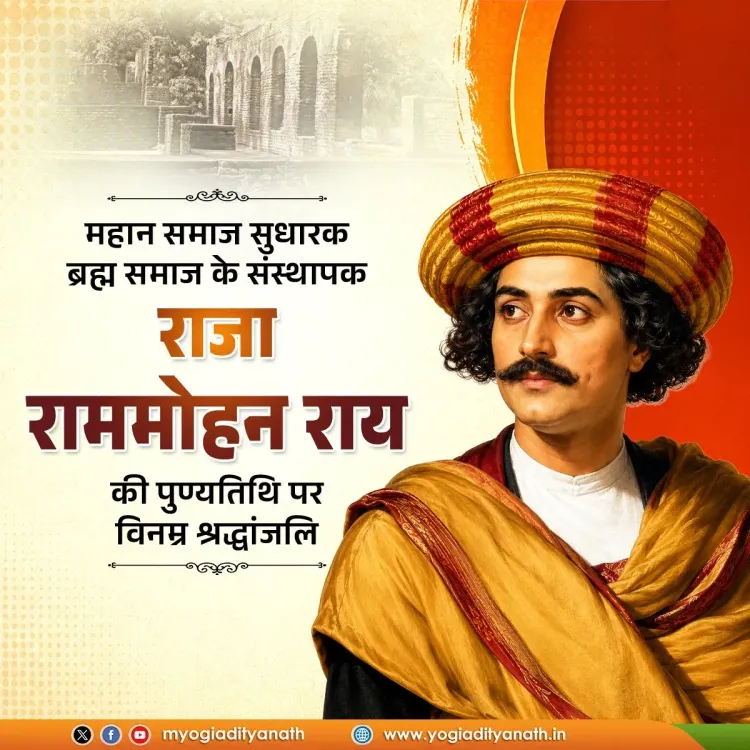
CM Yogi pays tribute to Raja Ram Mohan Roy on death anniversary
Synopsis
Uttar Pradesh Chief Minister Yogi Adityanath paid tribute to 19th-century reformer Raja Ram Mohan Roy on his death anniversary on 27 September, calling his fight against social evils and his founding of the Brahmo Samaj an enduring inspiration for nation-building.
Key Takeaways
CM Yogi Adityanath posted a tribute to Raja Ram Mohan Roy on his death anniversary, 27 September 2026 .
He praised Roy as a torchbearer for eradicating social evils, empowering women, and advancing modern thought in India.
Roy founded the Brahmo Samaj in 1828 , a monotheistic reform movement opposing caste discrimination and idolatry.
Roy's most celebrated achievement was helping secure the Abolition of Sati Regulation in 1829 under British India.
He died on 27 September 1833 in Bristol, England, and is widely regarded as a father of the Bengal Renaissance.
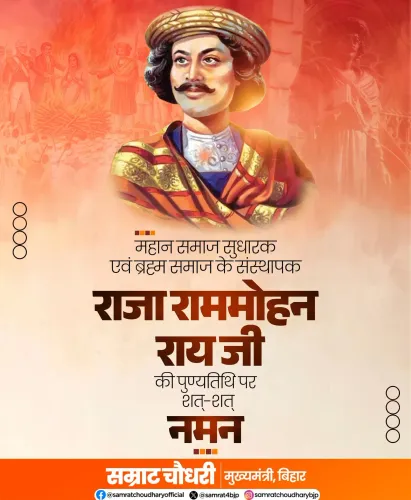
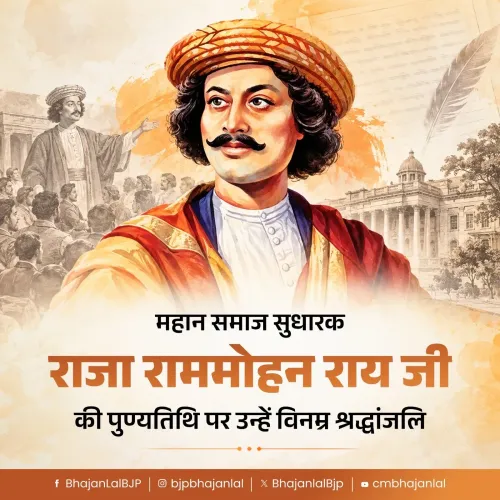
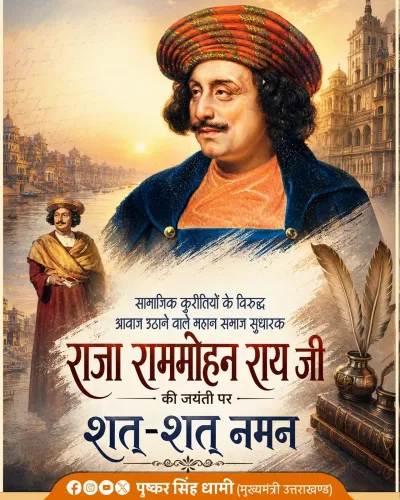
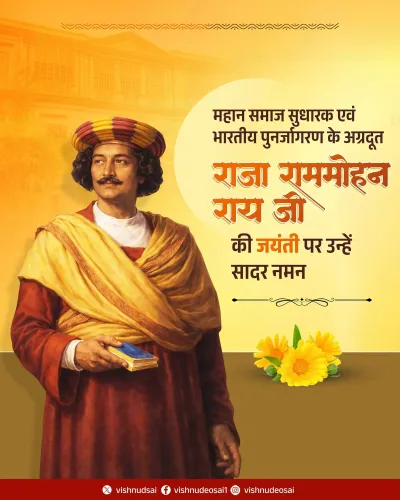
A reformer who fought sati, championed women's education, and relit the lamp of modern Indian thought — Uttar Pradesh Chief Minister Yogi Adityanath paused on Sunday, 27 September 2026, to honour that legacy on the death anniversary of Raja Ram Mohan Roy.
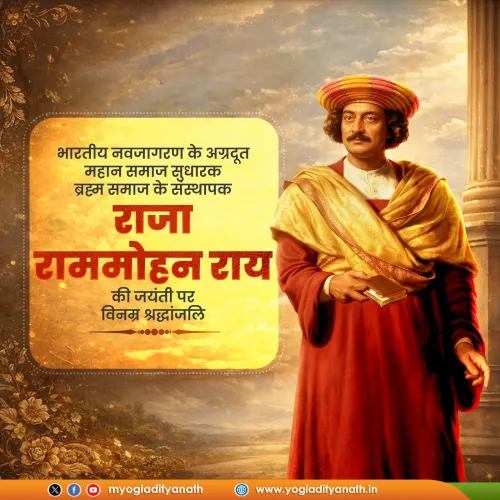
Posting in Hindi on X, CM Yogi wrote: 'सामाजिक कुरीतियों के उन्मूलन, महिला सशक्तीकरण तथा आधुनिक विचारों के संवाहक के रूप में राजा राममोहन राय ने भारतीय समाज के नवजागरण में अतुल्य योगदान दिया।' — 'As a torchbearer for the eradication of social evils, women's empowerment, and modern thought, Raja Ram Mohan Roy made an unparalleled contribution to the renaissance of Indian society.' He added that Roy's vision for nation-building and his progressive thinking 'remain exemplary for all of us,' offering a humble tribute on the occasion.
The reformer who rewrote India's social contract
Raja Ram Mohan Roy, born in 1772 in Bengal, remains one of the most consequential figures in modern Indian history. His single most dramatic intervention — a relentless campaign that helped secure the British colonial government's Abolition of Sati Regulation in 1829 — saved countless lives and fundamentally challenged the authority of entrenched orthodoxy over women's bodies. He did not stop there: he pushed for women's rights to inheritance, opposed child marriage, and advocated widow remarriage at a time when each position carried social peril.Brahmo Samaj and the architecture of reform
In 1828, Roy founded the Brahmo Samaj, a monotheistic reform movement that rejected idolatry and caste discrimination while embracing rational, progressive thought. The Brahmo Samaj became a crucible for the Bengal Renaissance — a cultural and intellectual awakening that seeded much of the reformist energy that would eventually fuel the independence movement. Roy's insistence on blending Western liberal education with Indian philosophical traditions gave the movement its enduring breadth. He died in Bristol, England, on 27 September 1833 — a date that Indian political leaders across the spectrum mark each year with public tributes, keeping his ideas in active civic circulation. For CM Yogi, a saffron-robed head of the Gorakhnath Math leading India's most populous state, invoking Roy connects a Hindu religious identity to a modernising, reform-minded tradition — a reminder that the call for social justice within Indian society is old, rooted, and cross-ideological. The kicker the history gives us is simple: Roy's anniversary is not a calendar formality — it is an annual referendum on whether the evils he fought have truly been buried.Point of View
Invoking Roy's anti-sati campaign and founding of the Brahmo Samaj signals an alignment with rational, reformist traditions that cuts across orthodox religious lines. The tribute carries no new policy announcement, but its symbolism is deliberate: positioning the ruling dispensation as heirs to a long, indigenous reform tradition rather than external imposition. Watch whether similar tributes from national leaders on this date coalesce into a broader BJP narrative around social reform ahead of any upcoming state political cycles.
NationPress
27 Sept 2026
Frequently Asked Questions
Why is 27 September significant for Raja Ram Mohan Roy?
27 September marks the death anniversary of Raja Ram Mohan Roy, who died on this date in 1833 in Bristol, England. Indian leaders across parties pay tribute on this day each year.
What was the Brahmo Samaj founded by Raja Ram Mohan Roy?
The Brahmo Samaj was a monotheistic reform movement founded by Raja Ram Mohan Roy in 1828. It opposed idolatry, caste discrimination, and social evils while promoting rational and progressive thought.
What did Raja Ram Mohan Roy do for women's rights in India?
Raja Ram Mohan Roy campaigned vigorously against the practice of sati, which led to its abolition by regulation in 1829. He also advocated for women's right to education, inheritance, and widow remarriage.
Why did CM Yogi pay tribute to Raja Ram Mohan Roy?
CM Yogi Adityanath posted a tribute on Roy's death anniversary, 27 September 2026, calling his contributions to social reform and nation-building 'unparalleled' and 'exemplary for all of us.'
What is Raja Ram Mohan Roy's connection to the Bengal Renaissance?
Roy is widely regarded as a founding figure of the Bengal Renaissance — a 19th-century cultural and intellectual awakening that blended Western liberal education with Indian philosophical traditions and helped shape modern Indian identity.