CM Yogi Orders Fast-Track AYUSH Colleges in 5 UP Divisions
Synopsis
Chief Minister Yogi Adityanath has ordered expedited establishment of integrated AYUSH colleges in five Uttar Pradesh divisions — Mirzapur, Gonda, Meerut, Agra, and Basti — while calling for better OPD services, medicine availability, and promotion of Panchakarma, framing an AYUSH-based wellness economy as a driver of health, investment, tourism, and jobs.
Key Takeaways
CM Yogi Adityanath directed officials to fast-track integrated AYUSH colleges in five divisions : Mirzapur, Gonda, Meerut, Agra, and Basti.
He stressed improved OPD services and adequate medicine availability at existing AYUSH institutions.
Promotion of traditional therapies including Panchakarma was specifically highlighted.
The CM framed an ' AYUSH-based wellness economy ' as a new pillar for healthcare, investment, tourism, and employment in UP.
The move aligns with the National AYUSH Mission (2014-15) and the National Health Policy 2017 , which recognise AYUSH as central to India's health architecture.
States like Kerala and Karnataka have precedent for linking AYUSH infrastructure to medical tourism and economic activity.
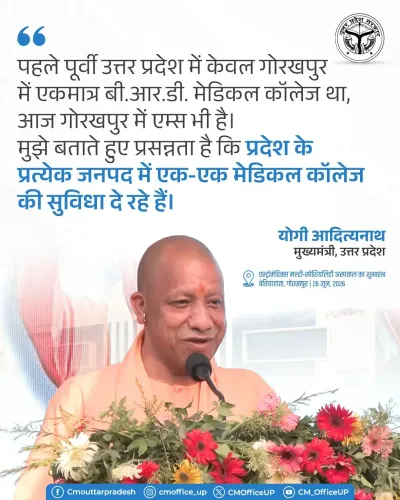
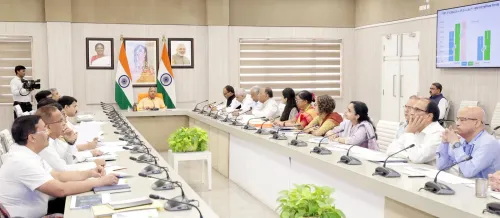
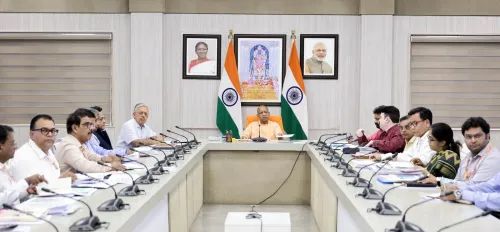
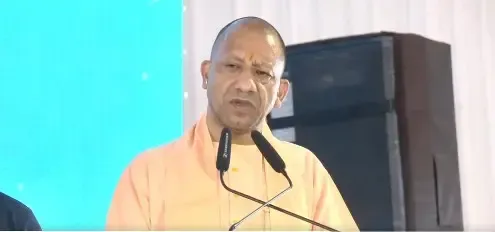
The Chief Minister's Office of Uttar Pradesh announced on Sunday, 25 May 2026 that Chief Minister Yogi Adityanath has directed officials to expedite the establishment of integrated AYUSH colleges across five divisions — Mirzapur, Gonda, Meerut, Agra, and Basti — signalling a major push to mainstream traditional medicine in the state's public health architecture.
The Chief Minister's Office posted on X, quoting CM Yogi as instructing swift action toward setting up these institutions. He also emphasised improving OPD sevaen (outpatient services), ensuring adequate availability of medicines, and promoting traditional therapies such as Panchakarma at existing AYUSH medical institutions across the state.
Context
CM Yogi declared that an 'AYUSH-based wellness economy' would serve as a new foundation for healthcare services, investment, tourism, and employment generation in Uttar Pradesh. The announcement positions traditional medicine not merely as a health intervention but as a multi-sector economic driver. The five divisions identified span the state's eastern, western, and central belts, suggesting an intent to achieve geographic spread rather than concentrate infrastructure in urban centres.
Policy Backdrop
The directive aligns with the National AYUSH Mission, a centrally sponsored scheme launched in 2014-15 to strengthen AYUSH education, services, and infrastructure across states. The National Health Policy of 2017 formally recognised AYUSH systems as integral to India's pluralistic health architecture, providing a policy basis for state-level investments of this kind. Uttar Pradesh has progressively aligned with central AYUSH policy, expanding colleges and wellness facilities as part of broader health-infrastructure goals.
The Ministry of AYUSH, established in 2014 to promote Ayurveda, Yoga, Unani, Siddha, and Homeopathy, provides the institutional framework within which state governments build their own capacity. Integrated colleges — combining multiple AYUSH disciplines under one roof — represent a cost-efficient model that several states have explored to address faculty shortages and optimise infrastructure investment.
Stakeholders and Impact
The most direct beneficiaries are AYUSH students and practitioners in divisions that currently lack dedicated institutions, as well as patients in semi-urban and rural areas who rely on traditional medicine for primary care. Improved OPD services and medicine availability at existing institutions addresses a long-standing gap: AYUSH facilities have often been criticised for irregular drug supplies and limited outpatient throughput.
For wellness tourism investors, the CM's framing of an 'AYUSH-based wellness economy' signals potential public-private partnership opportunities. States such as Kerala and Karnataka have demonstrated that robust AYUSH infrastructure can attract medical tourists and generate ancillary employment in hospitality and wellness services — a model Uttar Pradesh appears to be actively benchmarking.
What's Next
Attention will now turn to state budget allocations for 2026-27 and whether the government moves toward private partnerships for wellness centres in the five identified divisions. The operationalisation of integrated colleges requires land acquisition, faculty recruitment, and regulatory clearances from the National Commission for Indian System of Medicine, making the pace of follow-through a key indicator of policy seriousness. The broader ambition of linking AYUSH to investment and employment will ultimately be tested by whether wellness infrastructure translates into measurable economic activity on the ground.
Point of View
Tourism, and job creation, the government is repositioning AYUSH from a welfare measure into a growth narrative — a framing that broadens its political constituency beyond health advocates to include investors and the tourism sector. The emphasis on Panchakarma and OPD quality also suggests an acknowledgement that existing AYUSH facilities underperform on service delivery, making this as much a corrective signal as a new initiative. Whether the wellness economy rhetoric translates into funded, time-bound projects will be the real test of this policy push.
NationPress
8 Oct 2026
Frequently Asked Questions
Which divisions will get new integrated AYUSH colleges in Uttar Pradesh?
CM Yogi Adityanath has directed the establishment of integrated AYUSH colleges in Mirzapur, Gonda, Meerut, Agra, and Basti divisions of Uttar Pradesh.
What is an integrated AYUSH college?
An integrated AYUSH college combines multiple traditional medicine disciplines — such as Ayurveda, Yoga, Unani, Siddha, and Homeopathy — under one institution, making it more cost-efficient and accessible than separate single-discipline colleges.
What is the National AYUSH Mission?
The National AYUSH Mission is a centrally sponsored scheme launched in 2014-15 by the Government of India to strengthen AYUSH education, healthcare services, and infrastructure across states.
What is Panchakarma and why is CM Yogi promoting it?
Panchakarma is a classical Ayurvedic detoxification and rejuvenation therapy involving five therapeutic procedures. CM Yogi has directed AYUSH institutions in UP to promote it as part of a broader push for traditional medicine services and wellness tourism.
How does the AYUSH wellness economy plan affect jobs in Uttar Pradesh?
The CM has framed AYUSH-based wellness infrastructure as a generator of employment in healthcare, hospitality, and tourism sectors, positioning it alongside investment attraction and health service delivery as a multi-sector economic strategy.