Why Are Court Decisions Sometimes So Hard to Understand?

Synopsis
The recent suspension of Kuldeep Singh Sengar's life sentence by the Delhi High Court has raised eyebrows. SP MP Rajeev Kumar Rai expresses his concerns about the complexities of court rulings, highlighting the ongoing safety risks for the victim's family. This situation reflects the broader political dynamics surrounding justice and security in India.
Key Takeaways
Delhi High Court suspends Kuldeep Singh Sengar's life sentence.
SP MP Rajeev Kumar Rai questions the court's decision.
Concerns raised over the safety of the victim's family.
Political reactions highlight ongoing Hindu-Muslim dynamics.
The case reflects broader issues in the justice system.
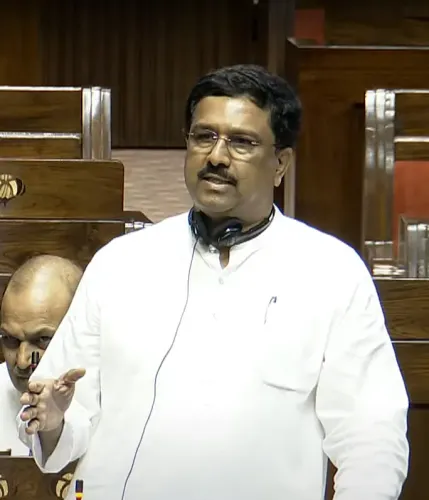
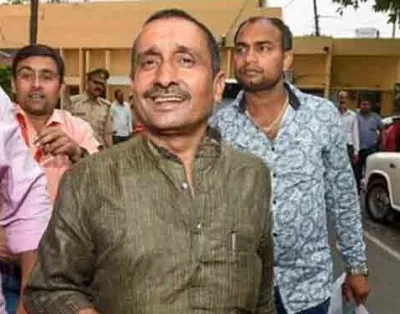
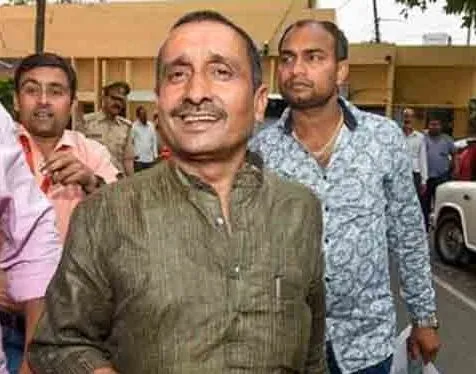
New Delhi, Dec 24 (NationPress) Following the Delhi High Court's decision to temporarily relieve expelled BJP leader Kuldeep Singh Sengar by suspending his life sentence in connection with the 2017 Unnao rape case, Samajwadi Party MP Rajeev Kumar Rai expressed his apprehension on Wednesday, remarking that "sometimes court decisions are challenging to comprehend."
A panel consisting of Justices Subramonium Prasad and Harish Vaidyanathan Shankar has suspended Sengar's life sentence and permitted him bail while his appeal against the conviction is pending.
In response to this development, Rai informed IANS, "It is regrettable that sometimes court rulings are difficult to grasp. However, what can one say about a judicial decision? It is already evident how intensely the Uttar Pradesh government endeavored to shield Kuldeep Singh Sengar and the extent of protection he received. Currently, the safety of the victim's family is jeopardized. They are seeking assistance. We hope they will receive sufficient security, and the court will acknowledge the situation and revisit its ruling."
Rai also commented on Union Minister Nitin Gadkari's assertion that the nation continues to grapple with "Hindu-Muslim issues" due to the Congress party's secularism and vote bank strategies.
Addressing this comment, the Samajwadi Party MP stated, "They allege that Congress is to blame for Hindu-Muslim tensions, but it is the BJP that is currently engaging in Hindu-Muslim politics. If you remove Hindu, Muslim, Pakistan, Mandir, and Masjid from their rhetoric, they are left with nothing."
Additionally, he responded to Union Minister Giriraj Singh's comments regarding the Babri Masjid controversy, wherein Singh suggested that the fate of a Babri Masjid-like structure in West Bengal would resemble that of Ayodhya.
Rai alleged, "No foundation has been established without a scheme. This was all orchestrated by the BJP. Humayun Kabir was previously linked to the BJP, and now they are attempting to fabricate another conspiracy in the upcoming elections because they cannot secure victory based on public support."
Meanwhile, on Tuesday, Giriraj Singh characterized the Babri Masjid issue as part of a "hidden agenda" orchestrated by West Bengal Chief Minister Mamata Banerjee. In a statement to reporters in Patna, he cautioned that if locations are named after invaders, a scenario akin to Ayodhya could unfold.
When asked about the Babri Masjid, Giriraj Singh claimed that Mamata Banerjee intentionally permitted Humayun Kabir to build the mosque. He alleged that Kabir has yet to be detained and accused Banerjee of having a covert agenda behind the action, stating she is attempting to instigate discord between Hindus and Muslims.
The Union Minister further remarked that people should remember that if the youth and Hindus of the nation remove the symbols of invaders from Ayodhya, similar actions could occur in Bengal if such names persist.
Point of View
The complexities surrounding court decisions and their societal repercussions are critical. This situation illustrates the ongoing struggle for justice in India, particularly for victims of high-profile crimes. Ensuring the safety of the victim's family while navigating the intricacies of legal rulings highlights the need for greater accountability and transparency in our judicial system.
NationPress
19 Sept 2026
Frequently Asked Questions
What was the reason for the Delhi High Court's decision?
The Delhi High Court granted conditional relief to Kuldeep Singh Sengar by suspending his life sentence while he appeals his conviction in the Unnao rape case.
Who expressed concerns about the court's decision?
Samajwadi Party MP Rajeev Kumar Rai expressed concerns, stating that court decisions can sometimes be difficult to understand.
What are the implications of the court's ruling for the victim's family?
The ruling raises concerns about the safety of the victim's family, who are reportedly at risk and appealing for help.
How did political figures react to the court's decision?
Rai criticized the BJP for attempting to protect Sengar and commented on the BJP's current role in Hindu-Muslim politics.
What broader issues does this case highlight?
This case underscores the complexities of justice, political dynamics, and the ongoing societal challenges related to crime and safety in India.