CR Paatil chairs dam safety meet at Ekta Nagar
Synopsis
Union Jal Shakti Minister C. R. Paatil chaired the ministry's advisory committee meeting at Ekta Nagar, Gujarat, on November 16, 2026, focusing on dam safety, siltation, storage modernisation, and water technology — linking it to India's Viksit Bharat 2047 vision.
Key Takeaways
Union Jal Shakti Minister C.
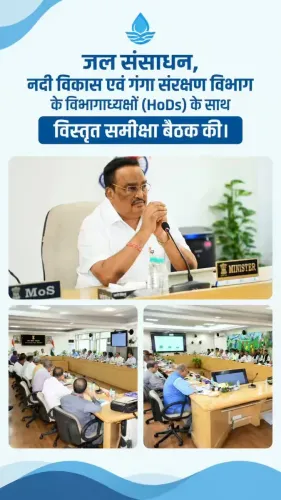
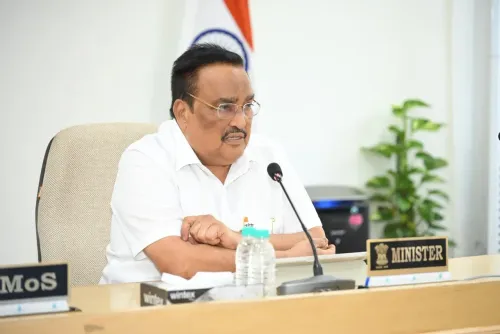
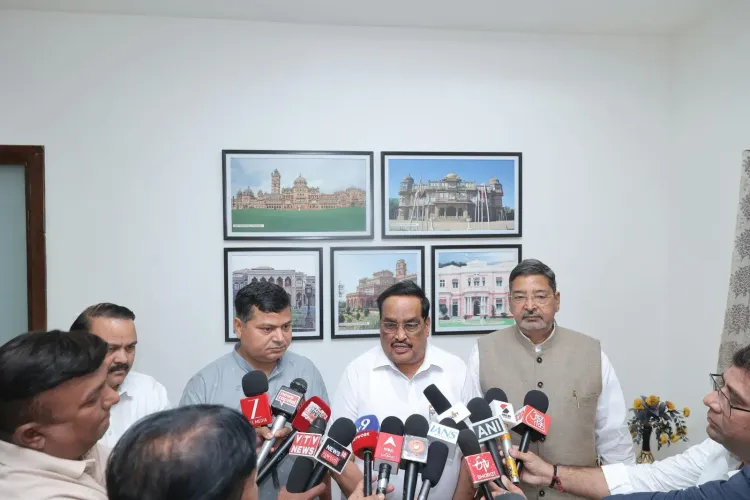
Paatil chaired the advisory committee meeting of the Department of Water Resources, River Development and Ganga Rejuvenation at Ekta Nagar, Gujarat on November 16, 2026 .
The meeting's theme was 'The Role of Dams in Water Security,' covering dam safety, reservoir siltation, storage capacity utilisation, modernisation, and new water-management technologies.
Attendees included MoS Jal Shakti V.
Somanna , MoS Raj Bhushan Choudhary , and Gujarat Water Resources Minister Ishwarsinh Thakorbhai Patel .
The session stressed maximising water use for irrigation, drinking water, and power generation — three competing demands on the same infrastructure.
Paatil anchored the discussions to Viksit Bharat 2047 , calling water security a prerequisite for India's developed-nation ambition.
The meeting builds on existing frameworks including the Dam Safety Act, 2021 and the Dam Rehabilitation and Improvement Project (DRIP) launched in 2012.
Water security is not just a policy goal — it is the foundation India must build if the Viksit Bharat 2047 vision is to mean anything beyond a slogan. Union Jal Shakti Minister C. R. Paatil drove that point home on Monday, November 16, 2026, chairing a high-level advisory committee meeting of the Ministry's Department of Water Resources, River Development and Ganga Rejuvenation at Ekta Nagar, Gujarat.
Posting on X, Paatil said the meeting was organised on the theme 'Jal Suraksha mein Baandhon ki Bhumika' — 'The Role of Dams in Water Security' — bringing together ministers, parliamentarians, and senior officials to deliberate on the country's most pressing dam-management challenges.Who was in the room at Ekta Nagar
The gathering was notably multi-layered. Minister of State for Jal Shakti V. Somanna and Raj Bhushan Choudhary attended from the Centre, while Gujarat's Water Resources and Water Supply Minister (Independent Charge) Ishwarsinh Thakorbhai Patel represented the state government. Elected members of the advisory committee and senior bureaucrats rounded out the room — a configuration designed to bridge central policy and state-level execution. Ekta Nagar, home to the Statue of Unity in Gujarat's Narmada district, has become a favoured venue for national-level government events, its symbolic weight amplifying the gravity of gatherings held there.Five problems, one agenda
The meeting covered ground that any honest audit of India's dam infrastructure would flag immediately. According to Paatil's post, deliberations centred on five interconnected concerns: dam safety, sedimentation (siltation) in reservoirs, better utilisation of water storage capacity, modernisation of dam infrastructure, and adoption of new technologies in water management. These are not abstract bureaucratic talking points. India has over 5,000 large dams — one of the highest concentrations in the world — many of them ageing structures whose safety and efficiency directly determine how much water reaches farms, taps, and turbines. Siltation alone steadily erodes live storage capacity, a creeping crisis that climate variability is accelerating. The meeting also emphasised maximising effective use of available water for irrigation, drinking water supply, and power generation — three demands that frequently compete for the same reservoir.Dam Safety Act and the DRIP legacy
The policy scaffolding for Monday's discussions has been years in the making. The Dam Safety Act, 2021 created India's first statutory framework for the inspection, maintenance, and rehabilitation of dams — a long-overdue move that placed regulatory obligations on dam owners. Before that, the Dam Rehabilitation and Improvement Project (DRIP), launched in 2012 with World Bank assistance, had already begun addressing safety and structural upgrades at selected dams across states. The Jal Shakti Ministry, formed in 2019 by merging the erstwhile water resources and drinking water ministries, has been the institutional home for integrating these threads — connecting dam safety to the broader Jal Shakti Abhiyan framework of water conservation and state-level coordination.Modi's 2047 lens on every drop
Paatil framed the meeting explicitly within Prime Minister Narendra Modi's Viksit Bharat 2047 vision, stating: 'Our resolve, under the visionary leadership of PM Modi, is that the country's water resources be better managed, dams become safer and more capable, and every drop of water be put to good use. Water security alone will realise the resolve of Viksit Bharat 2047.' That framing is deliberate. With 2047 — India's centenary of independence — set as the horizon for a developed-nation aspiration, ministries across the board are anchoring their sectoral agendas to that timeline. For Jal Shakti, the argument is straightforward: no agricultural productivity, no industrial growth, and no energy transition is possible without securing water. Advisory committee meetings of this nature are part of routine inter-governmental consultation, but their outputs — recommendations that can shape budget allocations, parliamentary questions, and state implementation plans — carry real downstream weight. Watch for any follow-up dam safety audit reports or state-level implementation commitments that may be tabled in Parliament in the coming session.Point of View
Paatil is reinforcing the Centre-state coordination model that has defined Jal Shakti's operational style since 2019. Framing the entire exercise under the Viksit Bharat 2047 umbrella is also politically astute: it elevates routine administrative consultation to a national mission milestone. The real test will come in whether advisory committee recommendations translate into accelerated state-level dam safety audits and budgetary commitments in the upcoming Parliament session.
NationPress
16 Nov 2026
Frequently Asked Questions
What was the Jal Shakti advisory committee meeting at Ekta Nagar about?
The meeting focused on 'The Role of Dams in Water Security,' with discussions on dam safety, reservoir siltation, water storage modernisation, adoption of new technologies, and effective water use for irrigation, drinking water, and power generation.
Where is Ekta Nagar and why was the meeting held there?
Ekta Nagar is a town in Gujarat's Narmada district, known as the site of the Statue of Unity. It has become a regular venue for national-level government events due to its symbolic significance.
What is the Dam Safety Act 2021?
The Dam Safety Act, 2021 is India's first statutory framework establishing regulatory obligations for the inspection, maintenance, and rehabilitation of dams, placing responsibility on dam owners and state governments.
Who attended the Jal Shakti advisory committee meeting on November 16 2026?
The meeting was chaired by Union Jal Shakti Minister C. R. Paatil and attended by Ministers of State V. Somanna and Raj Bhushan Choudhary, Gujarat Water Resources Minister Ishwarsinh Thakorbhai Patel, committee MPs, and senior officials.
How is dam safety connected to Viksit Bharat 2047?
The Jal Shakti Ministry argues that reliable water security — secured through safe, modern dams — underpins agricultural productivity, drinking water access, and energy generation, all of which are essential to India's goal of becoming a developed nation by 2047.