Delhi's Air Quality Declines, Remains 'Poor' for Fifth Day Amid Rising Temperatures
Synopsis
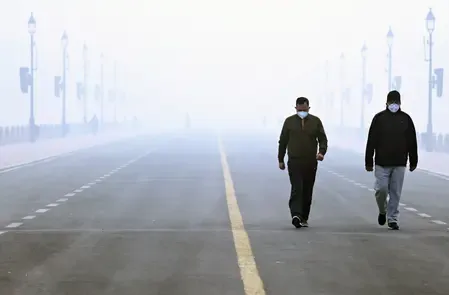
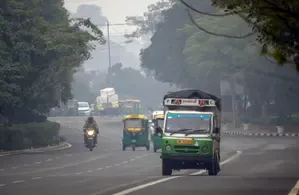
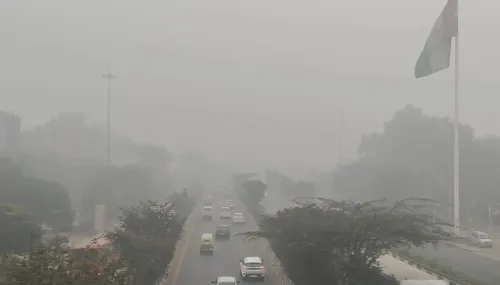
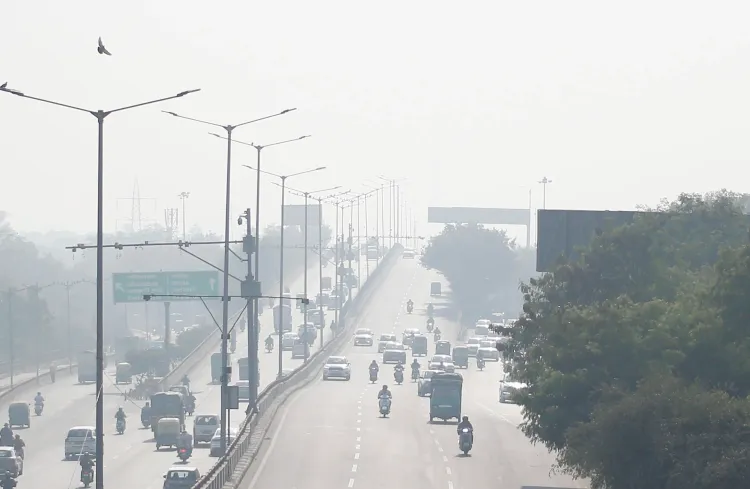
In New Delhi, the air quality has consistently remained in the 'poor' category for five consecutive days, with alarming AQI levels, raising concerns among residents and authorities alike. As temperatures rise across North India, the public is urged to remain vigilant about air quality.
Key Takeaways
Delhi's air quality remains in the 'poor' category.
New monitoring stations have been added to enhance air quality tracking.
Rising temperatures are contributing to worsening air conditions.
Government agencies are collaborating to tackle pollution.
Residents are urged to stay informed about air quality levels.
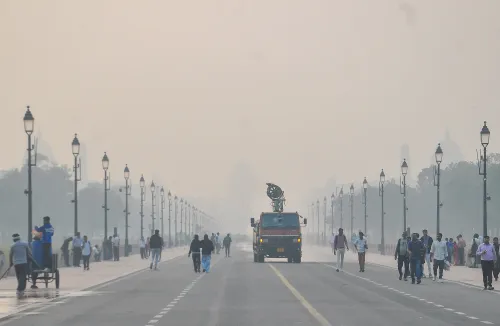
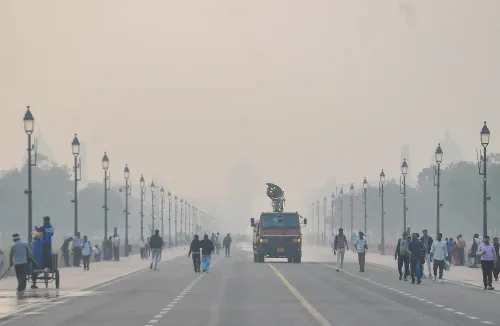
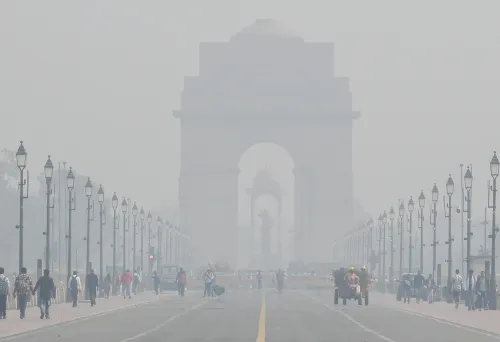
New Delhi, February 26 (NationPress) The air quality in New Delhi has remained in the ‘poor’ category for the fifth day in a row as of Thursday. Data collected at 8 a.m. indicated that the Air Quality Index (AQI) in Anand Vihar reached 299, suggesting very poor air quality.
On the previous day, Delhi's overall air quality was also classified as ‘poor’, with Anand Vihar reporting ‘very poor’ conditions marked by an AQI of 342. The ongoing high levels of pollution are raising alarms among both residents and officials.
According to the Central Pollution Control Board (CPCB), the AQI measurements from various monitoring locations on Thursday morning included: Anand Vihar (299), Ashok Vihar (212), Bawana (269), Burari Crossing (220), Chandni Chowk (233), DTU (203), Dwarka Sector-8 (211), IIT Delhi (143), Jawaharlal Nehru Stadium (172), Mandir Marg (150), Narela (205), Nehru Nagar (232), Patparganj (195), Pusa (198), Rohini (246), Sonia Vihar (220), and Wazirpur (246). Most locations continued to show air quality hovering between ‘poor’ and ‘moderate’ levels.
To enhance air quality monitoring efforts, six new Continuous Ambient Air Quality Monitoring Stations (CAAQMS) have been launched in the capital. This brings the total number of such facilities in Delhi to 46, the highest in the nation, as stated in an official announcement made on Tuesday.
In addition, the Public Works Department (PWD) alongside urban development departments from Delhi and surrounding states—Haryana, Uttar Pradesh, and Rajasthan—along with expert institutions, entered into memorandums of understanding (MoUs) on Tuesday. These agreements are intended to establish a standardized framework and a Road Asset Management System (RAMS) to mitigate road dust, a significant contributor to PM10 pollution in the area.
The air pollution crisis in Delhi-NCR has also been featured in the National Council of Educational Research and Training’s (NCERT) newly released Class 8 Social Science textbook, which was made available on Monday. The book discusses “AQI levels over 400” while examining the environmental challenges faced by urban India.
In the chapter titled ‘India’s Urban Landscape,’ the textbook highlights the various challenges confronting cities, such as the strain on resources due to population growth, poorly maintained narrow roads, unplanned urban expansion lacking adequate access to water, sanitation, energy, and waste management, increasing vehicle traffic, and elevated temperatures resulting from urban heat islands.
Although February is not yet concluded, several regions in North India are already experiencing warm conditions reminiscent of summer. States including Delhi, Uttar Pradesh, Bihar, and Rajasthan are seeing a steady increase in daytime temperatures, with some areas in Rajasthan surpassing 36 degrees Celsius.
The India Meteorological Department (IMD) anticipates a gradual rise in both maximum and minimum temperatures across Delhi-NCR in the upcoming days, although strong surface winds may be prevalent during the daytime.
The IMD has projected a maximum temperature of 31 degrees Celsius and a minimum of 14 degrees Celsius for February 26, with February 27 expected to reach a maximum of 32 degrees Celsius, and a minimum possibly climbing to 15 degrees Celsius.
In Uttar Pradesh, districts expected to experience rising temperatures include Kanpur, Meerut, Lucknow, Agra, Aligarh, Etawah, Mainpuri, Mathura, Amethi, Azamgarh, Amroha, Baghpat, Bahraich, Ballia, and Balrampur.
Point of View
It’s crucial to recognize the persistent air quality challenges in Delhi. The government and local authorities must enhance monitoring and take decisive actions to address pollution, especially as rising temperatures exacerbate the situation. Residents deserve a clean and healthy environment.
NationPress
7 Oct 2026
Frequently Asked Questions
What is the current air quality status in Delhi?
Delhi's air quality remains in the 'poor' category for five consecutive days, with Anand Vihar recording an AQI of 299.
What measures are being taken to improve air quality?
Six new Continuous Ambient Air Quality Monitoring Stations have been launched, increasing total monitoring facilities to 46 in Delhi.
How does temperature impact air quality?
Rising temperatures can exacerbate pollution levels, causing air quality to deteriorate further.
Which areas in Delhi have the worst air quality?
Anand Vihar has been identified as one of the areas with the worst air quality, often recording 'very poor' conditions.
What were the AQI readings on February 26?
AQI readings on February 26 included Anand Vihar (299), Ashok Vihar (212), and Burari Crossing (220), among others.