Delhi Environment Minister Sirsa directs DMs to map, fix pollution hotspots
Synopsis
Delhi's Environment Minister has put every District Magistrate on notice — map pollution hotspots, coordinate with MCD, DPCC, and PWD, and deliver time-bound results. With AQI sensors being rolled out citywide and industrial units under fresh scrutiny, this is the most structured administrative mobilisation Delhi has seen ahead of a smog season.
Key Takeaways
Delhi Environment Minister Manjinder Singh Sirsa on 25 June directed all District Magistrates to map and address pollution hotspots across the capital.
DMs must coordinate with Delhi Police , MCD , PWD , DPCC , and Traffic Police for a unified anti-pollution drive.
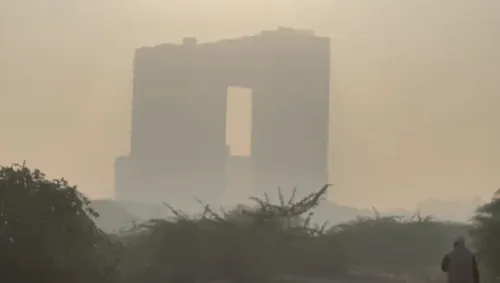
Dust from damaged roads, construction sites, and poorly maintained areas was identified as a primary contributor to Delhi's deteriorating air quality.
The government plans to install AQI sensors citywide to enable real-time, source-specific pollution tracking.
DMs must submit periodic progress reports and attend review meetings to ensure time-bound outcomes.
Industrial units found violating environmental norms will be recommended for regulatory action in coordination with the DPCC .
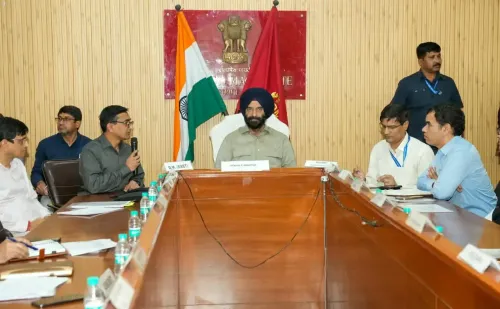
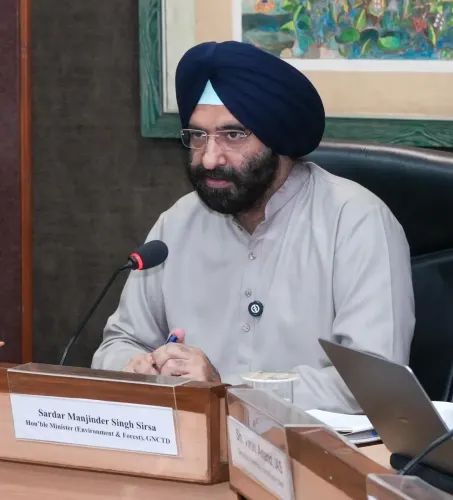
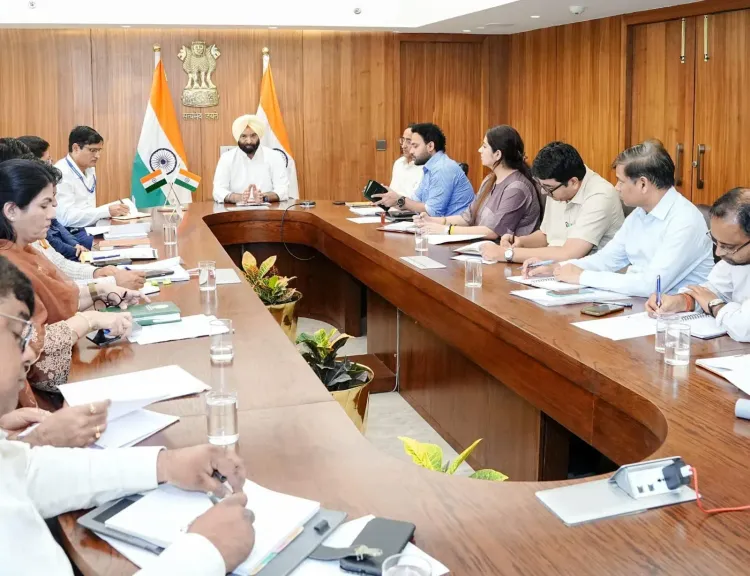
Delhi Environment Minister Manjinder Singh Sirsa on Thursday, 25 June directed all District Magistrates (DMs) across the capital to formulate coordinated district-level strategies for identifying pollution hotspots and implementing targeted mitigation measures. The directive, issued at a high-level meeting, underscores the government's push to tackle Delhi's worsening air quality through ground-level administrative action.
Key Directives Issued
At the centre of the Minister's instructions was an intensive mapping exercise, requiring each DM to work in close coordination with Delhi Police, Traffic Police, the Municipal Corporation of Delhi (MCD), the Public Works Department (PWD), and the Delhi Pollution Control Committee (DPCC). The meeting covered a broad agenda: identifying pollution hotspots, improving traffic management to ease congestion, strengthening dust mitigation, removing encroachments, restoring public parks, and monitoring polluting industries.
Sirsa stressed that dust pollution is among the most significant contributors to Delhi's deteriorating air. 'Dust pollution remains one of the most significant contributors to Delhi's deteriorating air quality. Every District Magistrate must proactively identify sources of dust generation and work with all concerned departments to implement effective mitigation measures,' he said, according to an official statement.
Inter-Departmental Coordination at the Core
The Minister emphasised that no single agency can address Delhi's pollution crisis in isolation. 'The fight against pollution is a collective effort. District Magistrates must work in complete coordination with Delhi Police, MCD, PWD, DPCC, and other agencies to identify pollution hotspots. Every hotspot represents a source of pollution, and reducing these hotspots will directly improve Delhi's air quality,' Sirsa said.
DMs are also expected to prepare a comprehensive inventory of public parks with damaged boundary walls or inadequate maintenance, enabling restoration work to be prioritised. The approach signals a shift toward preventive upkeep rather than reactive repair.
Industrial Pollution Under the Lens
Reviewing the industrial pollution front, Sirsa instructed DMs to identify non-compliant industrial units in coordination with the DPCC and recommend regulatory action wherever necessary. The Delhi government, he said, is actively strengthening compliance mechanisms to ensure all industrial units operate strictly within environmental norms — a signal that enforcement, not just monitoring, is on the agenda.
AQI Sensor Network to Expand
In a significant infrastructure push, Sirsa highlighted the government's plan to install AQI sensors at multiple locations across the city. This expanded monitoring network is intended to enable authorities to pinpoint specific pollution sources — including vehicular emissions, industrial activity, road dust, and construction — and facilitate more focused, localised interventions. The expanded grid could mark a step-change in how Delhi tracks and responds to real-time pollution data.
Accountability Mechanism
District Magistrates are required to submit periodic progress reports and attend review meetings to track implementation of action points and ensure time-bound outcomes, according to an official statement. The accountability framework suggests the government is moving beyond issuing directives to actively monitoring follow-through — a critical gap in past anti-pollution drives.
With winter smog season still months away, the 25 June meeting represents an early administrative mobilisation — one that will be watched closely to see whether ground-level execution matches the urgency of the directives.
Point of View
When the capital's air quality historically enters crisis territory. The directive to DMs is structurally sound: multi-agency coordination, mandatory progress reports, and industrial scrutiny are the right levers. But past anti-pollution drives in Delhi have repeatedly faltered at the last mile — enforcement on the ground. The addition of a citywide AQI sensor network is the most substantive new element; if it delivers granular, real-time data, it could finally break the cycle of reactive fire-fighting. Whether the accountability framework — periodic reports and review meetings — translates into actual penalties for non-compliance remains the critical unknown.
NationPress
24 Sept 2026
Frequently Asked Questions
What did Delhi Environment Minister Manjinder Singh Sirsa direct on 25 June?
Minister Sirsa directed all District Magistrates in Delhi to formulate coordinated district-level strategies to identify pollution hotspots and implement mitigation measures. The directive covers dust control, traffic management, industrial monitoring, park maintenance, and inter-agency coordination.
Which agencies must Delhi's District Magistrates coordinate with?
DMs are required to work with Delhi Police, Traffic Police, the Municipal Corporation of Delhi (MCD), the Public Works Department (PWD), and the Delhi Pollution Control Committee (DPCC), among other relevant agencies.
What is the significance of the AQI sensor expansion in Delhi?
The government plans to install AQI sensors across Delhi to enable real-time identification of specific pollution sources — including vehicular emissions, industrial activity, road dust, and construction. This is intended to allow more targeted, localised interventions rather than blanket measures.
How will the government ensure District Magistrates follow through?
DMs are required to submit periodic progress reports and attend review meetings to monitor implementation of action points and ensure time-bound outcomes, according to an official statement.
Why is dust pollution a focus of Delhi's anti-pollution drive?
According to Minister Sirsa, dust pollution — from damaged roads, construction activity, and poor maintenance — is one of the most significant contributors to Delhi's deteriorating air quality. Addressing dust sources is seen as a direct lever for improving the city's Air Quality Index.