Delhi HC rejects bail for man accused of leaking military secrets to Pakistan High Commission
Synopsis
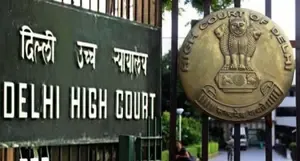
The Delhi High Court has refused bail to a man accused of acting as an intermediary in funnelling classified Indian military documents — including material on a secretive special operations division — to a Pakistan High Commission official. Despite over three years in custody, a slow-moving trial, and a wheelchair-bound medical condition, the court held that the prima facie case against him was simply too weighty to allow release.
Key Takeaways
The Delhi High Court dismissed the bail plea of Habib Ur Rahman in an Official Secrets Act espionage case on 25 September 2026 .
Rahman is accused of transmitting classified military documents — including material on the Armed Forces Special Operations Division (AFSOD) — to Rana Muhammad Qasim Zia , an alleged official of the Pakistan High Commission .
He was arrested on 14 July 2021 and has spent 3 years, 4 months, and 13 days in actual custody as of 18 September 2026 .
The court acknowledged his wheelchair-dependent condition and post-traumatic paraplegia but held that treatment was available in custody.
Only 4 witnesses have been examined so far; the court directed the trial court to expedite proceedings and avoid unnecessary adjournments.
The court directed jail authorities to ensure all specialist treatment — including physiotherapy — is provided without avoidable delay.
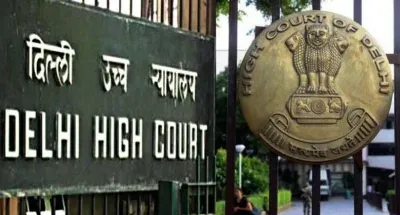
The Delhi High Court on 25 September 2026 dismissed the regular bail application of Habib Ur Rahman, an accused in an Official Secrets Act case involving the alleged possession and transmission of classified military documents to an official at the Pakistan High Commission in New Delhi. A single-judge bench of Justice Sanjeev Narula held that the material on record prima facie connected Rahman with the chain of transmission, and that neither his prolonged custody nor his deteriorating medical condition justified his release at this stage.
The Charges and the Alleged Chain of Transmission
Habib Ur Rahman was arrested on 14 July 2021 following an FIR registered at the Crime Branch police station under Sections 3 and 9 of the Official Secrets Act, 1923, and several provisions of the Indian Penal Code (IPC), including criminal breach of trust, destruction of evidence, theft, house trespass, criminal conspiracy, and common intention. According to the prosecution, he was apprehended with copies of documents relating to military training, the operationalisation of the Armed Forces Special Operations Division (AFSOD), an intelligence summary, and other military material marked confidential or restricted.
Army authorities subsequently verified the documents as genuine, classified, and sensitive. The prosecution alleged that Rahman was not merely a passive recipient of the documents but acted as an intermediary — connecting co-accused Naik Clerk Paramjeet Kumar with Rana Muhammad Qasim Zia, stated to be an official of the Pakistan High Commission. The chargesheet further cited financial transactions, mobile phone and call detail records, and the statement of Rahman's employee, Mohd. Arif, who allegedly delivered documents at the Pakistan High Commission on Rahman's instructions.
What the Court Weighed
The court acknowledged several factors favouring Rahman. He had remained on interim bail from April 2024 until he voluntarily surrendered on 6 February 2026, during which no allegation of absconding, witness-tampering, or misuse of liberty was raised. As of 18 September 2026, his actual custody stood at three years, four months, and 13 days. Only four witnesses had been examined so far, making an early conclusion of the trial unlikely.
Justice Narula cited Supreme Court judgments recognising that the seriousness of a charge cannot justify indefinite detention when a trial shows no prospect of concluding within a reasonable time. “The gravity of the offence is an important consideration, but it does not relieve the Court of the duty to assess the case on its own facts,” the order stated. However, the court ultimately held that these factors did not outweigh the prima facie weight of the prosecution material. “The custody undergone is substantial; at this stage, however, it does not outweigh the prima facie assessment of the record noticed above,” it added.
Medical Condition: Serious but Not Grounds for Release
Rahman's counsel drew attention to his client's grave medical state. The latest medical report before the court described him as wheelchair-dependent, requiring assistance with daily activities, and suffering from post-traumatic paraplegia, left upper limb paresis, neurogenic bladder, and other ailments. He is currently receiving treatment at Safdarjung Hospital, Dr BSA Hospital, G.B. Pant Hospital, and related specialist departments.
The court, however, found that the medical report did not assert that the prescribed treatment could not be provided in custody or that continued incarceration was medically incompatible with his condition. “The medical record, therefore, does not by itself justify release on regular bail at this stage,” the order said. Separately, Justice Narula directed the jail superintendent to ensure all prescribed treatment — including specialist consultations and physiotherapy — was arranged without avoidable delay, with any treatment unavailable in jail to be provided at an appropriate government hospital.
Directions to the Trial Court
While denying bail, the Delhi High Court directed the trial court to give the matter due priority and to record prosecution evidence expeditiously. It also directed that unnecessary adjournments should not be granted to either side, signalling judicial impatience with the pace of proceedings. The court was careful to note that its observations were confined strictly to the bail application and would not be read as any expression on the merits of the prosecution's case.
The case is being closely watched given its national security dimensions, and the pace of the trial — with only four witnesses examined in over five years — is likely to remain a point of scrutiny going forward.
Point of View
Even as it ultimately denies relief. What it quietly spotlights is a deeper systemic failure: a man has spent over three years in custody with only four witnesses examined, and the trial shows no sign of concluding soon. The court's direction to expedite proceedings is welcome but toothless without enforcement. In high-stakes security cases, justice delayed is a liability for both sides — and the state cannot have it both ways, invoking urgency to deny bail while tolerating glacial trial timelines.
NationPress
23 Oct 2026
Frequently Asked Questions
Who is Habib Ur Rahman and what is he accused of?
Habib Ur Rahman is an accused in an Official Secrets Act case in which he is alleged to have acted as an intermediary who facilitated the transmission of classified Indian military documents to Rana Muhammad Qasim Zia, stated to be an official of the Pakistan High Commission in New Delhi. He was arrested on 14 July 2021 and is charged under the Official Secrets Act, 1923, and several IPC provisions including criminal conspiracy and criminal breach of trust.
Why did the Delhi High Court reject his bail?
The court held that the material on record prima facie connected Rahman with the chain of transmission of sensitive military documents, and that this outweighed factors such as his prolonged custody, the slow pace of the trial, and his deteriorating medical condition. It found no basis to conclude that the prosecution case was so weak as to justify his release at this stage.
What classified documents are at the centre of the case?
The documents allegedly recovered from Rahman include material related to military training, the operationalisation of the Armed Forces Special Operations Division (AFSOD), an intelligence summary, and other military documents marked confidential or restricted. Army authorities have verified these documents as genuine and sensitive.
What is Rahman's current medical condition?
According to the latest medical report placed before the court, Rahman is wheelchair-dependent, requires assistance with daily activities, and suffers from post-traumatic paraplegia, left upper limb paresis, and neurogenic bladder, among other ailments. He is receiving treatment at Safdarjung Hospital, Dr BSA Hospital, and G.B. Pant Hospital, but the court found that his condition did not by itself justify bail as the prescribed treatment was available in custody.
What did the court direct regarding the trial and his medical care?
The Delhi High Court directed the trial court to prioritise the case and record prosecution evidence expeditiously, while avoiding unnecessary adjournments to either side. It also directed the jail superintendent to ensure that all specialist consultations, physiotherapy, and other prescribed treatments are provided without avoidable delay, with treatment unavailable in jail to be arranged at an appropriate government hospital.