Delhi Police defend Jantar Mantar de-notification in Supreme Court, cite MHA panel
Synopsis
Delhi Police have told the Supreme Court that Jantar Mantar's de-notification was not triggered by the court's October order but by an MHA committee formed in August 2026 — one that found the iconic protest strip too congested, too close to embassies, and unable to safely hold even 1,500 people. The ruling redraws where dissent can be heard in India's capital.
Key Takeaways
Delhi Police Commissioner Anurag Kumar filed a counter affidavit in the Supreme Court on 3 November 2026 defending the de-notification of Jantar Mantar as a protest site.
The MHA constituted a review committee on 26 August 2026 ; its report was forwarded to the Commissioner on 14 September 2026 .
The venue hosts over 1,300 protests annually and has a maximum assessed capacity of 1,500 people , which was exceeded on 20 July 2026 .
78 foreign embassies and 99 Central government offices — with a daily footfall of 1.46 lakh people — lie within a 3–4 km radius .
Three alternative sites proposed: Ramlila Maidan , CBD Ground , and Burari Ground .
Delhi Police urged the Supreme Court not to interfere, calling the move an administrative decision in the public interest.
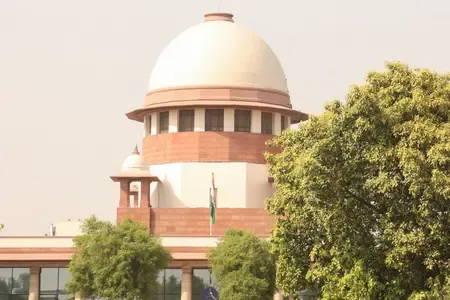
Delhi Police have told the Supreme Court that the decision to de-notify Jantar Mantar as a designated protest site was taken independently, after factoring in changed ground realities, public safety concerns, and the recommendations of a committee formed by the Ministry of Home Affairs (MHA). The affidavit, filed on 3 November 2026, pushes back against a petition challenging the move and explicitly argues that the decision predated the court's 9 October order.
What the Affidavit Says
Delhi Police Commissioner Anurag Kumar, in a counter affidavit before the apex court, stated that the proposal to shift the designated protest venue had been under consideration by the Central government for a considerable period before the Supreme Court passed its October directive. The MHA had constituted a committee on 26 August 2026 to examine the suitability of continuing Jantar Mantar as a protest site and to identify alternative venues. The committee's report was received in September and forwarded to the Commissioner on 14 September 2026.
'The decision to denotify Jantar Mantar as the designated site for protests was taken by me after due consideration of the relevant factors and criteria relevant for such decision making, and upon consideration of the recommendations of the Committee constituted by the Ministry of Home Affairs,' the affidavit stated.
Ground Realities Behind the Decision
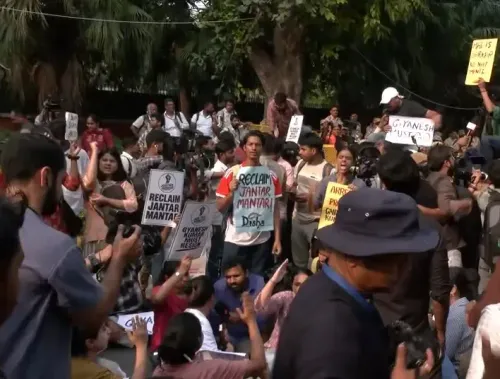
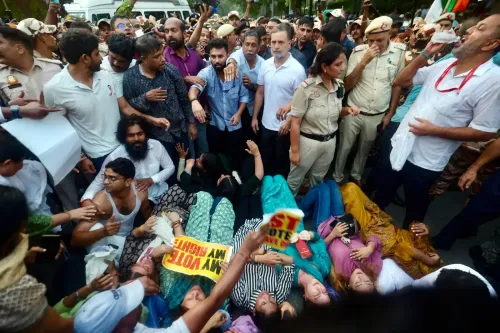
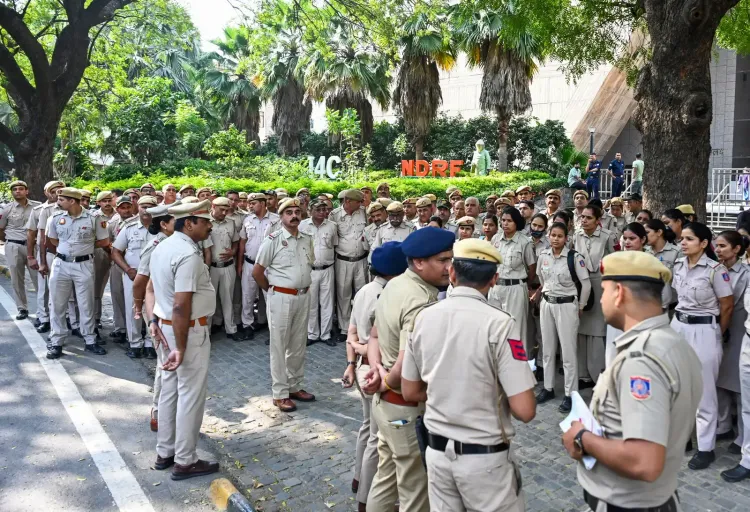
The affidavit described Jantar Mantar as a public road rather than a conventional protest site, noting it witnessed more than 1,300 protests and demonstrations annually. This frequency, officials argued, repeatedly blocked emergency services including ambulances and fire brigades. The venue's assessed maximum capacity stands at approximately 1,500 people, yet the number of protesters on 20 July 2026 had far exceeded that figure, raising concerns over a possible stampede and disruption in Janpath and Connaught Place.
The Commissioner also highlighted that 78 foreign embassies, diplomatic missions and offices of international organisations are situated within a 3–4 km radius of Jantar Mantar. Additionally, 99 Central government offices, ministries and autonomous bodies — including the Reserve Bank of India (RBI) — are located in the vicinity, with a combined daily footfall of approximately 1.46 lakh people. Traffic congestion from protests was also said to disrupt Ram Manohar Lohia Hospital, impeding patient movement and ambulance access.
Alternative Sites Proposed
The MHA committee unanimously concluded that Jantar Mantar Road was no longer a suitable protest venue. It recommended three alternatives: Ramlila Maidan in Central Delhi, CBD Ground in East Delhi, and Burari Ground in North-West Delhi. These sites were identified after assessing public safety, law and order, traffic management, emergency response requirements, and the need to protect vital installations.
Legal Position of Delhi Police
Delhi Police argued before the court that the right to protest must be balanced against the rights of other citizens — including their right to earn a livelihood, conduct business, and move freely within the national capital. The affidavit stated that 'the petitioners cannot claim any vested right to insist upon a particular site for the purpose of exercising their right to protest.' The force urged the Supreme Court not to interfere, framing the de-notification as an administrative and executive measure taken in the larger public interest.
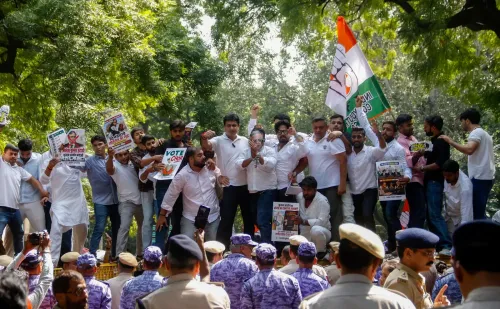
This comes amid a broader national conversation about the regulation of protest spaces in central Delhi — a tension that has persisted since the Supreme Court's 2018 order directing authorities to devise a mechanism for regulating demonstrations at Jantar Mantar Road. How the court rules on the petition will likely set a precedent for how India's most symbolically significant protest corridor is governed going forward.
Point of View
Delhi Police insulate the executive decision from appearing reactive or contemptuous of judicial authority. But the numbers they cite — 1,300 protests a year, capacity breached on a single day — are a double-edged sword; they also underscore how central Jantar Mantar has become to India's protest culture, which is precisely why shifting it is politically freighted. The proposed alternatives (Ramlila Maidan, Burari Ground) are geographically peripheral and logistically harder to mobilise around, raising legitimate questions about whether 'alternative venue' is a genuine substitute or a dilution dressed as accommodation. The court's response will test whether administrative convenience can override the symbolic geography of democratic dissent.
NationPress
3 Nov 2026
Frequently Asked Questions
Why has Jantar Mantar been de-notified as a protest site?
Delhi Police say the site was de-notified due to changed ground realities, including over 1,300 protests annually, a maximum capacity of 1,500 people that was breached on 20 July 2026, and concerns over emergency access, diplomatic security, and traffic disruption. The decision followed recommendations from an MHA-constituted committee.
What did the MHA committee recommend?
The MHA committee, formed on 26 August 2026, unanimously concluded that Jantar Mantar Road was no longer suitable for protests. It recommended Ramlila Maidan in Central Delhi, CBD Ground in East Delhi, and Burari Ground in North-West Delhi as alternative venues.
Was the de-notification triggered by the Supreme Court's October 2026 order?
Delhi Police have explicitly denied this in their affidavit. Commissioner Anurag Kumar stated that the proposal had been under consideration for a considerable period before the court's 9 October order, and the MHA committee's report had already been received in September 2026.
What is the legal challenge before the Supreme Court?
A petition has been filed in the Supreme Court challenging the de-notification of Jantar Mantar as a designated protest venue. Delhi Police have filed a counter affidavit urging the court not to interfere, arguing the move is an administrative decision in public interest.
Why is Jantar Mantar considered a sensitive location?
Jantar Mantar lies within a 3–4 km radius of 78 foreign embassies and diplomatic missions, 99 Central government offices and ministries — including the Reserve Bank of India — with a combined daily footfall of approximately 1.46 lakh people. Protests there also affect Ram Manohar Lohia Hospital's emergency operations.