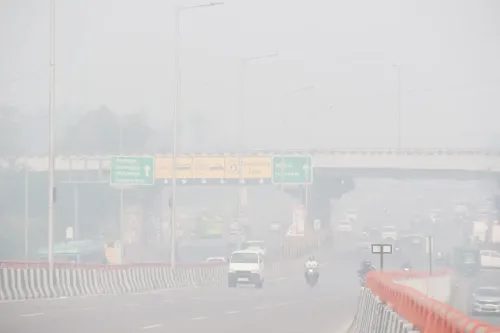
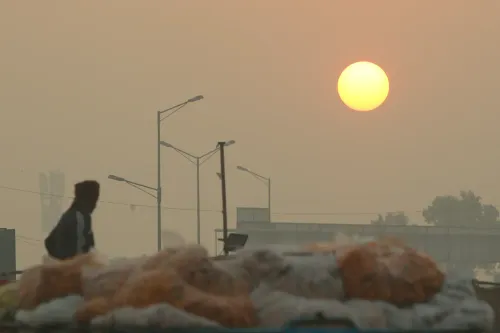
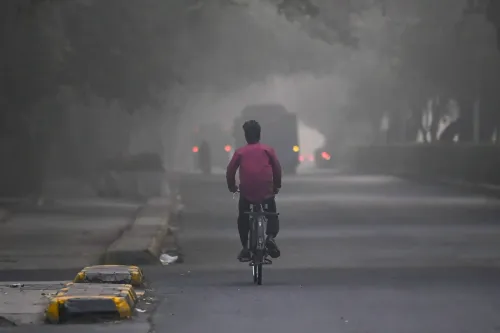
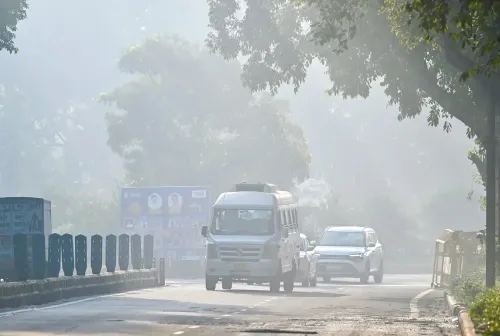
Delhi AQI hits 319, back in 'very poor' zone as pollution rebounds
Synopsis
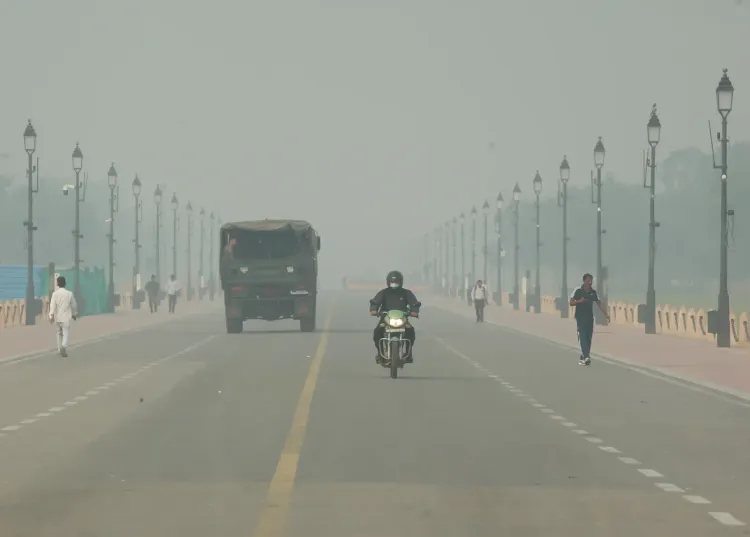
Delhi's AQI bounced back to 319 on 12 November after a fleeting reprieve, with Pusa and NSIT Dwarka touching 388. CSE data reveals pre-Diwali PM2.5 was 97 per cent worse than 2025 — the highest in three years — and with no rain forecast until at least 15 November, there is no immediate escape from the smog.
Key Takeaways
Delhi's overall AQI climbed to 319 on 12 November 2026 , pushing it back into the 'very poor' category.
Pusa and NSIT Dwarka recorded the city's highest readings at 388 each; Chandni Chowk followed at 387 .
NCR cities also remained polluted: Gurugram at 300 , Noida at 284 , Ghaziabad at 280 , Faridabad at 270 .
According to CSE , pre-Diwali PM2.5 averaged 236 micrograms per cubic metre — 97 per cent higher than in 2025 and the worst in three years .
IMD forecasts no rainfall in Delhi between 10 and 15 November , offering no near-term relief.
Delhi's AQI peaked at 376 on 8 November , higher than the 345 recorded on Diwali in 2025 .
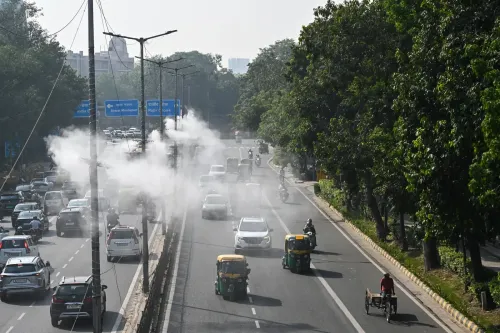
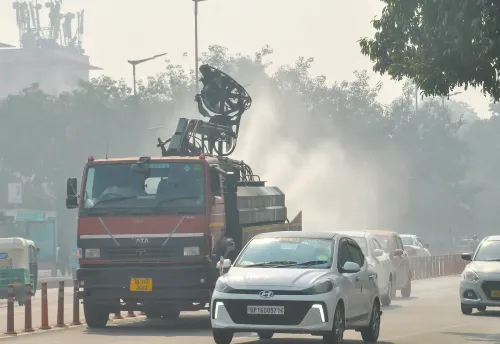
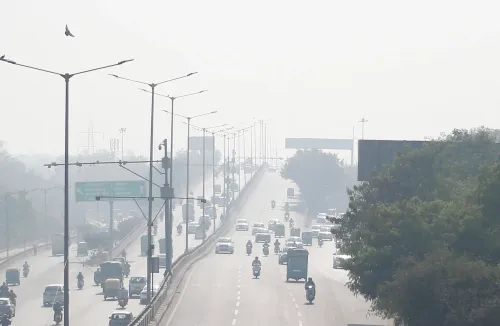
New Delhi's overall Air Quality Index (AQI) climbed to 319 on Thursday, 12 November 2026, slipping back into the 'very poor' category after a brief and short-lived improvement. The deterioration, confirmed by readings across multiple monitoring stations, signals that the city's pollution crisis is far from over — and weather forecasts offer little comfort in the days ahead.
Worst-Hit Monitoring Stations
Readings from air quality monitoring stations painted a grim picture across the capital. Pusa and NSIT Dwarka recorded the highest AQI readings at 388 each, followed closely by Chandni Chowk at 387 and JNU at 380. Punjabi Bagh logged 373, Chhawla registered 369, and Aya Nagar along with CRRI Mathura Road each recorded 366.
Other stations reported elevated but comparatively lower levels: Jahangirpuri at 342, Wazirpur at 336, Ghummanhera at 334, Tikri Kalan at 322, Anand Vihar at 319, Ashok Vihar at 317, and Burari and Bawana both at 316. Relatively cleaner readings came from Ghoga at 232 and Karala at 258 — still well within the 'poor' range.
NCR Also Under the Pollution Cloud
The air quality crisis extends well beyond Delhi's administrative boundaries. Among the National Capital Region (NCR) cities, Gurugram reported an AQI of 300, Noida recorded 284, Ghaziabad stood at 280, and Faridabad logged 270 — all in the 'poor' to 'very poor' range, confirming that the pollution episode is regional in character.
No Weather Relief Expected Soon
Atmospheric conditions are unlikely to provide meaningful relief in the near term. The India Meteorological Department (IMD) had earlier forecast no rainfall in Delhi between 10 and 15 November. Maximum temperatures are expected to remain between 27 and 30 degrees Celsius, with minimum temperatures hovering between 14 and 17 degrees Celsius through 15 November. While a Western Disturbance is reportedly approaching, it is not expected to bring any significant temperature change or precipitation sufficient to wash out pollutants.
Post-Diwali Surge Worse Than Previous Years
This year's pollution surge began even before the festival season peaked. According to an analysis by the Centre for Science and Environment (CSE), the average PM2.5 concentration during the week preceding Diwali stood at 236 micrograms per cubic metre — the highest for that corresponding period in three years. That figure was 97 per cent higher than the 120 micrograms recorded in 2025 and 32 per cent above the 179 micrograms reported in 2024.
Pollution intensified further around Diwali itself. Delhi's average AQI reached 376 on 8 November, according to Central Pollution Control Board (CPCB) figures, compared with 345 recorded on Diwali in 2025. The city subsequently recorded AQI levels of 344 on 9 November, 299 on 10 November, and 313 on 11 November — the brief dip that has now been reversed.
With no rainfall forecast and temperatures set to remain stable, Delhi's air quality is likely to remain under severe stress for at least the next several days.
Point of View
And the post-festival rebound is happening faster. The absence of rainfall, combined with stable low-wind conditions, means Delhi is structurally exposed to multi-week pollution sieges — not isolated spikes. Emergency response frameworks that activate only after AQI crosses 400 are plainly insufficient when the city is parked above 300 for days at a stretch. The NCR-wide spread also exposes the limits of Delhi-centric policy — pollution does not respect administrative boundaries, and coordinated regional action remains conspicuously weak.
NationPress
12 Nov 2026
Frequently Asked Questions
What is Delhi's AQI today, 12 November 2026?
Delhi's overall AQI stood at 319 on 12 November 2026, placing it firmly in the 'very poor' category. This marks a reversal of a brief period of improvement seen over the previous two days.
Which areas in Delhi have the worst air quality right now?
Pusa and NSIT Dwarka recorded the highest AQI readings at 388 each on 12 November, followed by Chandni Chowk at 387 and JNU at 380. Punjabi Bagh, Chhawla, and Aya Nagar also reported readings above 365.
How does this year's Diwali pollution compare to previous years?
According to a CSE analysis, the average PM2.5 concentration in the week before Diwali 2026 was 236 micrograms per cubic metre — 97 per cent higher than the 120 micrograms recorded in 2025 and 32 per cent above the 179 micrograms in 2024, making it the worst pre-Diwali pollution in three years. Delhi's AQI on 8 November reached 376, up from 345 on Diwali day in 2025.
Will rain help clear Delhi's pollution soon?
The India Meteorological Department has forecast no rainfall in Delhi between 10 and 15 November. Although a Western Disturbance is reportedly approaching, it is not expected to bring significant precipitation or temperatures changes adequate to disperse pollutants.
Is air quality in NCR cities also affected?
Yes. All major NCR cities reported poor air quality on 12 November — Gurugram at 300, Noida at 284, Ghaziabad at 280, and Faridabad at 270. The pollution episode is regional in scale and not confined to Delhi alone.