Delhi protest sites: From Boat Club to Jantar Mantar and what comes next
Synopsis
Delhi's Jantar Mantar has been de-notified as a protest venue — and there is no designated replacement. From the half-million-strong farmer occupation of Boat Club in 1988 to the NEET protests threatening Parliament in July 2026, India's capital has steadily closed off the spaces where citizens could confront power. The question is not just logistical; it is constitutional.
Key Takeaways
Jantar Mantar in New Delhi has been de-notified as a designated protest site, leaving movements without a fixed, recognised venue.
The Boat Club lawns on Kartavya Path (formerly Rajpath) served as India's primary mass protest ground until the early 1990s.
In October 1988 , Bharatiya Kisan Union leader Mahendra Singh Tikait led an estimated five lakh farmers to occupy Boat Club for nearly a week.
The 2020–21 farm laws protests , led partly by Rakesh Tikait , avoided a designated site and instead besieged Delhi's borders; an Independence Day tractor march turned violent, resulting in at least one death.
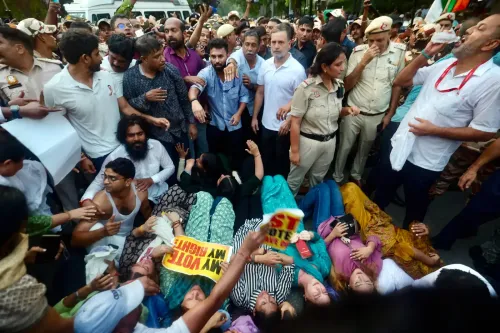
In July 2026 , NEET-related protests by the Cockroach Janta Party spilled onto streets near Parliament, drawing a forceful security response.
Critics call venue restrictions 'authoritarian'; authorities cite public order, safety, and security concerns.
New Delhi's landscape of organised dissent is shrinking — and the consequences for democratic expression could be significant. The de-notification of Jantar Mantar as a designated protest venue, combined with the state's intensifying resistance to large assemblies in the capital's core, leaves activists and movements without a recognised, accessible stage for public demonstration.
The Boat Club Era: When Protesters Held the Heart of Delhi
For several decades, the sprawling Boat Club lawns on Rajpath — now renamed Kartavya Path — served as India's foremost arena for mass political mobilisation. Positioned between India Gate and Vijay Chowk, and within symbolic reach of Parliament and the Prime Minister's Office, the site offered protest movements a stage that carried unmistakable political weight.
The decisive moment came in October 1988, when Bharatiya Kisan Union leader Mahendra Singh Tikait led an estimated five lakh farmers to occupy the Boat Club grounds for nearly a week. Eyewitness accounts describe the ceremonial precinct transformed into a working rural encampment — tractors, livestock, and community kitchens crowding a space ordinarily reserved for state pageantry. The mobilisation extracted a direct government response and demonstrated that mass movements could physically seize national political space.
Among those watching was an 18-year-old Rakesh Tikait, son of Mahendra Singh Tikait and himself a prominent farmer-leader decades later. He reportedly recalled the site being converted into a village-like setting, as his father pressed demands for higher remunerative prices for sugarcane, waiver of water and electricity dues, and tariff concessions.
The Shift to Jantar Mantar
Concerns over public order and security gradually prompted authorities to redirect large-scale protests away from the Boat Club. Jantar Mantar, located on Parliament Street, became the designated alternative — narrower and more operationally manageable, but still symbolically proximate to the seat of power.
Over the years, the site became synonymous with structured democratic dissent. Farmers, students, pensioners, anti-corruption campaigners, government employees, and a wide spectrum of social movements all used Jantar Mantar as their platform. When campaigns grew large enough to outgrow the space, they relocated further: the Anna Hazare-led anti-corruption movement began at Jantar Mantar before shifting to the far larger Ramlila Maidan to accommodate swelling public participation.
The 2020–21 Farm Laws Protests and the Perils of Uncontrolled Mobilisation
The protests against three agriculture laws in 2020–21, spearheaded in part by Rakesh Tikait alongside other farmer-leaders, marked a departure from the traditional model. Rather than occupying a designated site inside the capital, protesters laid siege at Delhi's borders for over a year.
An attempt to enter the city via a tractor march on Independence Day escalated into widespread disorder, resulting in property damage, scenes of anarchy, and the death of at least one person. The episode sharpened state concerns about the risks posed by large, unscheduled mobilisations near the capital's core institutions.
De-notification and the Question of Democratic Space
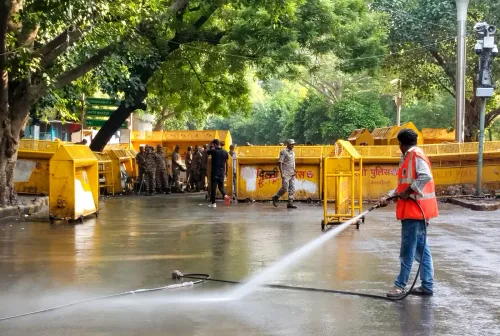
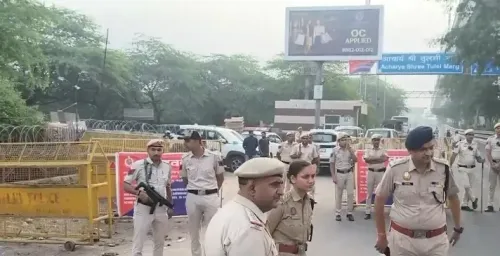
Jantar Mantar's de-notification as a protest site has reignited a long-running debate about the balance between public order and the right to assembly. Critics argue that restricting or relocating protest venues increases the physical and psychological distance between citizens and political authority, and describe such measures as 'authoritarian' in effect if not intent. Authorities counter that the decisions are driven by legitimate concerns over congestion, safety, and the risk of infiltration by disruptive elements.
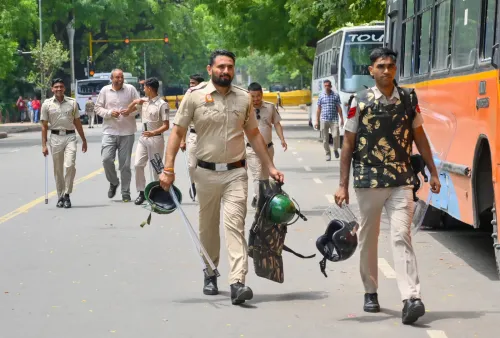
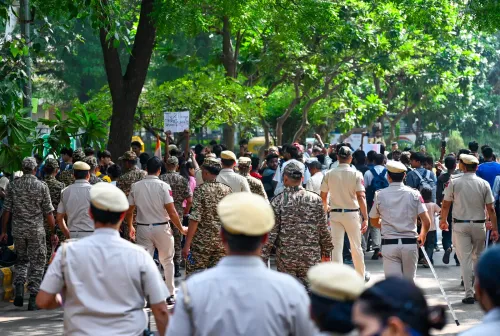
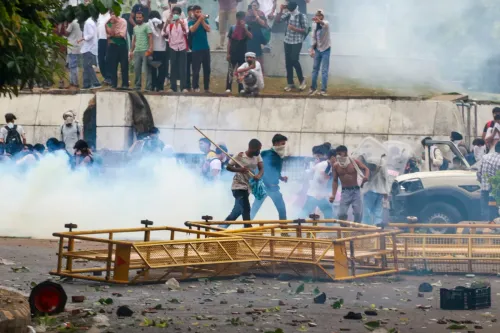
The controversy intensified this past July, when demonstrations by the Cockroach Janta Party over alleged examination irregularities and NEET-related concerns drew large crowds that spilt onto surrounding streets and reportedly threatened to march on Parliament. Security forces responded forcefully, citing risks of breach and the precedent of the Parliament attack. Protesters, however, described the response as repression of legitimate dissent.
What the Shrinking of Protest Space Signals
An emerging movement challenging alleged manipulation of electoral machinery now finds itself navigating this more constrained environment — mobilising public opinion without access to a recognised, central venue. Notably, this is a pattern seen across democracies: as designated spaces narrow, protest activity becomes more diffuse and harder to sustain, often disadvantaging smaller or less organised movements that lack the resources to secure alternative venues.
With no fixed protest centre on the horizon, those seeking to draw national attention to a cause face a structurally harder task. How the state manages — or mismanages — this vacuum will test its democratic credentials in the months ahead.
Point of View
From Boat Club to Jantar Mantar to effectively nowhere, has come with plausible-sounding administrative justifications, yet the cumulative effect is to make mass dissent logistically harder and symbolically weaker. What mainstream coverage misses is that the right to protest near power is not incidental to democracy; it is structural. A movement that cannot be seen from Parliament cannot easily compel Parliament to listen. The emerging challenge to electoral integrity, arriving precisely as designated protest space disappears, raises uncomfortable questions about timing and intent that deserve direct scrutiny.
NationPress
12 Oct 2026
Frequently Asked Questions
Why has Jantar Mantar been de-notified as a protest site in Delhi?
Authorities de-notified Jantar Mantar as a designated protest venue citing concerns over public order, congestion, and security risks — particularly after large demonstrations spilled beyond the site's boundaries. The decision has been contested by civil society groups who argue it curtails the constitutional right to peaceful assembly.
What was the significance of the Boat Club protests in 1988?
In October 1988, Bharatiya Kisan Union leader Mahendra Singh Tikait led an estimated five lakh farmers to occupy the Boat Club lawns near India Gate for nearly a week, transforming the ceremonial heart of Delhi into a rural encampment with tractors and community kitchens. The protest successfully compelled a government response on demands including higher sugarcane prices and waiver of water and electricity dues.
How did protests shift from Boat Club to Jantar Mantar?
Security and public order concerns prompted authorities to gradually redirect large-scale protests from the Boat Club — close to Parliament and the PMO — to the narrower, more manageable Jantar Mantar on Parliament Street from the early 1990s onwards. Jantar Mantar then became the country's principal protest venue for farmers, students, pensioners, and social movements for over two decades.
What happened during the 2020–21 farmers' protests in Delhi?
Farmers opposing three agriculture laws, led partly by Rakesh Tikait, chose not to occupy a designated site inside Delhi but instead blockaded the capital's border points for over a year. A tractor march into the city on Independence Day escalated into widespread disorder, resulting in property damage and at least one death, intensifying state resistance to large urban protest mobilisations.
Who is affected by the loss of a designated protest venue in Delhi?
Any group or movement seeking to draw national political attention is affected — particularly smaller, less-resourced organisations that cannot easily secure alternative venues such as Ramlila Maidan. An emerging movement challenging alleged electoral manipulation is among those now navigating this more constrained environment, according to reports.