Delhi's Ambitious Transport Plan: Double-Decker Flyovers and Metro Expansion
Synopsis
Delhi's Chief Minister Rekha Gupta reviews ongoing Metro and road projects aimed at transforming public transport and reducing pollution. Key updates include double-decker flyovers and significant corridor expansions, with a focus on timely completion and improved connectivity across the capital.
Key Takeaways
Modern Transport System: Focus on enhancing public transport efficiency.
Metro Expansion: 416 km network with ongoing projects to boost connectivity.
Environmental Impact: Aims to reduce traffic congestion and pollution.
Double-Decker Flyovers: Innovative solutions for accommodating Metro and road traffic.
Timely Completion: Commitment to monitoring and completing projects on schedule.
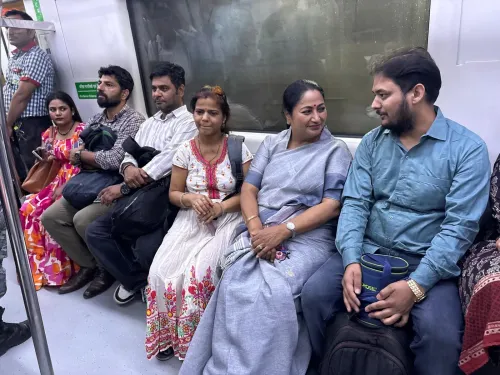
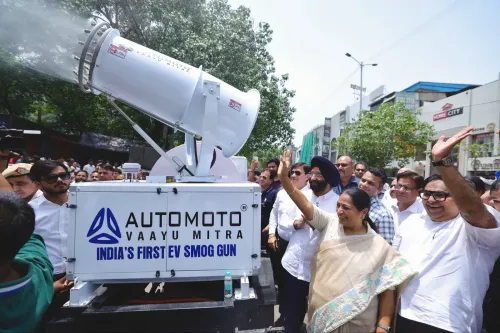
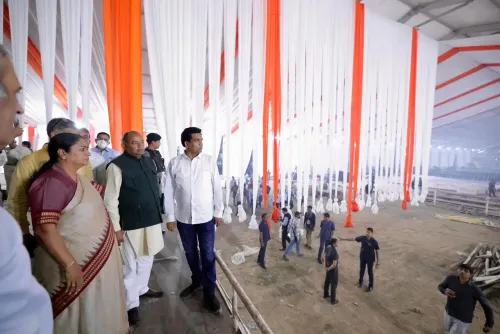
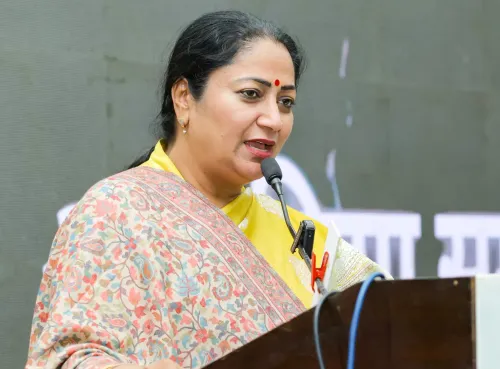
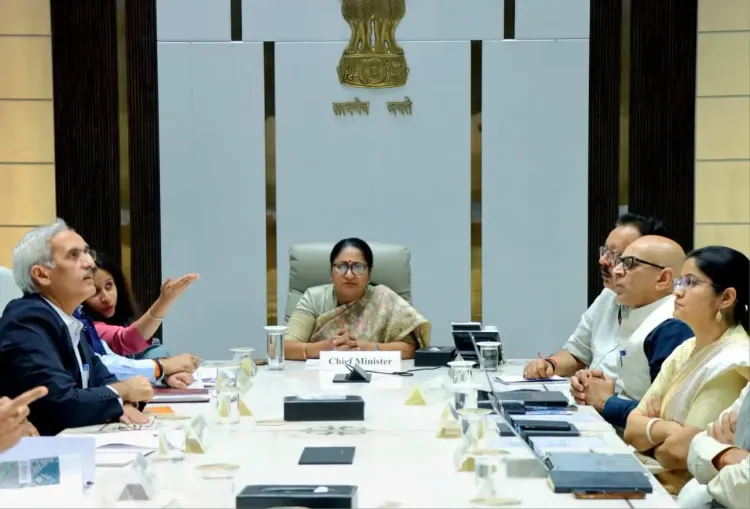
New Delhi, April 12 (NationPress) The Chief Minister of Delhi, Rekha Gupta, conducted an extensive evaluation of the Delhi Metro and related road and flyover initiatives, emphasizing that creating a cutting-edge and effective public transport system is a principal focus for the administration.
During a session held at the Delhi Secretariat, she highlighted the aim of mitigating traffic bottlenecks, enhancing travel convenience, and reducing pollution levels in the city.
Key officials, including the Managing Director of the Delhi Metro Rail Corporation, were in attendance.
Gupta pointed out that while numerous projects are advancing satisfactorily, ongoing challenges in certain areas are being systematically addressed.
The meeting underscored the need for improved collaboration to enhance Delhi's transport framework and manage pollution effectively.
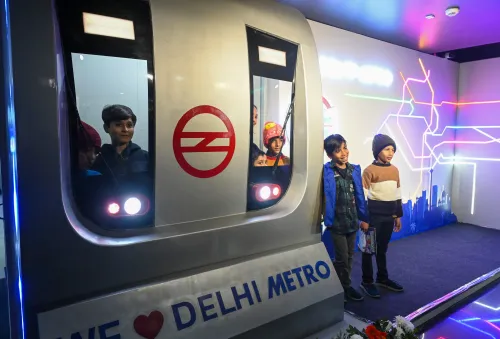
Officials reported that the Delhi Metro network currently extends across 416 km, encompassing 303 stations organized into 12 lines, with 32 interchange stations. Additionally, a further 104.45 km network featuring 81 stations is in the works. Progress on the priority corridors of Phase IV has accelerated, with physical progress recorded at 79.57% and financial progress at 80.60%.
In her briefing, Gupta mentioned that key segments such as Majlis Park to Maujpur, Deepali Chowk to Majlis Park, and Janakpuri West to Krishna Park Extension have already begun operations.
She stated that several significant corridors are slated for completion by December 2026, including Krishna Park Extension to Deepali Chowk (approximately 6.6 km), Majlis Park to Derawal Nagar (3.5 km), Derawal Nagar to R.K. Ashram (7.4 km), Tughlakabad to Sangam Vihar (6.3 km), Sangam Vihar to Saket G Block (4.3 km), and Saket G Block to Aerocity (12.6 km). These routes are anticipated to greatly enhance connectivity throughout various city sectors.
Construction has also commenced on the remaining three corridors of Phase IV: Lajpat Nagar to Saket G Block (8.38 km), Inderlok to Indraprastha (12.37 km), and Rithala to Kundli (26.46 km), with a projected completion date of March 2029. Simultaneously, Phase V(A) initiatives have started, including R.K. Ashram Marg to Indraprastha (9.91 km), Aerocity to IGI Airport Terminal 1 (2.26 km), and Tughlakabad to Kalindi Kunj (3.9 km).
In addition to the Metro expansion, several integrated road and flyover projects are currently underway. A 2.16-km double-decker flyover from Azadpur to Tripolia Chowk, designed to support both Metro and road traffic, is approximately 73% complete, with an estimated budget of Rs 264.27 crore. Another 1.40-km flyover from Yamuna Vihar to Bhajanpura, costing Rs 291.17 crore, is around 85% complete.
In South Delhi, significant advancements are being made along MB Road, including a 2.48-km six-lane flyover from Saket G Block to Sangam Vihar, alongside underpasses at Saket G Block and Ambedkar Nagar. This initiative, valued at Rs 694.98 crore, has reached about 40% completion so far.
Meanwhile, design and alignment preparations are ongoing for a 2.53-km flyover from Maa Anandmayee Marg to Pul Prahladpur. Issues such as ASI permissions, tree removal, and land acquisition are being actively managed.
Looking ahead, the government has outlined several new proposals, including a 19.2-km elevated road along the Yamuna from Wazirabad to DND, planned in three phases: Surghat to ISBT, ISBT to Sarai Kale Khan, and Sarai Kale Khan to DND. Additionally, a proposal for a 2.62-km flyover from Tripolia Gate to Barfkhana has also been prepared.
Gupta stated that the expansion of the Delhi Metro and its integrated road network will fortify the city's transportation framework, making travel swifter and more convenient while significantly alleviating congestion and pollution. She instructed officials to ensure continuous oversight and prompt completion of all initiatives.
Point of View
The review of Delhi's transport initiatives by Chief Minister Rekha Gupta underscores a significant commitment to modernizing the city's infrastructure. The focus on tackling traffic congestion and pollution reflects a proactive approach to urban planning. The advancements, particularly in the Metro expansion, are promising for the future of public transportation in Delhi.
NationPress
19 Sept 2026
Frequently Asked Questions
What are the key features of the new double-decker flyovers?
The new double-decker flyovers are designed to accommodate both Metro and road traffic, enhancing connectivity and reducing congestion.
When is the Metro expansion expected to be completed?
Several major corridors of the Metro expansion are targeted for completion by December 2026.
How long is the current Delhi Metro network?
The current Delhi Metro network spans 416 km with 303 stations across 12 lines.
What is the estimated cost of the double-decker flyover project?
The double-decker flyover from Azadpur to Tripolia Chowk has a project cost of Rs 264.27 crore.
What are the environmental benefits of these projects?
These projects are expected to significantly reduce pollution levels and improve air quality in the capital.