DGCA orders OEM inspection of Air India fuel control switch under officer supervision
Synopsis
India's DGCA is not taking the OEM's word for it. Despite Boeing declaring Air India's fuel control switch serviceable after a February 2026 grounding at Bengaluru, the regulator has now ordered a fresh inspection at the manufacturer's own facility — with its officers watching. The move signals that India's aviation watchdog is tightening its grip on wide-body airworthiness oversight.
Key Takeaways
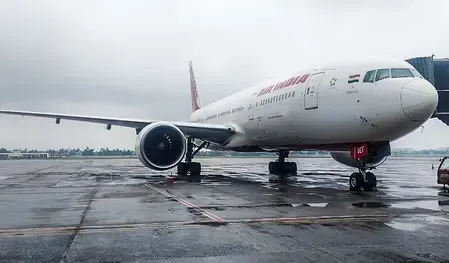
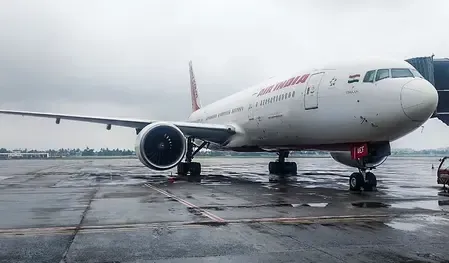
Air India Boeing 787-8 aircraft VT-ANX was grounded at Bengaluru on 2 February 2026 after the left Fuel Control Switch (FCS) was found slipping from 'RUN' to 'CUTOFF'.
The aircraft had completed flight AIC-132 from London Heathrow when the crew logged the defect in the Pilot Defect Report.
An initial inspection by Air India engineering, conducted per OEM guidelines in the presence of DGCA officers, found both switches satisfactory.
The OEM declared the unit mechanically serviceable, noting the slip occurred only when force was applied in an incorrect direction.
The DGCA has now directed that the fuel control switch be re-inspected at the OEM facility itself, with DGCA officers present, as part of continued airworthiness oversight.
India's aviation regulator, the Directorate General of Civil Aviation (DGCA), has directed the original equipment manufacturer (OEM) to conduct a fresh inspection of the fuel control switch involved in the Air India Boeing 787-8 grounding incident at Bengaluru in February 2026 — this time at the OEM's own facility and in the presence of DGCA officers. The Civil Aviation Ministry confirmed the directive on Tuesday, 19 May 2026, signalling that regulators are not fully satisfied with earlier on-site checks.
What Triggered the Grounding
On 2 February 2026, Air India aircraft VT-ANX — a Boeing 787-8 — was grounded at Bengaluru (VOBL) after completing flight AIC-132 from London Heathrow (EGLL). The crew logged a defect in the Pilot Defect Report (PDR), noting that the left Fuel Control Switch (FCS) slipped from the 'RUN' position to 'CUTOFF' when pushed slightly and did not lock positively in its selected position — a safety-critical anomaly for any commercial aircraft.
Initial Inspection and OEM's Finding
Following the grounding, Air India referred the matter to Boeing for guidance. Based on OEM-recommended procedures, the airline's engineering team inspected and functionally tested both the left and right fuel control switches in the presence of DGCA officers. The ministry noted that both switches were found satisfactory, with the locking tooth fully seated and not slipping from RUN to CUTOFF under normal operating conditions.
However, the earlier checks also revealed a nuance: when external force was applied in an incorrect direction — rather than parallel to the base plate — the switch moved easily from RUN to CUTOFF. According to the ministry's earlier statement, this was attributed to the angular base plate design, which allowed slip when the switch was pressed improperly with a finger or thumb. The OEM subsequently concluded that the switch was mechanically functioning as designed and declared the unit serviceable.
Why DGCA Is Pushing for a Deeper Check
Despite the OEM's serviceability clearance, the DGCA has now escalated the matter by directing that the fuel control switch be inspected at the OEM facility itself, with DGCA officers present throughout. The ministry described this as part of 'continued airworthiness' oversight — regulatory language that signals the regulator is treating the issue as unresolved until a facility-level examination is completed.
This is notable because the earlier checks were conducted on-site at the airline's engineering base, not under the controlled conditions of the manufacturer's own inspection environment. A facility-level inspection typically allows for more granular testing, access to original design specifications, and direct comparison against manufacturing tolerances.
Broader Safety Context
The fuel control switch is a critical component on any jet aircraft — it governs the flow of fuel to the engines. A switch that does not lock positively in the RUN position could, under specific circumstances, risk inadvertent engine shutdown. The DGCA's insistence on OEM-level scrutiny reflects the regulator's heightened focus on airworthiness standards for wide-body aircraft operating long-haul international routes. This comes amid broader global attention on Boeing 787 maintenance protocols, with multiple aviation authorities tracking component reliability on the Dreamliner fleet. Air India, which operates an extensive 787 fleet on international routes including London Heathrow, has been under increased regulatory watch as it scales up post-privatisation.
What Happens Next
The inspection at the OEM facility is yet to be completed, and its outcome will determine whether further corrective action is required on Air India's 787 fleet. The DGCA has not indicated a timeline for the inspection results, but any finding that contradicts the earlier serviceability assessment could prompt fleet-wide checks. Aviation safety observers will be watching whether the regulator issues an airworthiness directive following the OEM review.
Point of View
Which is the correct posture. The more important question is systemic: if a switch can slip from RUN to CUTOFF under an 'incorrect' finger press, is that a design tolerance that should be acceptable on a commercial wide-body? The DGCA's insistence on a controlled facility inspection may be the first step toward that harder question.
NationPress
20 Sept 2026
Frequently Asked Questions
Why was the Air India Boeing 787-8 grounded in February 2026?
The aircraft, VT-ANX, was grounded at Bengaluru on 2 February 2026 after the crew reported in the Pilot Defect Report that the left Fuel Control Switch slipped from the 'RUN' position to 'CUTOFF' when pushed slightly and did not lock positively. The flight had arrived from London Heathrow as AIC-132.
What did the initial inspection find?
Air India's engineering team, following OEM-prescribed procedures and in the presence of DGCA officers, found both the left and right fuel control switches satisfactory. The OEM concluded the switch was mechanically functioning as designed and declared it serviceable, noting the slip occurred only when force was applied in an incorrect direction.
Why has the DGCA ordered a fresh inspection at the OEM facility?
Despite the earlier serviceability clearance, the DGCA has directed that the fuel control switch be inspected at the OEM's own facility with its officers present, citing continued airworthiness oversight. A facility-level inspection allows for more rigorous testing against original manufacturing specifications.
What is a Fuel Control Switch and why does it matter?
A Fuel Control Switch governs the flow of fuel to an aircraft's engines. A switch that does not lock positively in the RUN position poses a safety risk, as it could potentially lead to inadvertent engine shutdown under specific conditions — making it a safety-critical component on any commercial jet.
What happens if the OEM inspection finds a problem?
If the facility-level inspection contradicts the earlier serviceability finding, the DGCA could issue an airworthiness directive requiring checks across Air India's Boeing 787 fleet. The regulator has not announced a timeline for the inspection results.