CM Dhami launches Centre for Hindu Studies at Doon University
Synopsis
Uttarakhand CM Pushkar Singh Dhami has announced the establishment of a Centre for Hindu Studies at Doon University in Dehradun, framing it as a state effort to align modern higher education with India's classical cultural and knowledge heritage under the NEP 2020 framework.
Key Takeaways
Uttarakhand Chief Minister Pushkar Singh Dhami announced a Centre for Hindu Studies at Doon University, Dehradun on 22 October 2026 .
The centre aims to expose students to India's cultural heritage, classical knowledge tradition, and history alongside modern university education.
Doon University is a public institution established in 2005 in Dehradun.
The move aligns with the National Education Policy 2020 mandate to integrate Indian Knowledge Systems into higher education.
Similar centres focusing on Indian traditions exist at other public universities across India.
Curriculum design, faculty appointments, and first-batch enrolment details are yet to be made public.
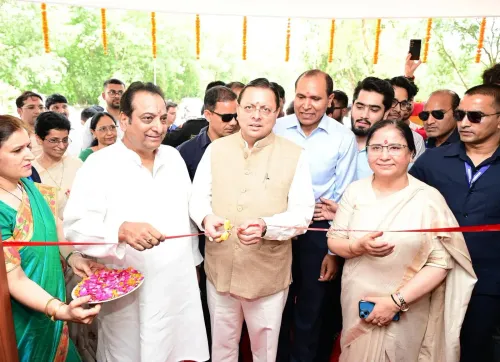
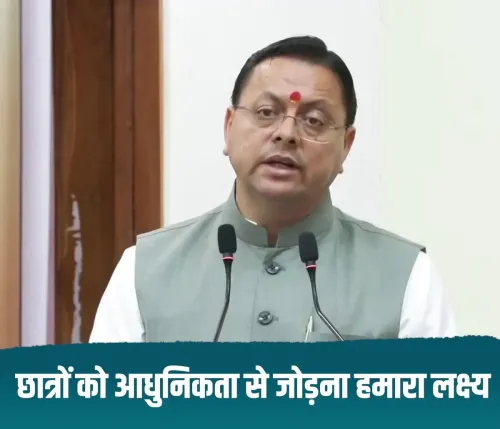
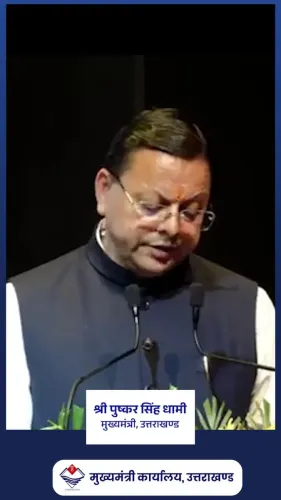
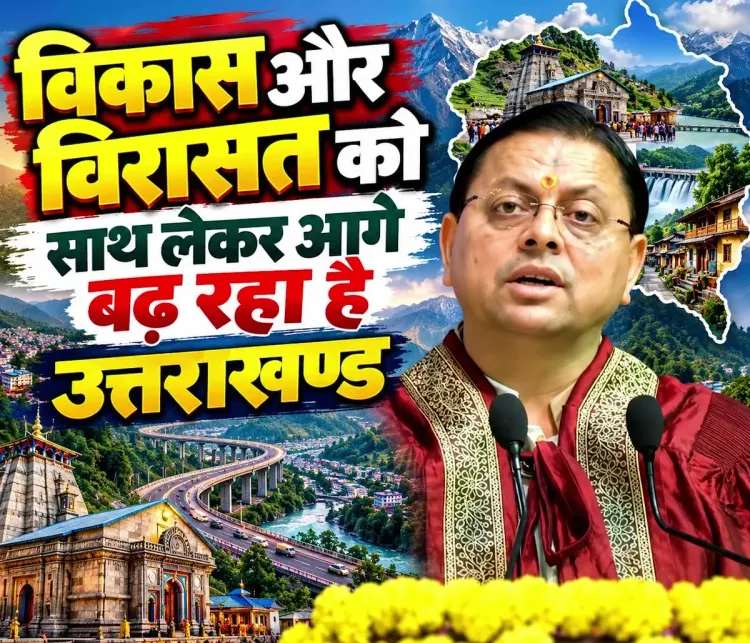
Development and heritage do not have to compete — Uttarakhand Chief Minister Pushkar Singh Dhami has made that argument concrete, announcing that the state government has established a Centre for Hindu Studies at Doon University in Dehradun, aiming to weave India's classical knowledge traditions into a modern university curriculum.
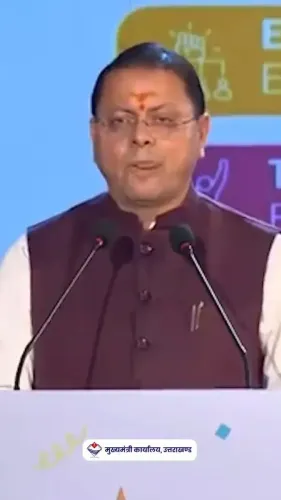
In his post on 22 October 2026, CM Dhami wrote: 'विकास और विरासत, दोनों का संरक्षण एवं संवर्धन साथ-साथ चलना चाहिए' — 'Development and heritage must both be preserved and promoted, side by side.' He framed the new centre as a deliberate bridge: one where young people pursuing modern education can simultaneously engage with 'India's rich cultural heritage, knowledge tradition, and glorious history.'
What the Centre for Hindu Studies will do at Doon University
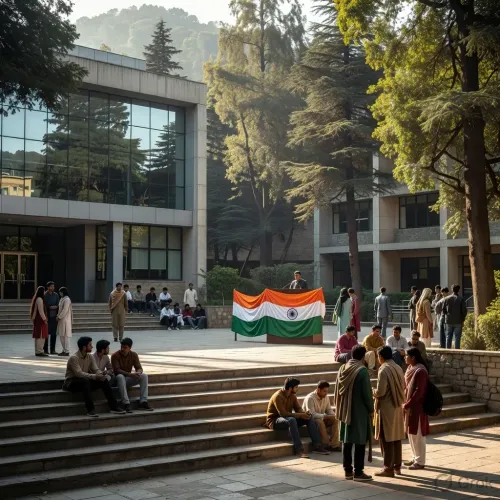
Doon University, a public institution established in 2005 and based in Dehradun, becomes the host campus for the new academic centre. The stated goal is academic exposure to Hindu philosophical traditions, classical texts, and the civilisational history that underpins them — positioned not as a replacement for mainstream subjects but as a complementary intellectual offering for enrolled youth.
Curriculum design, faculty appointments, and first-batch enrolment are the immediate milestones that will determine how ambitious the centre's programme actually is. Those details are yet to be made public.
NEP 2020's Indian Knowledge Systems push — and Uttarakhand's place in it
The announcement sits squarely within the framework of the National Education Policy 2020, which explicitly mandates the integration of Indian Knowledge Systems — spanning Ayurveda, classical philosophy, Sanskrit literature, and traditional sciences — into higher education curricula across the country. Several state governments have responded by establishing dedicated academic units; Uttarakhand's move follows that broader pattern.
For Uttarakhand specifically, the heritage angle carries added weight. The state is home to some of Hinduism's most sacred geography — the Char Dham circuit, Haridwar, Rishikesh — making a university-level centre for Hindu studies both symbolically resonant and practically anchored in the region's living traditions. CM Dhami's government has consistently paired infrastructure investment with cultural-identity signalling in its public communications.
Students and faculty: who this reshapes
The primary stakeholders are Uttarakhand's university students and the academic community at Doon University. If the centre attracts serious scholarly faculty and builds a rigorous syllabus, it could position Dehradun as a reference point for Hindu studies research in northern India — alongside existing centres at other public universities. If it remains ceremonial, the announcement's ambition will outrun its outcome.
Either way, the political signal is unambiguous: in Dhami's Uttarakhand, cultural heritage is being institutionalised inside the public university system, not left to private or religious bodies alone.
The next test is the syllabus. When the first cohort walks into the Centre for Hindu Studies at Doon University, what they are taught — and by whom — will be the real measure of this announcement.
Point of View
Not just a political talking point. For Uttarakhand, a state whose identity is inseparable from Hindu sacred geography, the move reinforces Dhami's consistent strategy of pairing development messaging with civilisational pride. The real test, however, is institutional rigour: whether the centre produces genuine scholarly output or becomes a ceremonial unit will determine its policy legacy. Nationally, it adds to a growing list of state-level Indian Knowledge Systems initiatives that collectively reshape what a public university education is expected to deliver.
NationPress
22 Oct 2026
Frequently Asked Questions
What is the Centre for Hindu Studies at Doon University?
It is a new academic centre established by the Uttarakhand state government at Doon University in Dehradun, designed to offer students structured engagement with Hindu philosophy, classical knowledge traditions, and India's cultural heritage alongside their mainstream university studies.
Who announced the Centre for Hindu Studies at Doon University?
Uttarakhand Chief Minister Pushkar Singh Dhami announced the establishment of the centre on 22 October 2026 via a post on X.
How does this relate to the National Education Policy 2020?
NEP 2020 explicitly promotes the integration of Indian Knowledge Systems into higher education curricula. The Centre for Hindu Studies at Doon University is consistent with that national framework, which several Indian states have acted on by creating dedicated academic units.
Where is Doon University located?
Doon University is a public university located in Dehradun, the capital of Uttarakhand. It was established in 2005.
What will students study at the Centre for Hindu Studies?
According to CM Dhami's announcement, the centre will focus on India's rich cultural heritage, knowledge tradition, and history. Specific curriculum details, faculty appointments, and enrolment timelines have not yet been made public.