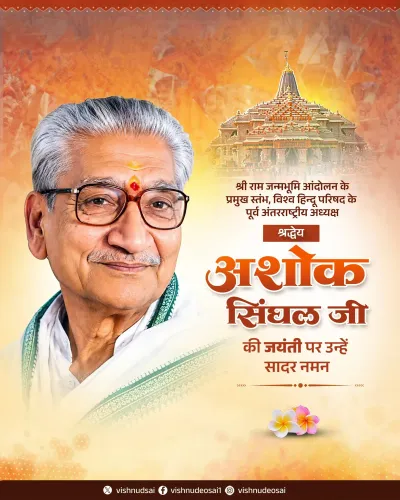
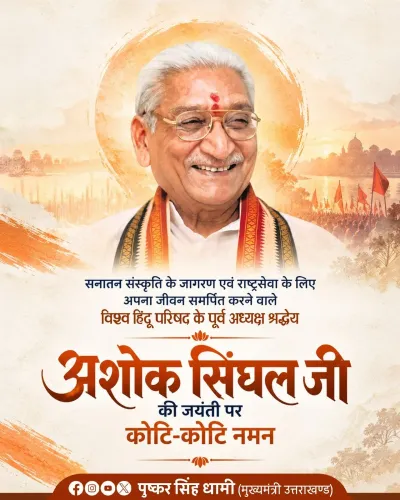
CM Dhami pays tribute to VHP chief Ashok Singhal on death anniversary
Synopsis
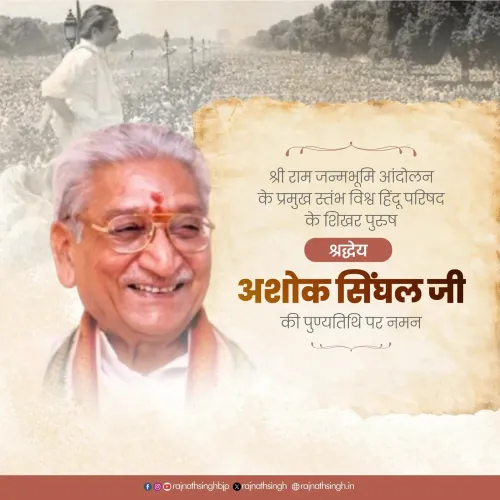
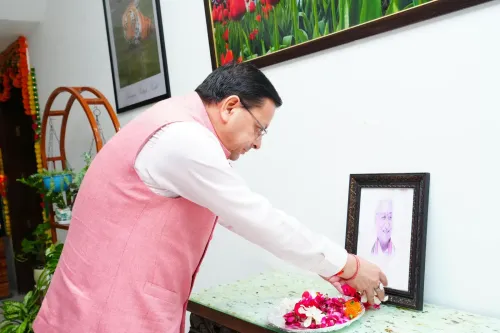
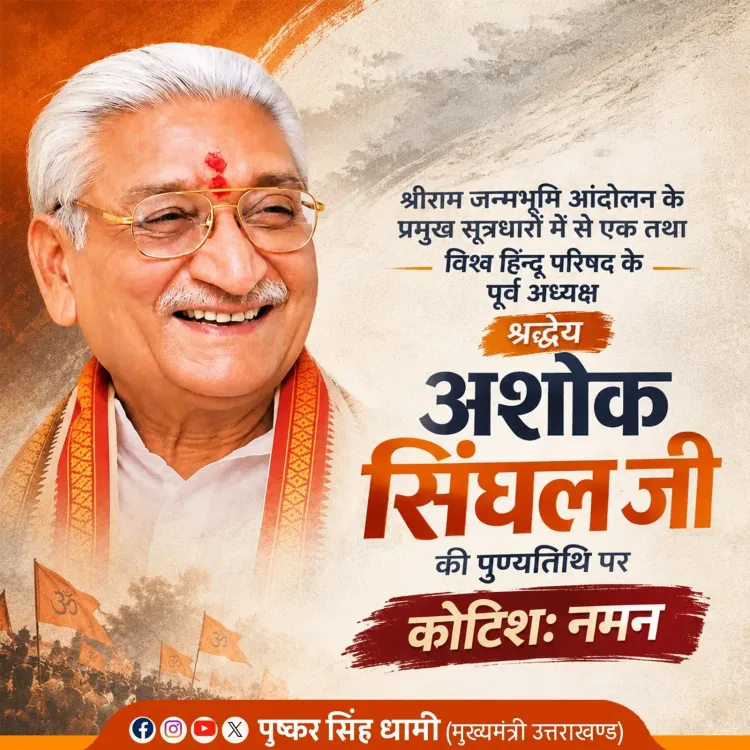
Uttarakhand Chief Minister Pushkar Singh Dhami paid tribute to late VHP president Ashok Singhal on his death anniversary, crediting his pivotal role in mobilising mass support for the Ram Janmabhoomi movement and championing Indian cultural identity.
Key Takeaways
CM Pushkar Singh Dhami marked Ashok Singhal's death anniversary on 17 November 2026 with a tribute post in Hindi.
Ashok Singhal served as president of the Vishva Hindu Parishad (VHP) , founded in 1964 .
Singhal was a central figure in intensifying the Ram Janmabhoomi movement from the mid-1980s onward through mass mobilisation.
The Supreme Court of India resolved the Ayodhya title dispute in November 2019 , enabling temple construction.
Dhami praised Singhal's organisational skill, dedication to Sanatan traditions, and contribution to cultural consciousness.
The tribute follows a pattern of BJP state leaders commemorating Sangh Parivar figures to reinforce ideological continuity.
A life devoted to Sanatan tradition and cultural mobilisation, remembered on its quietest day — the anniversary of its end. Uttarakhand Chief Minister Pushkar Singh Dhami on Tuesday, 17 November 2026 offered his homage to Ashok Singhal, the long-serving president of the Vishva Hindu Parishad (VHP), marking Singhal's death anniversary with a tribute that recalled both the man and the movement he helped shape.
Posting in Hindi, CM Dhami wrote: 'Kotishaः naman' — 'a salute a hundredfold' — to a leader who, in his words, 'dedicated his entire life to the preservation and promotion of Indian culture, Sanatan traditions and social consciousness.' The Chief Minister specifically credited Singhal's role as VHP president in mobilising mass public support for the Shri Ram Janmabhoomi movement and in awakening society to its cultural identity.The man behind the movement: Ashok Singhal's VHP legacy
Ashok Singhal served as the working president and later president of the Vishva Hindu Parishad, the Hindu nationalist body founded in 1964 with a mandate of cultural preservation and social mobilisation. From the mid-1980s onward, he was the principal organising force behind the Ram Janmabhoomi campaign — the decades-long drive to construct a temple at Ayodhya, the birthplace of Lord Rama. Under his stewardship, the VHP transformed what had been a local religious grievance into a nationwide mass movement, drawing millions into rallies, processions and brick-consecration ceremonies (shila pujan) that became defining images of late-20th-century Indian public life. His methods combined grassroots mobilisation with a sharp organisational discipline — qualities CM Dhami specifically invoked, praising Singhal's 'organisational skill and unbreakable dedication to cultural values.' That combination made the VHP under Singhal a central actor in one of independent India's most consequential legal and political disputes.From street agitation to Supreme Court: the Ram Janmabhoomi arc
The movement Singhal championed ran through decades of legal battles and street agitation before reaching its legal conclusion. The Supreme Court of India ruled on the Ayodhya title dispute in November 2019, clearing the path for temple construction on the contested site. The Ram Mandir that opened in Ayodhya in January 2024 is, in the BJP and VHP's telling, the culmination of the work Singhal and his generation undertook at considerable personal and political cost. For leaders like CM Dhami, invoking Singhal's memory on his death anniversary is not merely ceremonial — it ties present-day governance messaging directly to that historical arc, affirming continuity between the cultural campaigns of the 1980s-90s and the party's contemporary identity.Dhami's tribute in the broader BJP commemorative pattern
Uttarakhand, under CM Dhami since 2021, has been among the states most vocal in aligning administrative messaging with religious and cultural themes. Tributes by BJP chief ministers to Sangh Parivar figures such as Singhal have become a fixture of the party's annual commemorative calendar — a way of reinforcing the ideological lineage that runs from organisations like the VHP through to electoral politics and state governance. Dhami's post follows that pattern faithfully, foregrounding Singhal's 'dedication to nation and society' as a template of public service worth remembering.The legacy Ashok Singhal left — a mass movement now enshrined in stone at Ayodhya — ensures that tributes to him carry weight well beyond a single morning post.
Point of View
Connecting the BJP's current governance identity to the cultural mass movements of the 1980s and 90s. By spotlighting Singhal's organisational role in the Ram Janmabhoomi agitation, Dhami draws a direct line from street-level mobilisation to the constitutional and electoral victories the party regards as its legacy. For the BJP, such commemorations serve a dual function: honouring a figure revered within the Sangh Parivar while signalling to core voters that the government remains rooted in those cultural commitments. In Uttarakhand specifically, where religious tourism and cultural heritage are both governance priorities and vote-bank anchors, the messaging lands with particular resonance.
NationPress
17 Nov 2026
Frequently Asked Questions
Who was Ashok Singhal and why is he remembered?
Ashok Singhal was the long-serving president of the Vishva Hindu Parishad (VHP) who is remembered as the principal organiser of the Ram Janmabhoomi movement from the mid-1980s onward, mobilising mass public support for temple construction at Ayodhya.
What is the Vishva Hindu Parishad (VHP)?
The Vishva Hindu Parishad is a Hindu nationalist organisation founded in 1964, focused on cultural preservation and social mobilisation, and closely associated with the broader Sangh Parivar family of organisations.
What was the Ram Janmabhoomi movement?
The Ram Janmabhoomi movement was a decades-long campaign to build a temple at Ayodhya, the birthplace of Lord Rama, involving mass rallies, legal battles and political developments that culminated in the Supreme Court's November 2019 verdict favouring temple construction.
Why did CM Dhami post a tribute to Ashok Singhal?
CM Pushkar Singh Dhami marked Ashok Singhal's death anniversary on 17 November 2026, as is customary among BJP leaders who annually commemorate Sangh Parivar figures associated with the Ram Janmabhoomi agitation and Hindu cultural causes.
When did the Supreme Court rule on the Ayodhya dispute?
The Supreme Court of India delivered its ruling on the Ayodhya title dispute in November 2019, clearing the legal path for construction of the Ram Mandir at the contested site.