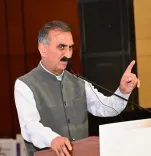
Dr. Jitendra Singh Backs India's Vikram Space Mission
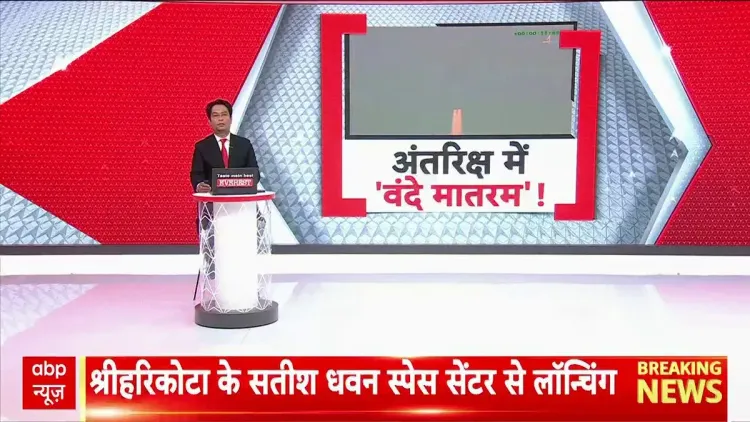
Synopsis
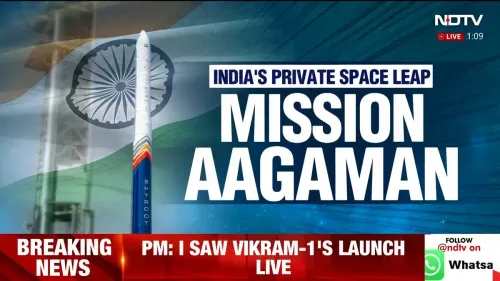
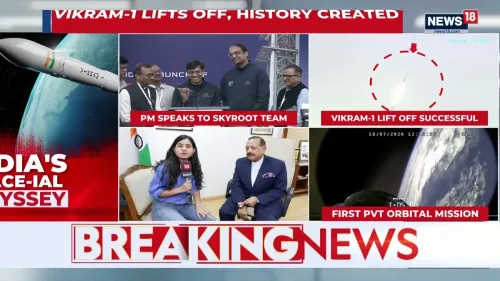
Union Science and Technology Minister Dr. Jitendra Singh posted #IndiaWithVikram1 on 19 July 2026, rallying support for what appears to be a new mission in India's Vikram lunar lander lineage, building on Chandrayaan-3's historic 2023 south-pole landing.
Key Takeaways
Jitendra Singh posted #IndiaWithVikram1 on 19 July 2026 , with an accompanying video on X.
The hashtag references the Vikram lander lineage, named after space pioneer Dr.
Chandrayaan-3 's Vikram lander made India the first nation to land near the Moon's south pole in August 2023 .
India's lunar programme spans three missions: Chandrayaan-1 (2008) , Chandrayaan-2 (2019) , and Chandrayaan-3 (2023) .
The minister oversees Science and Technology , Earth Sciences , and serves as MoS in the PMO .
A formal ISRO announcement on any Vikram1 mission is anticipated through official government channels.
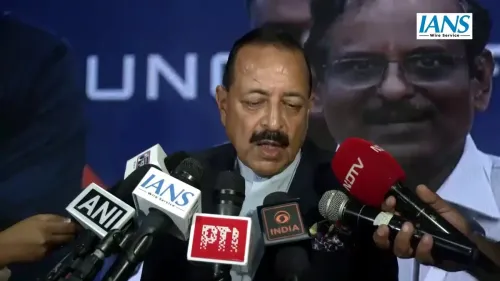
Union Science and Technology Minister Dr. Jitendra Singh on Sunday, 19 July 2026, expressed public support for India's space endeavours by posting the hashtag #IndiaWithVikram1 on X, signalling solidarity with what appears to be a new chapter in the country's lunar or space exploration programme linked to the Vikram mission lineage.
Context
The hashtag #IndiaWithVikram1 invokes the name of the Vikram lander, which made history on 23 August 2023 when Chandrayaan-3 achieved a soft landing near the Moon's south pole — making India the first country to reach that region of the lunar surface. The lander is named after Dr. Vikram Sarabhai, the physicist widely regarded as the founding father of India's space programme. The minister's post, accompanied by a video, appears to rally public and institutional enthusiasm around a mission or initiative carrying the Vikram designation.
Dr. Jitendra Singh holds independent charge of the Ministry of Science and Technology and the Ministry of Earth Sciences, and also serves as Minister of State in the Prime Minister's Office. His public communications on space matters carry institutional weight and often precede or accompany formal announcements by the Indian Space Research Organisation (ISRO).
Policy Backdrop
India's lunar programme has evolved through three successive missions. Chandrayaan-1, launched in 2008, was the country's first lunar orbiter and confirmed the presence of water molecules on the Moon. Chandrayaan-2 in 2019 attempted a powered descent but the lander lost contact before touchdown. The success of Chandrayaan-3 in 2023 restored confidence and placed India among a small group of nations capable of precision deep-space landings.
These missions are part of a broader national strategy to build indigenous capability in launch vehicles, satellite technology, and planetary exploration — reducing dependence on foreign space infrastructure while opening avenues for commercial launch services and international cooperation.
Stakeholders and Impact
The primary stakeholders in any Vikram-linked mission are the thousands of scientists and engineers at ISRO centres across Bengaluru, Thiruvananthapuram, Sriharikota, and other facilities. A successful follow-on mission would further validate India's deep-space engineering capabilities and strengthen its position in global space diplomacy.
Broader beneficiaries include India's growing private space sector, which has expanded significantly since the government opened the sector to private players, and international partners who view India as a reliable and cost-effective collaborator for planetary science missions.
What's Next
The Gaganyaan human spaceflight programme remains the most closely watched near-term milestone for ISRO, with uncrewed and crewed test flights in various stages of preparation. Any formal announcement regarding a Vikram1 mission — whether a new lunar lander, a technology demonstrator, or a collaborative programme — is expected to come through official ISRO and government channels. Minister Dr. Jitendra Singh's post is likely to amplify public engagement and build momentum ahead of such an announcement, continuing the pattern of ministerial social-media outreach that preceded the Chandrayaan-3 landing in 2023.
Point of View
Making it a powerful rallying symbol for national pride in indigenous space capability. By posting ahead of any official ISRO statement, the minister is also signalling the government's political investment in the space programme — a domain that has become central to India's soft-power narrative. The move underscores how space policy has moved from being a purely scientific affair to a key pillar of the ruling dispensation's development story.
NationPress
19 Jul 2026
Frequently Asked Questions
What is #IndiaWithVikram1?
#IndiaWithVikram1 is a hashtag posted by Union Minister Dr. Jitendra Singh on 19 July 2026, appearing to express support for a new space mission linked to India's Vikram lander programme, though a formal ISRO announcement is yet to be made.
Who is the Vikram lander named after?
The Vikram lander is named after Dr. Vikram Sarabhai, the physicist regarded as the founder of India's space programme.
What did Chandrayaan-3's Vikram lander achieve?
Chandrayaan-3's Vikram lander achieved a historic soft landing near the Moon's south pole on 23 August 2023, making India the first country to land in that region.
What is Dr. Jitendra Singh's role in India's space programme?
Dr. Jitendra Singh holds independent charge of the Ministry of Science and Technology and Ministry of Earth Sciences, and is MoS in the PMO — making him the nodal minister for ISRO and related space policy.
What comes after Chandrayaan-3 for ISRO?
ISRO is actively working on the Gaganyaan human spaceflight programme, and the #IndiaWithVikram1 hashtag suggests a possible follow-on lunar or space mission in the Vikram series may be in the pipeline.