Joshi hails DWR 162 wheat variety's global recognition

Synopsis
PM Modi announced during his Indonesia visit that India will supply 100 tonnes of DWR 162 wheat seeds — developed by UAS Dharwad — to bolster bilateral food security cooperation. Union Minister Pralhad Joshi hailed the move as global recognition of Karnataka's agricultural science capabilities.
Key Takeaways
PM Narendra Modi announced the supply of 100 tonnes of DWR 162 wheat seeds to Indonesia during his visit to the country.
The variety was developed by the University of Agricultural Sciences, Dharwad , Karnataka, and is bred to tolerate heat stress.
DWR 162 offers higher yield potential, superior grain quality, and heat-stress tolerance — traits suited to tropical climates.
The seed supply is part of a bilateral agreement aimed at strengthening regional food security and agricultural cooperation.
Union Minister Pralhad Joshi called the development a moment of pride for Karnataka and described it as global recognition of the state's scientific strength.
The initiative fits India's broader agricultural diplomacy strategy of sharing climate-resilient crop technology with Global South partners.
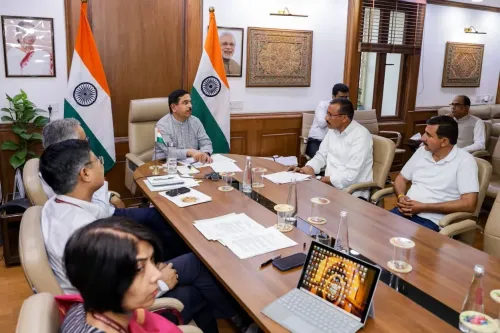
Union Consumer Affairs Minister Pralhad Joshi on Thursday, 9 July 2026, celebrated a milestone for Indian agricultural science after Prime Minister Narendra Modi, during his visit to Indonesia, announced the supply of 100 tonnes of DWR 162 wheat seeds — a heat-tolerant variety developed by the University of Agricultural Sciences (UAS), Dharwad — to the Southeast Asian nation, calling it global recognition for Karnataka's scientific community.
Context
Posting in Kannada, Minister Joshi wrote: 'ನಮ್ಮ ಧಾರವಾಡದ ಕೃಷಿ ವಿಶ್ವವಿದ್ಯಾಲಯವು ಸಂಶೋಧಿಸಿರುವ... ಡಿಡಬ್ಲ್ಯುಆರ್ 162 ಗೋಧಿ ತಳಿಗೆ ಜಾಗತಿಕ ಮನ್ನಣೆ ಸಿಕ್ಕಿದೆ' ('Our Dharwad agricultural university's researched DWR 162 wheat variety has received global recognition'). He noted that PM Modi's announcement during the Indonesia visit to supply 100 tonnes of the variety's seeds constitutes a bilateral agreement aimed at strengthening regional food security and agricultural cooperation between the two countries.
Joshi described the development as a moment of pride for every citizen of Karnataka and the nation, saying it once again proves the state's scientific strength on the world stage.
Policy Backdrop
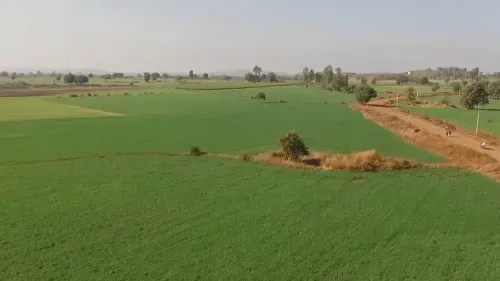
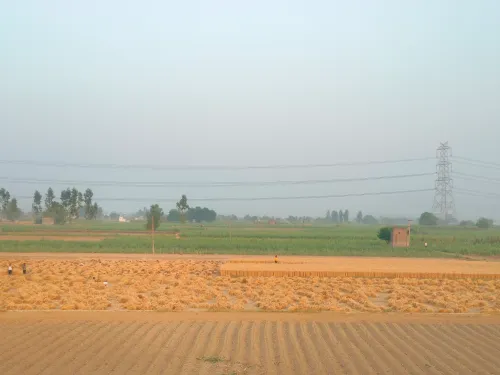
DWR 162 is a wheat variety bred specifically for high-temperature conditions, offering superior grain quality, higher yield potential, and notable heat-stress tolerance — traits increasingly critical as climate change squeezes traditional wheat-growing windows across Asia. The variety was developed through research programmes at UAS Dharwad, one of Karnataka's premier agricultural universities.
India has pursued agricultural research collaborations and seed exports under the Indian Council of Agricultural Research (ICAR) framework for over two decades. Bilateral agricultural cooperation between India and Indonesia has been progressively deepened through engagements at ASEAN and G20 platforms since 2014. The selection of a domestically bred, climate-resilient variety for this agreement reflects India's broader agricultural diplomacy strategy with Global South partners.
Stakeholders and Impact
Karnataka's agricultural scientists at UAS Dharwad stand to gain significant institutional recognition from this international endorsement of their research. The university's work now enters a diplomatic context, with the variety being positioned not merely as a domestic crop improvement but as a tool for regional food security.
For Indonesia, a tropical nation where conventional wheat varieties struggle with heat stress, the DWR 162 seeds represent a potential pathway to reducing import dependence and strengthening domestic grain production. Indonesian wheat growers and food-security planners are the direct beneficiaries of the announced seed supply.
What's Next
Attention will now turn to the logistics of delivering the 100 tonnes of seed to Indonesia and to any parliamentary or ministerial follow-up on the scale and scope of future variety exports under India's agricultural diplomacy framework. If the pilot proves successful, it could open the door to wider ASEAN-focused seed cooperation programmes anchored in ICAR-developed, climate-resilient varieties.
The episode underscores a consistent policy direction: positioning India's publicly funded agricultural research institutions as contributors to global food security — an approach that simultaneously advances bilateral ties and elevates the profile of institutions like UAS Dharwad on the international stage.
Point of View
The Centre also signals that India's food-security outreach is rooted in domestic scientific capacity rather than surplus commodity exports. For Minister Joshi, amplifying this in Kannada is a deliberate regional play: it frames a foreign-policy win as a Karnataka achievement ahead of a politically sensitive period in the state. The broader arc points toward ICAR-linked institutions becoming key nodes in India's Global South engagement.
NationPress
7 Oct 2026
Frequently Asked Questions
What is DWR 162 wheat variety?
DWR 162 is a heat-tolerant wheat variety developed by the University of Agricultural Sciences, Dharwad, in Karnataka. It is known for high yield potential, superior grain quality, and the ability to withstand heat stress, making it suitable for warmer climates.
Why is India sending wheat seeds to Indonesia?
India announced the supply of 100 tonnes of DWR 162 wheat seeds to Indonesia as part of a bilateral agreement to strengthen regional food security and agricultural cooperation between the two countries, announced by PM Modi during his Indonesia visit.
Which university developed the DWR 162 wheat variety?
The DWR 162 wheat variety was developed by the University of Agricultural Sciences (UAS), Dharwad, a premier agricultural university in Karnataka.
What did Pralhad Joshi say about DWR 162?
Union Consumer Affairs Minister Pralhad Joshi posted in Kannada calling the international recognition of DWR 162 a moment of pride for Karnataka and India, saying PM Modi's announcement to supply the seeds to Indonesia proves Karnataka's scientific strength on the global stage.
How does India use crop varieties in agricultural diplomacy?
India has increasingly positioned climate-resilient crop varieties developed by ICAR-linked institutions as tools of agricultural diplomacy, sharing them with Global South and ASEAN partners to address regional food security without relying solely on large-scale grain exports.