Vasundhara Raje: Women Are the Cornerstone of Family Stability
Synopsis
On International Women’s Day, Vasundhara Raje emphasized the vital role of women as the foundation of families, highlighting their empowerment in politics and society. She called for greater recognition of women's contributions and urged them to pursue economic independence.
Key Takeaways
Women are crucial to family stability.
Nari Shakti Vandan Act enhances political representation.
Economic self-reliance is essential for women’s empowerment.
Significant progress in women’s literacy and entrepreneurship.
Women’s contributions in leadership roles are on the rise.
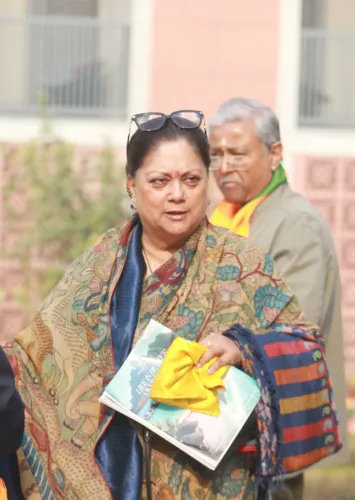
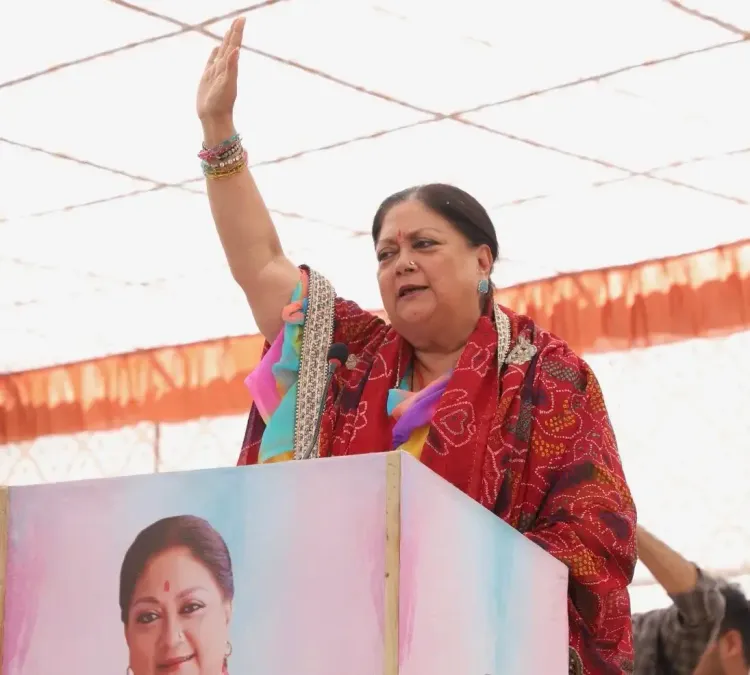
Jaipur, March 7 (NationPress) Former Chief Minister of Rajasthan, Vasundhara Raje, asserted that women are the bedrock of family structure, indicating that any deterioration in this foundation can disrupt the entire household. She made these remarks during the International Women’s Day Felicitation and Awards Ceremony held at JECRC University in Jaipur.
Raje pointed out that women's involvement in politics remains insufficient. To tackle this issue, Prime Minister Narendra Modi enacted the Nari Shakti Vandan Act, which guarantees a 33 percent reservation for women in both Parliament and state legislative bodies.
She stressed the importance of women leading their own advancement while collaborating for the empowerment and welfare of other women. The former Chief Minister expressed her discontent with the narrative of a male-dominated society, stating that women are the ones who give birth to men. According to her, society needs to acknowledge the equal contributions of both genders.
Reflecting on her time in office, Raje highlighted the introduction of the Bhamashah Scheme in 2008, which aimed to empower women by recognizing them as heads of households.
Additionally, she mentioned that her administration implemented a 50 percent reservation for women in the Panchayati Raj institutions across Rajasthan.
On this International Women’s Day, Raje urged women to forge ahead with confidence, make independent choices for themselves and their families, and aim for economic self-sufficiency. She encouraged successful women to extend support to others, emphasizing that perseverance and patience lead to success.
Highlighting advancements in women’s empowerment, she noted that when India gained independence in 1947, the literacy rate among women was approximately 8 percent, which has now escalated to nearly 68 percent. Enrollment of women in higher education has reached nearly 50 percent, and there are about 2 crore women entrepreneurs in India. Women represent nearly 40 percent of participants in the MSME sector.
She further indicated that women now make up around 26 percent of India’s IAS officers, a significant increase from just one female IAS officer in 1951. The Indian Armed Forces currently include over 10,000 women officers, and women account for approximately 8 percent of CEOs in the country. Additionally, about 41 percent of successful candidates in the UPSC Civil Services examinations are women.
Raje acknowledged the pioneering contributions of women like former President Pratibha Patil, former Lok Sabha Speaker Meira Kumar, India’s first female IAS officer Anna Rajam Malhotra, and the first female IPS officer Kiran Bedi, who have shown that education and guidance are essential for women’s success.
She also mentioned President Droupadi Murmu as a powerful example of how education and determination can propel women to the highest echelons of power in the country.
The ceremony was attended by O.P. Agarwal, Chairman of JECRC University, along with President Victor Gamber, Vice Chairpersons Amit Agarwal and Arpit Agarwal, university officials, faculty members, and various other dignitaries.
Point of View
It is clear that Vasundhara Raje's remarks resonate with a growing acknowledgment of women's pivotal role in society. Her emphasis on empowerment and representation reflects a crucial step towards gender equality in India.
NationPress
23 Sept 2026
Frequently Asked Questions
What is the Nari Shakti Vandan Act?
The Nari Shakti Vandan Act ensures 33 percent reservation for women in Parliament and state legislatures, aiming to enhance women's representation in politics.
What is the Bhamashah Scheme?
Launched in 2008, the Bhamashah Scheme aims to empower women by acknowledging them as heads of families in Rajasthan.
What percentage of IAS officers in India are women?
Approximately 26 percent of India's IAS officers are women, reflecting significant progress in gender representation in civil services.
How has women’s literacy in India changed since independence?
Women's literacy in India has increased from about 8 percent at independence in 1947 to nearly 68 percent today.
What role do women play in the MSME sector?
Women constitute nearly 40 percent of participants in the MSME sector, highlighting their vital contribution to the economy.