CM Fadnavis Addresses Media on Exam Security, Slams Rahul Gandhi
Synopsis
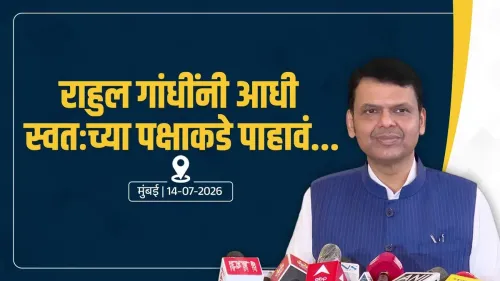
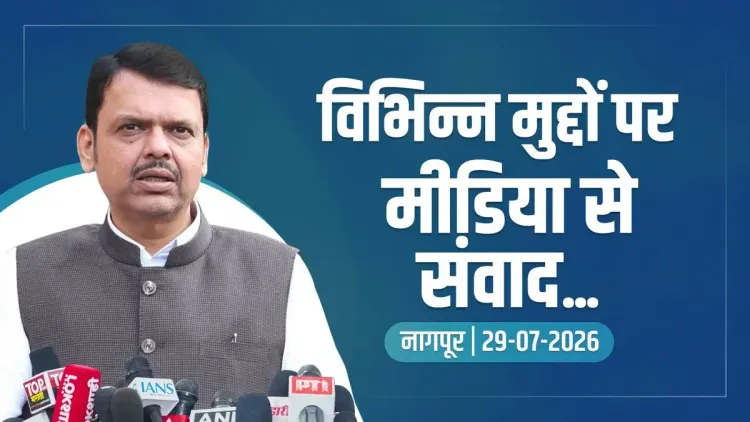
Maharashtra Chief Minister Devendra Fadnavis held a media interaction in Nagpur on 29 July 2026, championing a secure national examination framework for youth and directly attacking Congress leader Rahul Gandhi for what he described as an agenda of anarchy.
Key Takeaways
Devendra Fadnavis addressed the media in Nagpur on 29 July 2026 .
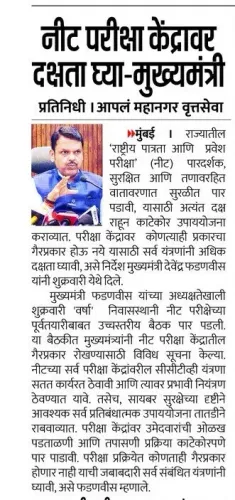
He advocated for a 'secure examination system' ( surakshit pariksha paddhati ) for India's youth.
He directly named Rahul Gandhi , accusing him of pursuing an 'agenda of anarchy.' The National Testing Agency , set up in 2019 , underpins the central government's standardised exam framework that Fadnavis referenced.
The Nagpur address follows a pattern of BJP state leaders aligning local messaging with central youth and governance priorities.
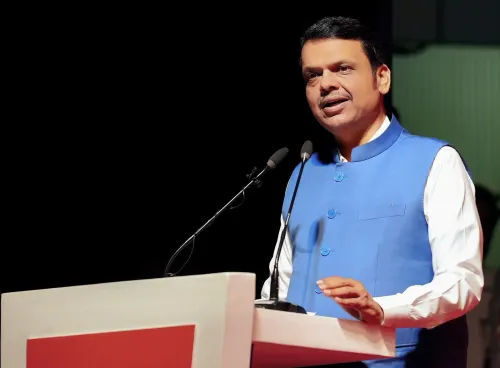
At Nagpur on 29 July 2026, Maharashtra Chief Minister Devendra Fadnavis stepped before the cameras to defend the government's push for a secure national examination system for the country's youth — and to take direct aim at Rahul Gandhi, accusing the Congress leader of pursuing what he called an 'agenda of anarchy.'
Exam Security at the Centre of the Argument
Fadnavis framed the government's examination framework as a shield for young aspirants, invoking the phrase 'surakshit pariksha paddhati' — a secure examination system — as the cornerstone of the state's pitch to students. The National Testing Agency (NTA), established by the central government in 2019, was designed precisely with this mandate: standardised, transparent national-level examinations. Fadnavis positioned the ruling alliance's record on exam integrity as a direct contrast to what he characterised as opposition obstructionism.
Fadnavis Targets Rahul Gandhi's 'Anarchy Agenda'
Rahul Gandhi, the face of the Indian National Congress and the government's most prominent critic, was singled out by name. Fadnavis accused him of stoking disorder on multiple fronts — a line of attack BJP leaders have deployed with increasing regularity as the party seeks to frame the opposition as a destabilising force rather than a constructive one. The Nagpur press conference, with its twin focus on youth policy and political combat, is a template Maharashtra's ruling leadership has used before: anchor the critique in a governance deliverable, then land the political punch.
Why Nagpur, Why Now
Nagpur is no ordinary backdrop. As Maharashtra's winter capital and a city with deep organisational roots for the BJP, it amplifies any message Fadnavis chooses to send. State chief ministers from the ruling coalition have periodically used regional platforms to echo central government priorities — on education, governance, and youth welfare — while sharpening attacks on the opposition. This address fits squarely into that pattern.
The students and youth aspirants at the receiving end of these policy debates are watching for concrete follow-through — whether Maharashtra moves to align its own examination security measures with central reforms, or whether the press conference remains a political moment rather than a policy one. That question will define the next chapter.
Point of View
Keeping the opposition on the defensive on an issue that resonates deeply with student communities. The invocation of the NTA's mandate signals an attempt to nationalise a state-level press conference, tying Maharashtra's political capital to the Centre's policy record. For the BJP, framing the Congress as the 'anarchy' party on education is a long-term electoral play targeting the aspirational youth vote. Whether Fadnavis follows through with Maharashtra-specific exam reforms will determine if this moment is policy or pure politics.
NationPress
13 Sept 2026
Frequently Asked Questions
What did CM Fadnavis say about examination security?
Fadnavis advocated for a 'surakshit pariksha paddhati' — a secure examination system — for the country's youth, positioning it as a key government priority during his media interaction in Nagpur on 29 July 2026.
Why did Fadnavis attack Rahul Gandhi?
Fadnavis accused Rahul Gandhi of pursuing an 'agenda of anarchy,' a line of attack the BJP has used to frame the Congress leader as a destabilising force rather than a constructive opposition figure.
What is the National Testing Agency and why is it relevant?
The National Testing Agency (NTA) was established by the central government in 2019 to conduct standardised national examinations with a focus on transparency and integrity — the policy backbone behind Fadnavis's call for secure exams.
Why did Fadnavis hold this press conference in Nagpur?
Nagpur is Maharashtra's winter capital and a key BJP stronghold. State leaders frequently use the city as a platform to amplify messages on national governance issues and political positioning.
What should students and youth aspirants watch for after this address?
The key follow-up is whether Maharashtra announces specific state-level examination security measures aligned with central NTA reforms, or whether the Nagpur press conference remains primarily a political statement.